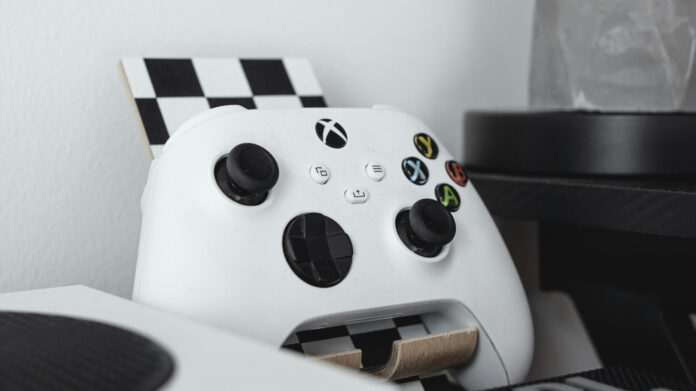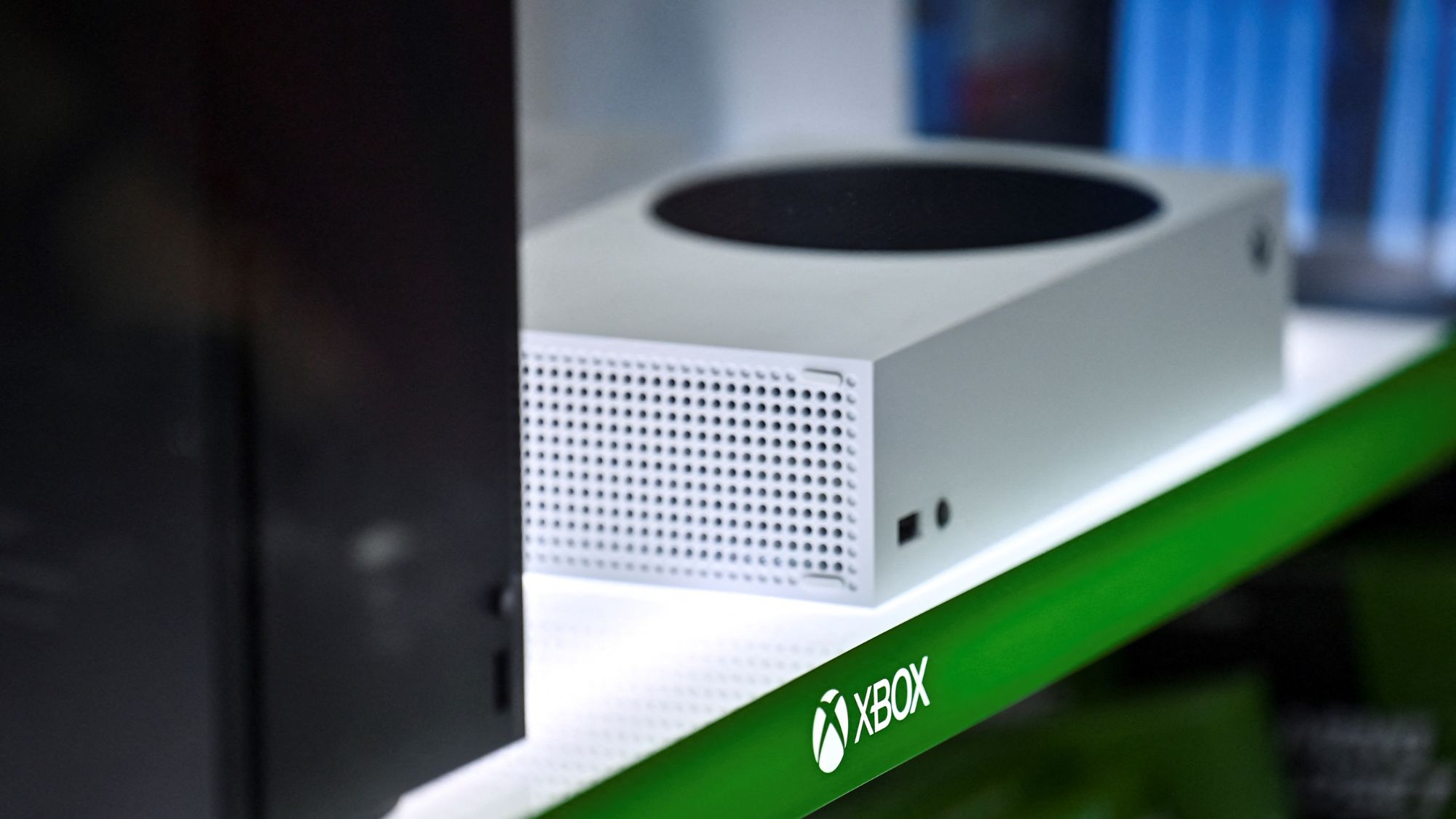

REDMOND, Washington — The Xbox Series X already costs $650. That figure, which would have seemed implausible when Microsoft launched the console at $500 in 2020, may yet look cheap.
An internal memo sent to Xbox employees last Tuesday, co-authored by CEO Asha Sharma and publishing chief Matt Booty, made a stark admission that the company’s next-generation hardware ambitions are colliding with a component market that has turned sharply against it. Console storage parts already cost twice what they did last autumn. By the 2027 holiday season — the window widely expected to see the arrival of “Project Helix,” Xbox’s next-generation console — memory prices are projected to reach five times what Xbox paid two years prior.
“While the entire industry is facing a components crisis, we believe we have been impacted more greatly than many of our peers due to the choices we made over the last half-decade,” Sharma and Booty wrote to staff, in language that was simultaneously a warning and a reckoning.
The memo, titled “Next 100 Days: Xbox Reset,” set in motion what is expected to be a significant restructuring of Microsoft’s gaming division, with layoffs anticipated in July. It also exposed a problem that has been building quietly since the second half of 2025, when demand from artificial intelligence data centers began consuming DRAM and NAND flash at a pace that left consumer electronics manufacturers scrambling for allocation.
Matthew Ball, the prominent gaming analyst and strategist who joined Xbox as its chief strategy officer earlier this year, offered one of the more candid public assessments of the situation during an interview at The Game Business Live on June 8. Ball — who had warned about the DRAM crisis in a widely circulated industry report months earlier, only to be dismissed by some in the sector as alarmist — told the audience that he had actually underestimated the severity. “At the time, there was a lot of ‘Ball is being histrionic’ on Twitter. However, six months later, I was underestimating how bad it is,” he said. “The crisis is the right term.”
Ball added that memory availability may be constrained by 30 to 40 percent going into next year, a figure that would complicate not only the technical specifications of Project Helix but the price at which Microsoft could realistically bring it to market. Xbox is “rethinking” the console’s design, he said, specifically to keep it affordable.
That constraint shapes a question that no one in the gaming industry has a comfortable answer to: what counts as affordable? Mat Piscatella, the head video game industry analyst at Circana, noted on social media that 53 percent of households that bought a console in the fourth quarter of 2025 earned more than $100,000 annually. The median U.S. household income, according to Census Bureau data, sits at roughly $80,000. The mathematics of who can actually buy an expensive gaming console, never mind a more expensive one, are not reassuring.
Ball did not directly address that income gap when it was raised in the interview. What he did address was Xbox’s proposed response. The company is exploring advertising as a mechanism to subsidize lower-cost access to its software and services — with ad-supported tiers of Xbox Cloud Gaming or Game Pass the most likely vehicle. “The question is, are there opportunities for us to find cheaper products, different products, and different delivery models to allow the people who can’t afford, or wouldn’t try, or wouldn’t test to be onboarded to our properties and franchises?” he asked.
The framing positions advertising not as a revenue stream in the conventional sense but as an access tool — a way to widen the aperture of who can participate in Xbox’s ecosystem at a moment when the hardware itself is becoming a luxury item. Whether players will accept it, and how intrusively the ads might appear, remains unclear. Ball emphasized that nothing specific has been announced.
The AI sector’s insatiable demand for memory is not the only pressure. U.S. trade tariffs on components manufactured in Asia have added further cost. Microsoft raised Xbox console prices twice during 2025, absorbing what pressure it could before publicly acknowledging in June 2026 that the model had reached its limit. The Xbox Series X at $650 already occupies a price tier that, five years ago, would have been associated with high-end PC hardware.
The company made that upward trajectory literal with its partnership with Asus, which produced the ROG Xbox Ally X handheld — a $1,000 device — in October 2025. A successor, the ROG Xbox Ally X20 with an OLED display, is planned for later in 2026. Asus has confirmed it will cost more than its predecessor. How much more is, in part, a function of what RAM looks like in the next six months.
The broader context helps explain why Sharma and Booty chose to disclose the internal figures at all. Excluding the Activision Blizzard King acquisition, Xbox spent more than $20 billion over five years on content, platform, and hardware subsidy — while revenue fell by nearly half a billion dollars over the same period. The memo made clear that the math is no longer sustainable. “Going forward, this cannot continue,” it stated.
Ball, asked at the event whether Xbox’s position is recoverable, leaned on the language of the strategic optimist — a phrase he used more than once. “I think it is incredibly defeatist to think that there’s any scenario that you can’t do better, that you can’t improve. How hard is it? Different question. What’s it going to take? Different question.”
That confidence has to coexist with the operational reality that Xbox cannot make enough consoles to meet current demand — not because of insufficient desire to sell them, but because the components are not available. The shortage is structural. Microsoft has committed to Project Helix. But what Helix will cost, what it will contain, and how it will reach the players who cannot afford $650 for the current hardware — let alone whatever comes next — are questions that remain, as of this week, unanswered.
For a company that has spent several years arguing that the console itself matters less than the subscription that runs on it, the irony is pointed. The collapse of the pure Game Pass strategy has left Xbox more dependent on hardware revenue at precisely the moment when building that hardware has become its most expensive challenge. And while the memory crisis is, as Ball insists, an industry-wide problem, the AI chip squeeze that has rattled Nintendo’s Switch 2 ambitions has landed on Xbox’s ledger with particular force — a consequence, the company admits, of a half-decade of decisions that left it with less flexibility than its rivals when the crisis arrived.
The restructuring that follows will be watched closely. Sharma’s broader Xbox overhaul, which has already drawn sharp lines around exclusives and reorganized the division’s identity, now faces its hardest test not in software strategy but in semiconductor economics.