ATLANTA – The epidemiologists at the Centers for Disease Control and Prevention who spent months studying 85,000 patients’ vaccination records were still employed by the CDC last Monday when JAMA Network Open published their findings. They had not left the agency. They had not been fired or reassigned. The journal published the work because the institution their study was designed for, the CDC’s own publication arm, would not.
That is the precise moment the U.S. public health system has reached. A landmark peer-reviewed medical journal is now serving as a release valve for a government agency that has lost the ability, or the willingness, to release its own routine surveillance data. And the researchers whose work required that escape route still show up every morning at federal offices in Atlanta.
The study, led by Ruth Link-Gelles, PhD, MPH, of the CDC’s National Center for Immunization and Respiratory Diseases, assessed the effectiveness of the 2025–26 COVID-19 vaccine across roughly 85,000 participants. Its finding: adults who received the updated shot were approximately 55 percent less likely to be hospitalized with COVID-19 than unvaccinated adults, and about 50 percent less likely to visit an emergency department or urgent care clinic for COVID. These are not marginal improvements. They are the kind of numbers public health officials need to advise patients, make procurement decisions, and justify continued vaccination programs during an active respiratory disease season.
The study had passed the CDC’s own internal scientific review process and had been approved by editors at the Morbidity and Mortality Weekly Report for publication in March 2026. Then it was not published. Acting CDC Director Jay Bhattacharya, a Stanford economist appointed under the Trump administration, intervened to delay the paper. The MMWR subsequently rejected it outright. Bhattacharya’s stated objection was methodological: the study used a test-negative design, which compares the vaccination status of patients who test positive for COVID-19 to those who test negative for the same illness at the same care site. He argued the approach could yield effectiveness estimates that were either an overestimate or an underestimate, and wrote that it was impossible to determine which. He did not propose an alternative method that would allow comparable real-time estimates to be produced.
JAMA Network Open published the Link-Gelles study on June 23, three months after the CDC’s own editors had approved it. The journal ran an accompanying editorial calling the test-negative design, the methodology Bhattacharya rejected, an important and practical approach for estimating vaccine effectiveness. That description is not a stretch. The test-negative design is the same method the CDC has used for decades to measure how well the annual flu vaccine is working in the real population seeking care. It accounts specifically for differences in care-seeking behavior between vaccinated and unvaccinated groups, the primary confounding variable Bhattacharya cited. Its use in COVID vaccine effectiveness research has been published in peer-reviewed journals, validated across multiple countries, and endorsed by the World Health Organization as a standard evaluation framework. NBC News reported that proponents of the design say no realistic alternative has been put forward for generating real-time effectiveness estimates during an active season.
As Eastern Herald reported in April, when the CDC first delayed publication of the Link-Gelles findings, the decision raised early interference concerns that have since intensified. What was then a delay has now become an outright rejection, followed by outside publication. The sequence matters: internal approval, political intervention, agency rejection, independent journal rescue. At no point in that chain was the study’s scientific validity formally contested by a peer-reviewed body. The MMWR’s editors had approved it. JAMA’s editorial process accepted it. Bhattacharya’s objection was the only methodological challenge the study received from anyone with the authority to block it.
Following the MMWR’s rejection of the study, Bhattacharya did not stop there. According to reporting by the journal Science, he publicly criticized the MMWR publication itself, the same 65-year-old journal he had just used as a mechanism to suppress data, arguing it lacked external peer review and calling for either its restructuring or the creation of a new CDC journal that would be externally reviewed. Several former CDC officials who had overseen the MMWR’s editorial operation disputed this characterization directly, describing the journal’s review process as more rigorous than most scientific publications. The MMWR was designed for rapid public health communication during emergencies, not quarterly journal timelines. Its internal review system is correspondingly intensive. The AAAS Science report noted the critique of the MMWR came after the vaccine study rejection, not before, and that Bhattacharya had not previously identified deficiencies in the journal’s peer review process as a reason for his intervention.
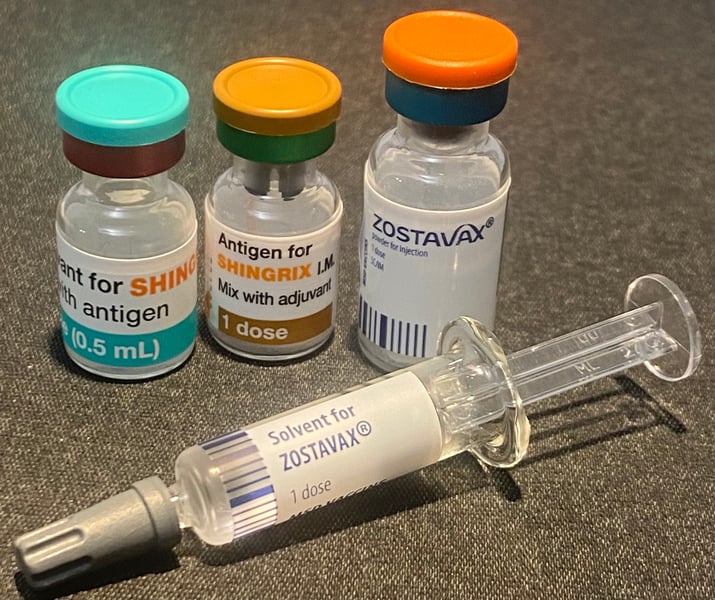
The CDC vaccine study is not the only piece of public health data to have been detained at the federal level in recent months. The FDA separately blocked publication of COVID-19 and shingles vaccine safety studies, drawing a fierce backlash from the scientific community, as Eastern Herald reported in May. That intervention covered studies relying on millions of patient records that had already undergone advanced statistical analysis and, in some cases, preliminary peer review. The pattern emerging across CDC and FDA is not one of rigorous methodological skepticism leading to better science. It is one of approved findings being blocked at the administrative level, then surfacing through journals that have no institutional obligation to carry them and no mandate to do so on the timeline the public health system requires.
What JAMA Network Open’s publication does not resolve is the downstream question. Some Americans who would have received a COVID booster this spring, had the 55 percent hospitalization reduction been published in March as scheduled, will not have had access to that data when they made their vaccination decisions. The CDC does not publish estimates of how many decisions the delay affected. The agency has not issued a statement acknowledging the circumstances under which the study left its publication pipeline. Bhattacharya has not retracted his methodological objections or indicated whether he considers the JAMA publication to be an adequate replacement for the government’s own public health communication channel.
What is not yet visible is how many other studies are sitting inside the agency without a comparable escape route. Ruth Link-Gelles and her co-authors had prominent institutional affiliations, a finding clear enough to attract a major journal’s interest, and colleagues willing to pursue outside publication through a process that is slow and uncertain compared with the MMWR’s rapid-release cycle. Not every piece of CDC surveillance data has those advantages. The agency has not disclosed what studies are currently under administrative review, which have been approved internally but not published, or whether any mechanism exists to bring those decisions to outside attention. That is the part of this story JAMA Network Open cannot answer.
Related Posts