
LOS ANGELES — At some point in the editing of Jackass: Best and Last, Johnny Knoxville got emotional. Not in the manner one might expect from a man who has been bitten by a full-sized alligator, launched headfirst from a rental car, and set on fire for pay. He got emotional in the way people do when something they built is ending. The film contains a sequence in which the cast watches footage from the franchise’s earliest years, a generation of now-middle-aged men looking at versions of themselves doing things their bodies can no longer absorb the same way. Knoxville, 55, reportedly fought back tears in the edit suite. It does not appear to have been planned.
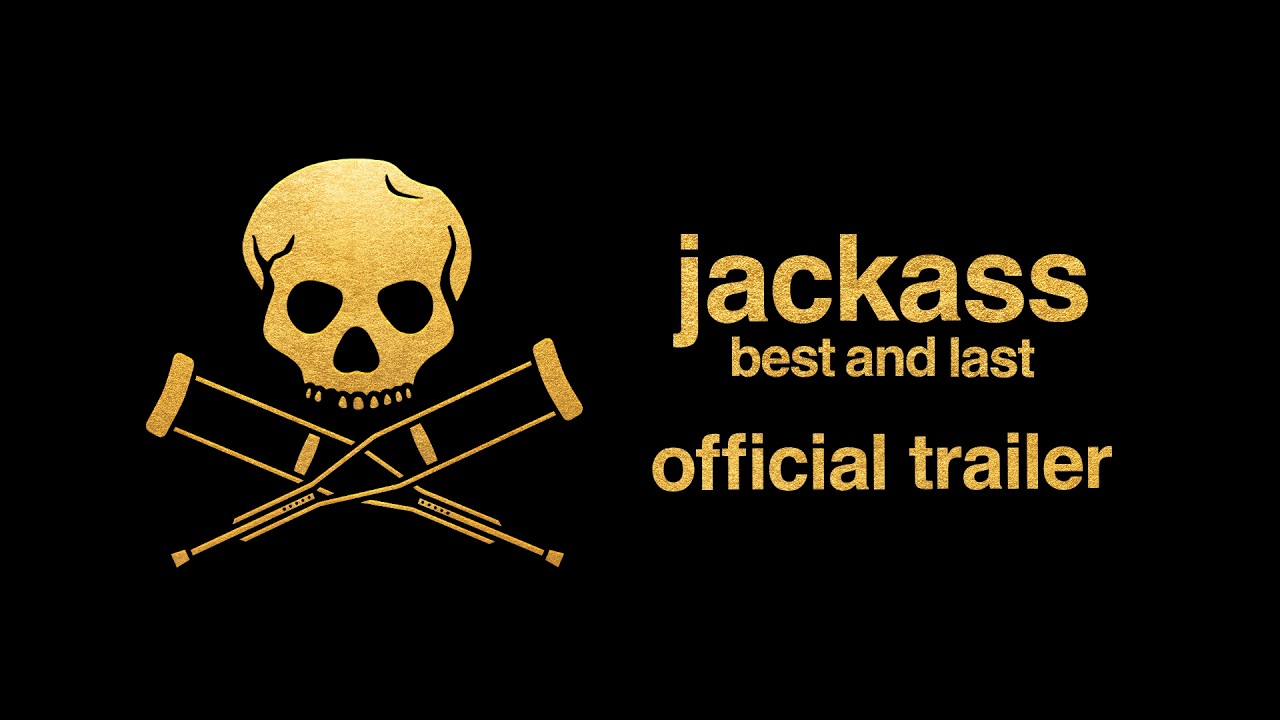
Jackass: Best and Last opened Friday at 2,800 theaters nationwide to the highest critical reception in the franchise’s history. The film holds a 93% approval rating on Rotten Tomatoes, the best score any Jackass project has ever received, with critics deploying a word that would have seemed absurd applied to this material even a few years ago: “poignant.” Jeff Tremaine, who has directed every major Jackass theatrical release, directed this one with what reviewers have described as a wistful control of tone, making archive footage feel like documentation rather than a clip show.
The film does not disguise its architecture. Best and Last is explicitly hybrid, combining new stunts shot for this production with never-before-released footage from the decades of material Tremaine and Knoxville accumulated, alongside a selection of greatest-hits clips that serve as connective tissue and, in the final third, something closer to elegy. The new material includes a stunt involving colonoscopy preparation fluid and a game of Twister that most reviewers describe without going into significant clinical detail, and a balance beam challenge with a shock collar element that several critics noted was genuinely difficult to watch. Sean “Poopies” McInerney, the youngest cast member, emerges in multiple reviews as the film’s most committed new-generation performer.
The commercial trajectory of the franchise tells a different story from its critical reception. Jackass 3D opened to $50.3 million in 2010, a figure that made it briefly the most profitable film per dollar of production cost in Paramount’s recent catalog. Jackass Forever debuted at $23.1 million four years ago. Best and Last is tracking toward $10 million to $12 million from its 2,800 theaters this weekend, which would mark the lowest opening-weekend number in franchise theatrical history. At an estimated production budget of roughly $10 million, the film does not need to perform at historical levels to recover its costs.
The weekend situates the film in company it would not have shared in its commercial peak years. Toy Story 5, now in its second weekend, is expected to retain the top spot. Supergirl, which Eastern Herald reported opened to a 57% Rotten Tomatoes score and box office projections of $39 million to $51 million, is competing in its own opening frame. Paramount is not projecting Jackass above third place this weekend, which in franchise terms is not a failure so much as a quiet acknowledgment that this franchise is ending not at its peak but well past it, and with something its highest-grossing films never had: near-unanimous critical approval.

Variety called the film “an amusing, slightly wistful farewell,” noting that the casting of middle-aged men in scenarios designed for younger bodies generates an unanticipated emotional register. The Hollywood Reporter praised Tremaine’s control of tone, describing the film as “one final high-risk hurrah” that manages the difficult balance of delivering the franchise’s traditional carnage while making space for what the years have done to these performers. The cast arrived at this project, by most critical accounts, willing to be seen clearly.
The Jackass franchise began on MTV in 2000, launched to film in 2002, and survived multiple career-defining injuries, lawsuits, and cast member departures over a quarter century. The prolonged legal dispute that kept Bam Margera from appearing in Jackass Forever followed him into this film as well. Margera’s absence from Best and Last is not addressed directly in the film, according to reviewers who saw advance screenings, but it hangs over the archive footage sections that include his earlier work. Whether the “Last” in the title is contractually binding or merely aspirational, Tremaine has not said publicly.
The summer season that Best and Last is entering has been defined by franchise tentpoles performing in wide bands. The Mandalorian and Grogu topped Memorial Day weekend with an $81 million to $100 million four-day projection, a benchmark that set the frame for what the summer’s major releases would need. Best and Last is not competing for that tier. It is competing, instead, to complete its run profitably and leave behind a franchise exit that the critical consensus has already declared a success on terms the franchise’s box office peak could not claim.
The 93% on Rotten Tomatoes matters not for the opening-weekend receipts it will generate. It matters because it is, by the franchise’s own standards, the most legitimate acknowledgment of artistic coherence the Jackass films have received. For a franchise built on deliberate incoherence, on the refusal of narrative arc, consequence, or resolution, that shift in critical register represents something the franchise’s peak years never produced. The film is not asking to be taken seriously. The critics have taken it seriously anyway.
What remains unknown is whether Best and Last will actually be the last. Knoxville has said in interviews it represents the franchise’s theatrical finale. He said comparable things before Jackass Forever, which arrived four years after Jackass 3 was marketed as the series conclusion. Variety’s opening-weekend analysis notes that Paramount is not commenting on future franchise plans. Given the economics of a film that could recover its production cost domestically in its first two weekends, the conversation about whether “Last” means last is probably not over.
Jackass: Best and Last is distributed by Paramount Pictures and rated R, with a runtime of 92 minutes.
Related Posts