
SAN DIEGO – When Qualcomm Inc. needed a hyperscaler to make its data center ambitions credible, it found one in Meta Platforms Inc. META. The deal, announced Wednesday at Qualcomm’s investor day alongside a new data center CPU and a revenue target that startled analysts, marks the sharpest pivot in the chipmaker’s history: a company that built its fortune on mobile phone processors is now asking Wall Street to value it as a data center challenger.
The target is $40 billion in non-handset revenue for fiscal 2029, up from a prior forecast of $22 billion the company offered less than a year ago. Breaking that down: $15 billion from data centers, $14 billion from internet of things devices, $10 billion from automotive. The headline number added 13 percent to Qualcomm’s share price in extended trading Wednesday, the strongest single-session gain for the stock since 2023.
The most consequential line item is the one that currently sits closest to zero. Qualcomm generates virtually no data center revenue today. Getting from zero to $15 billion in three years requires that the Dragonfly C1000, the data center CPU revealed at the event, move from an investor day announcement to a shipping product inside a timeline the company has now committed to publicly.
The Dragonfly C1000 arrives with specifications designed to stand against incumbents. The processor carries more than 250 cores running above five gigahertz, PCIe Gen 7 connectivity, CXL support for memory pooling, and bandwidth claims Qualcomm said exceed competing designs by more than 30 percent. Production is scheduled for the second half of 2028. Those are company figures using company methodology; independent verification awaits actual silicon.
Meta Platforms agreed to a multi-generation supply agreement for the Dragonfly C1000 to power its next-generation server fleet, with deliveries tied to the 2028 production schedule. Financial terms, including volume commitments or pricing benchmarks, were not disclosed. The absence of those details matters: they are the numbers that would show how much of the $15 billion data center target Meta alone could account for, and without them the two figures cannot be independently connected.
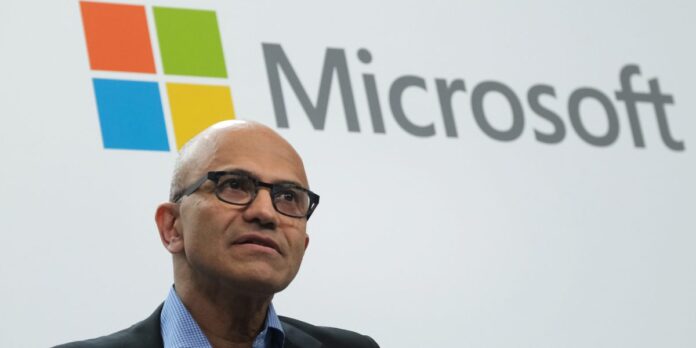
What Qualcomm did disclose is that Microsoft has also made commitments on the Dragonfly roadmap. That second named hyperscaler, alongside Meta, gives the 2028 shipping timeline dual-customer backing that a single anchor could not provide. Two of the five largest AI infrastructure spenders in the world have stated publicly that they intend to use Qualcomm’s data center CPU. That is a different document than a roadmap.

The software bet running alongside the hardware is, if anything, the more striking disclosure. Qualcomm said it is acquiring Modular, an AI software company, for $3.92 billion in stock. Modular’s central product is a software stack designed to run AI workloads without CUDA, Nvidia Corp.’s programming framework that has locked most AI development to Nvidia hardware since 2006. Breaking that lock has been the declared ambition of every data center CPU entrant in the past decade. None has succeeded at scale. Qualcomm is paying $3.92 billion on the premise that Modular’s approach can.
The scale of AI infrastructure spending that makes hyperscalers willing to consider non-Nvidia chips is reshaping the broader technology economy. Amazon committed $48 billion to cloud and AI infrastructure in India alone this week, part of a global buildout without precedent in the industry’s history. The same data center demand drove Apple to raise MacBook and iPad prices by as much as $500 after AI server capacity consumed memory supply at a rate Apple’s procurement arm could not offset. Qualcomm’s data center entry arrives as the cost of concentrating all server spending on one chip supplier has become impossible for the industry to ignore.
The company’s most recent quarterly results, for the second fiscal quarter of 2026, showed where Qualcomm stands before any Dragonfly revenue arrives. Revenue came in at $10.6 billion, beating the consensus estimate, with earnings of $2.65 per diluted share against a $2.55 forecast. The handset segment contributed $6 billion of that total, still the dominant segment. Automotive revenue reached $5 billion annualized for the first time, up 38 percent. IoT revenue was $1.7 billion, up 9 percent. The diversification is real; it is also happening from a base where handsets still represent more than half of total revenue, and Qualcomm lost Apple’s modem contract in the same period it is asking investors to price in a $15 billion data center business by 2029.
CNBC reported that analyst price targets across major banks moved higher after the investor day, reflecting the view that named customer commitments changed the probability distribution around the 2029 targets. Those targets, being three years out and predicated on a chip that has not yet shipped, carry the standard caution any forecast of that duration warrants.
What Qualcomm’s investor day could not answer is whether 250 cores and a Meta partnership are enough to move AI workloads off CUDA at the scale the $15 billion figure requires. Modular’s software stack is the actual test of that question, not the chip specification document. The acquisition closes a software gap that hardware alone cannot. Whether it closes the right gap, CUDA’s grip on developer tooling built over 20 years of ecosystem investment, is what the next three years will determine.