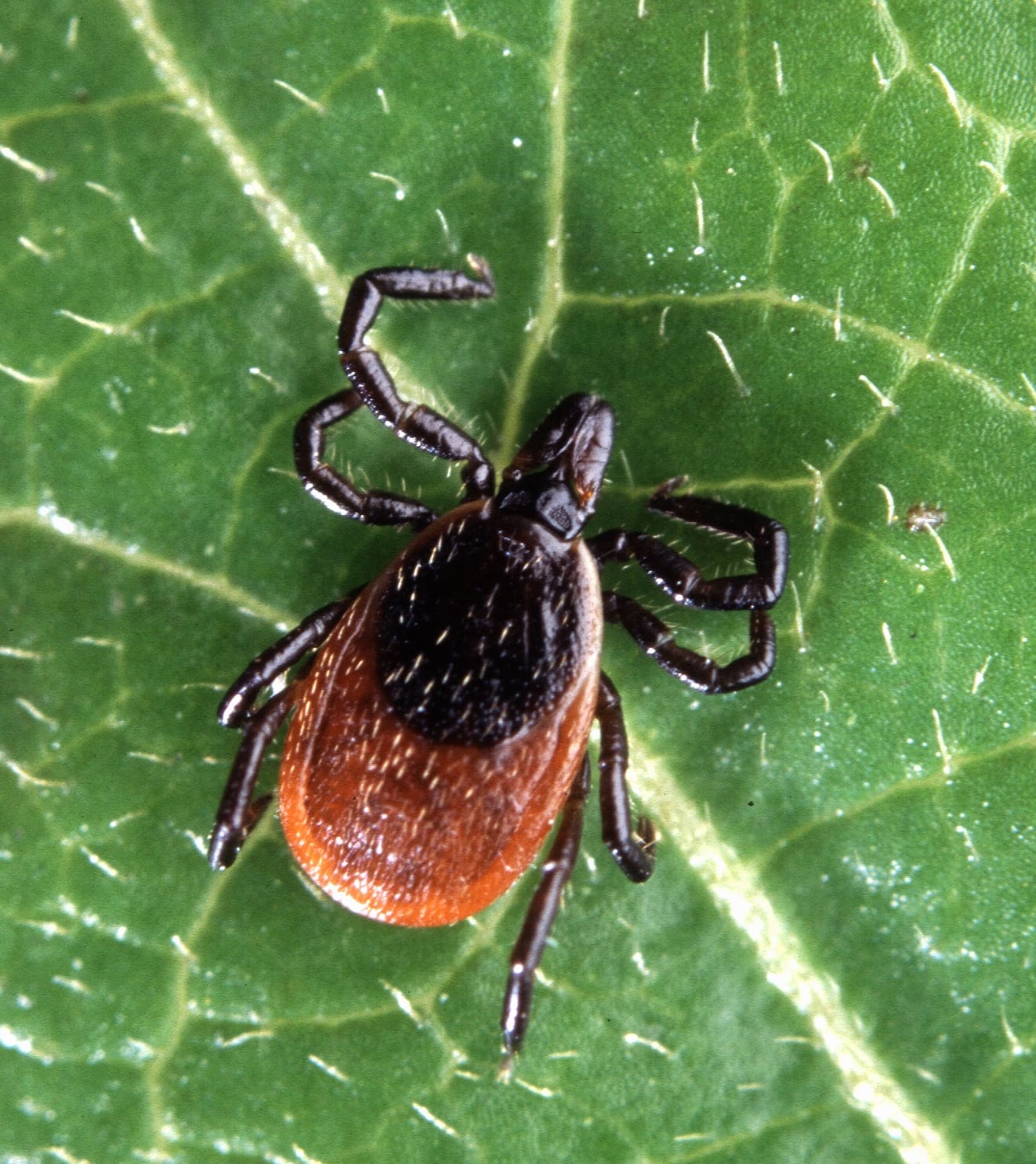

COLUMBUS — She had been mowing the edge of the yard when her son came inside with the tick. He was seven. It was lodged behind his left ear, small enough that she had not noticed it during the sunscreen check before he went out, dark enough that she might have dismissed it as a fleck of dirt. She called the pediatrician’s office first, then drove to the emergency room when the nurse on the line said it had likely been there long enough to require evaluation. The clinician who removed it told her she was the fourth mother from this county to come in that week.
In 2026, that scene is playing out at the highest weekly rate in nearly a decade. Emergency room visits for tick bites reached 118 per every 100,000 emergency department visits during the week ending June 21, according to the Centers for Disease Control and Prevention’s Tick Bite Data Tracker, the federal surveillance system that began capturing this data in 2017. The rate is the highest the tracker has recorded for this point in the summer calendar.
What makes 2026 different is not simply volume. The season started early, with tick activity appearing in the CDC’s surveillance data in February and March, weeks before the spring surge that defines tick season in the Northeast. And the places being affected have shifted. The blacklegged tick, the species responsible for most Lyme disease transmission in the United States, is no longer concentrated in coastal New England and the upper Midwest. It is establishing breeding populations across Ohio, Indiana, Illinois, and Michigan, states whose residents, until recently, rarely needed to check themselves after a walk in the woods.
The Northeast remains the hardest-hit region, recording 104 tick bite presentations per 100,000 emergency visits as of mid-June. But the Midwest is experiencing what public health officials are calling its worst tick season in more than a decade. The Companion Animal Parasite Council, which tracks tick range data across the United States, projected in January that Ohio, Kentucky, West Virginia, and parts of Indiana would see some of the largest expansions in blacklegged tick populations in 2026. Those projections are now being confirmed at emergency rooms.
The mechanisms behind the expansion are well-documented. Milder winters across the Ohio Valley and lower Great Lakes have allowed more ticks to survive into the following spring. Warming temperatures have extended the window in which nymphal-stage ticks, the smallest and hardest-to-spot phase of the life cycle and the stage most likely to transmit Lyme disease, remain active and questing. Expanding deer populations have carried ticks further into suburban woodlots, creek corridors, and backyard edges than was true twenty years ago. The tick’s range has moved because the deer’s range has moved, and the deer moved because the habitat did.
A CDC newsroom statement released this week noted that tick bite ER visits were up more than 25 percent in April 2026 compared with the same month in 2025, the steepest year-over-year April increase in the tracker’s nine-year history. Research published in recent years has found that the number of American counties with established blacklegged tick populations has more than doubled since the mid-1990s, with the fastest recent expansion in the Midwest. A family in central Indiana that once checked for ticks only during vacation in Vermont now lives inside the tick’s range year-round.
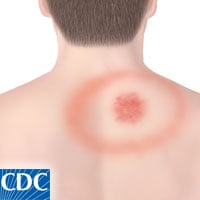
Lyme disease is the most common vector-borne illness in the United States. The CDC estimates approximately 476,000 Americans are treated for it each year, a figure derived not from a national case-reporting system but from health insurance claims analysis, which captures most diagnosed cases but misses those resolved before formal billing, or never identified at all. Emergency room visits for tick bites are a different measure: they capture public awareness and anxiety as much as infection burden. The ER clinician who removes a tick is not routinely running a Lyme disease test. The diagnosis, if it comes, will happen weeks later, when a primary care physician interprets a spreading rash or investigates fatigue and joint pain the patient never connected to a bite.
Researchers at the Johns Hopkins Bloomberg School of Public Health, which convened a media briefing on ticks and Lyme disease earlier this month, have noted that the ER surge and the eventual Lyme disease case count are separate phenomena, captured through different clinical encounters weeks apart. The ER surge measures whether the public knows enough to seek care when it finds an embedded tick. The actual Lyme disease burden for 2026 will not be tallied until state health departments compile their year-end surveillance reports next spring.
The CDC’s prevention guidance has not changed: long sleeves and long pants when walking in wooded or grassy areas, EPA-registered repellents with DEET or picaridin, a full-body tick check within hours of coming indoors. What has changed is who the guidance is addressed to. The Midwest resident who felt exempted from these precautions because her county appeared low-risk on older maps is no longer exempted. The range maps have caught up to where the tick actually lives, and they are not the same document they were in 2015.
The tick’s westward push is part of a pattern in 2026 in which wildlife-driven health risks are appearing in places they were previously rare. H5N1 bird flu reached two Australian states this month through migratory seabirds crossing the Southern Ocean, moving faster than wildlife managers had modeled. What binds these cases is not a single cause but a shared condition: populations of birds, deer, and other wildlife hosts are responding to altered habitats, shifting their ranges, and carrying their pathogens with them into territory where no warning system has been built.
The tick surge lands in a summer when American public health surveillance is already stretched across multiple fronts. With more than 2,100 measles cases confirmed in the United States by mid-June, already approaching the 2025 full-year total, the epidemiologists who track tick-borne diseases have less institutional bandwidth for the kind of sustained public education campaigns that, in a quieter year, would accompany data of this kind. Counties in Ohio and Indiana where blacklegged ticks are newly established do not yet have the thirty years of community messaging that New England built while learning to live inside Lyme territory.
The seven-year-old from Columbus is under observation. His pediatrician called ten days after the emergency room visit to ask how he was doing. The spreading rash that would definitively signal Lyme disease never appeared, which is medically reassuring but not conclusive: about a third of people with Lyme disease never develop the rash at all. His mother is watching for fatigue, joint pain, and the other symptoms she had to look up online, because nobody had told her, growing up in Ohio, that this was something to watch for here.