
KANSAS CITY — For three group games, Iran did not lose. They did not lose to Belgium. They did not lose to New Zealand. They did not lose to Egypt, even after a late winner was disallowed by VAR in the final minutes of a match that could have sent them through. Iran left Group G with three draws, three points, and exactly zero wins. And on Saturday evening, while their players waited and watched and did the arithmetic that footballers should not have to do, a stadium in Kansas City erased them anyway.
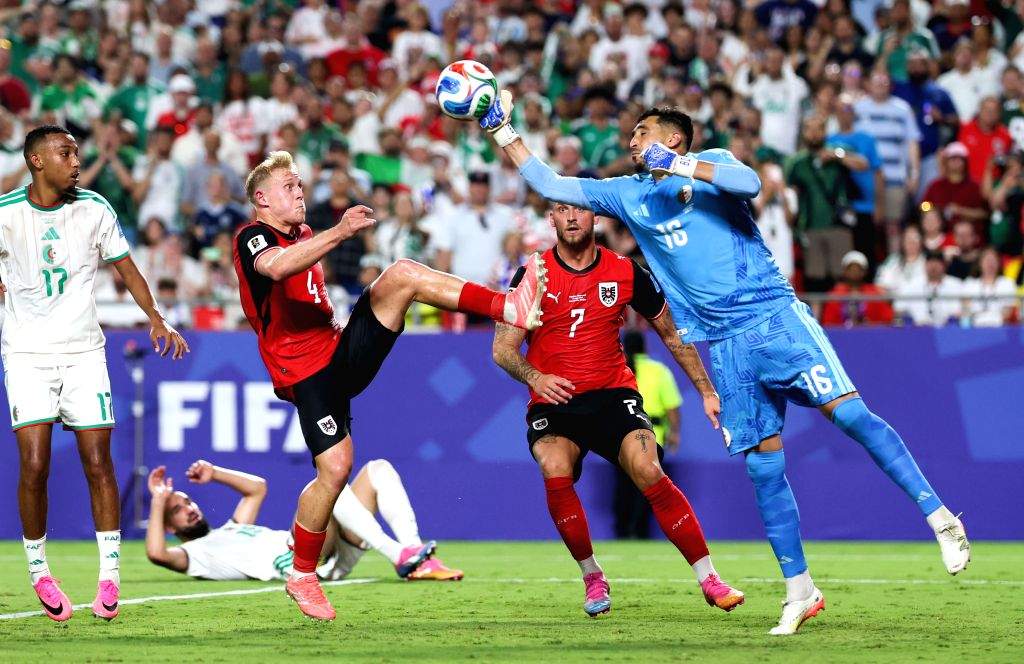
Algeria and Austria drew 3-3 at GEHA Field at Arrowhead Stadium, a result that sent both teams into the Round of 32 and confirmed Iran’s elimination. Iran finished third in Group G with three points from three draws. Algeria finished third in Group J with four points. The gap — one point — was enough. Among the eight third-placed teams that advance from the 48-team field, Iran ranked ninth. There is no tenth place at a World Cup.
What made Saturday’s result feel like something beyond a football match was the shadow of 1982 hanging over it. Forty-four years ago, at the World Cup in Spain, West Germany and Austria played out a 1-0 result in Gijón that eliminated Algeria from that tournament. It became known as the Disgrace of Gijón: two nations with shared interests, playing out a result they both needed, while Algeria had no way to intervene. Saturday night in Kansas City had the same cast and the same arithmetic. It produced something entirely different.
Austria needed only a draw to advance. Algeria needed to avoid a heavy defeat. For sixty minutes, the match moved in Austria’s direction. Marcel Sabitzer put Austria ahead in the 55th minute, and at 2-1, the Austrian bench looked calm. Substitute David Alaba stretched along the technical area. The stadium felt like it was waiting for the clock to run down.
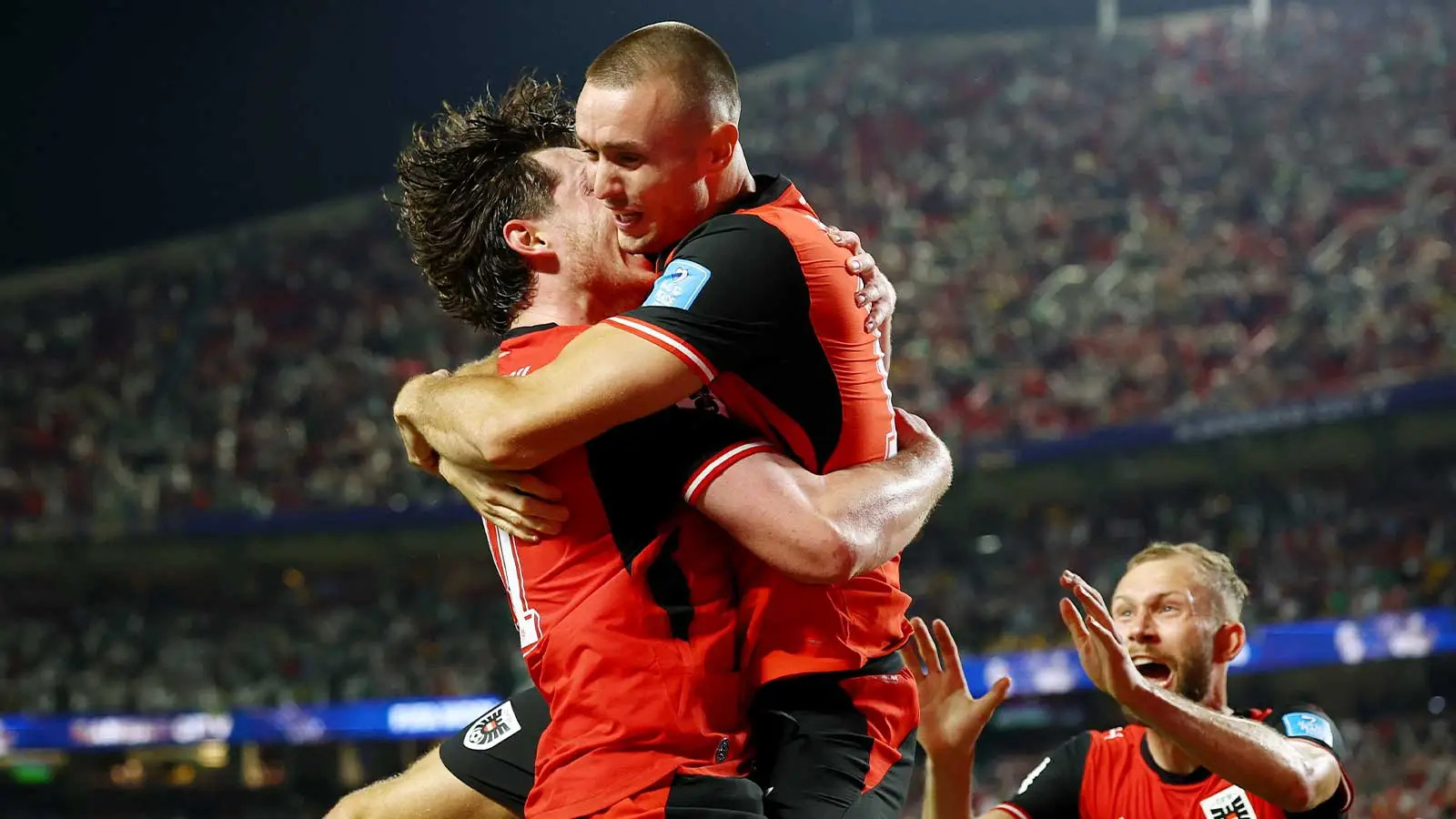
Riyad Mahrez disagreed. Algeria’s captain, 35 years old and playing what may be his final World Cup, equalized in the 60th minute with a finish that left Austrian goalkeeper Patrick Pentz with nothing to do. Then, in the third minute of stoppage time, Mahrez did it again. Algeria 3-2 Austria. The 69,045 inside Arrowhead erupted. The Algerians in the stadium, who had traveled in numbers, understood immediately what that goal meant: they were through. Austria, suddenly, was not.
Ralf Rangnick’s response in the moments after Mahrez’s second goal said more than anything he offered in the post-match press conference. Austria surged forward with an urgency the preceding eighty minutes had not contained. Sasa Kalajdzic, the tall striker who has spent years battling injury, rose to head home an equalizer in the 96th minute. Austria 3-3 Algeria. Both teams through. The mathematics that had seemed so dangerous for three minutes resolved itself in the most dramatic way the group stage can produce.
Rangnick, asked afterward to describe what he had witnessed, reached for a filmmaker. “If Alfred Hitchcock had written such a drama, I would have said he was completely mad,” the Austrian manager said. Mahrez, for his part, had no interest in the chaos of the final minutes. “It’s a feeling of being extremely happy,” he said. “It was the objective when we arrived — it was to go beyond the first round.”
Austria’s goals: Marko Arnautovic opened the scoring in the 28th minute, Sabitzer added the second shortly after halftime, and Kalajdzic completed the comeback at 96 minutes. Algeria’s goals came from Aissa Belghali in the 41st minute and Mahrez twice in the second half. The match’s opening goal came from Algeria — Marko Arnautovic’s opener came in reply to early Algerian pressure — and the match never settled into the comfortable 0-0 collusion that 1982 had provided. This was chaos, not conspiracy.
Austria will face Spain in the Round of 32. Algeria draws Switzerland. Neither fixture is forgiving, but both teams earned their place in it.
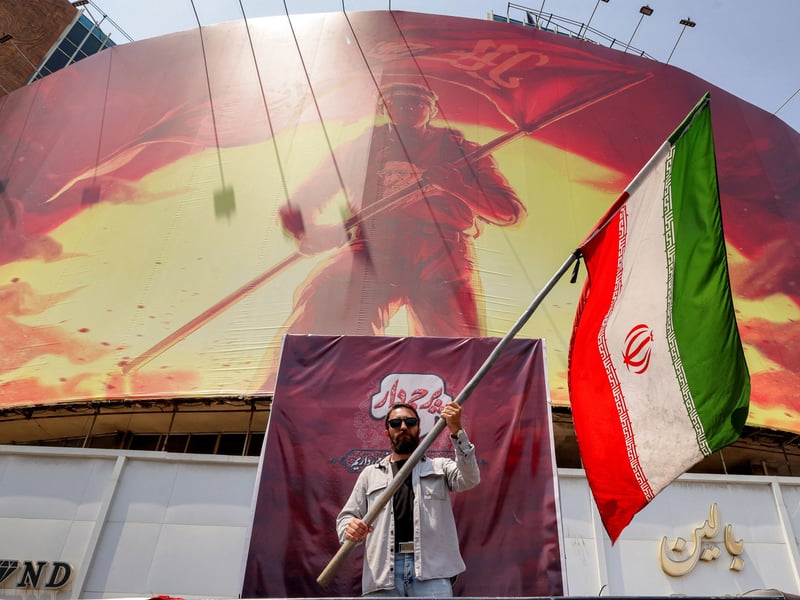
Iran’s elimination carried a weight that the football numbers cannot fully hold. This was the Islamic Republic’s seventh World Cup and its seventh group-stage exit. It was the first time Iran had gone unbeaten through the group stage and still gone home. The players, many of whom had navigated complicated political terrain to compete — Iran’s government crackdown in early 2026, the ongoing regional conflict, digital blackouts that kept millions of Iranians from following the tournament in real time — did everything asked of them by the scoreboard and were eliminated by what happened in a different city, in a different group, in a match they could not influence.
The VAR call in their final group game against Egypt, which ruled out what appeared to be a legitimate winner in the dying minutes, will be discussed in Tehran for years. Whether it should have stood is a question the footage continues to generate disagreement about. What is not in dispute is the sequence: a disallowed goal in one match left Iran needing other results to go their way, and on Saturday night in Kansas City, the results did not.
Algeria and Austria advance to the Round of 32 alongside the tournament’s other qualifiers. The bracket now takes shape. What it cannot contain is what Iran’s players will carry home: an unbeaten record, an early flight, and a VAR decision that nobody has stopped arguing about.
Related Posts