
LONDON – England needed 387 to be safe and made it look ordinary. Ben Duckett scored 141 at Lord’s on 19 July, the highest individual one-day international score ever made at the ground, and when India’s reply closed on 360 for 7 the series was gone. Rohit Sharma made 138 in that chase, which in almost any other week would have been the story.
Four months earlier India had won the T20 World Cup on home soil. They arrived in England as world champions and lost both white-ball series.
This is the complete india national cricket team vs england cricket team match record from the 2026 tour, with every venue, margin and turning point, and an honest account of what the results do and do not prove.
India national cricket team vs England cricket team match results, 2026 tour
| Match | Date | Venue | Result |
|---|---|---|---|
| 1st T20I | 1 July | Riverside, Chester-le-Street | No result (rain) |
| 2nd T20I | 4 July | Old Trafford, Manchester | England won by 4 wickets |
| 3rd T20I | 7 July | Trent Bridge, Nottingham | England won by 125 runs |
| 4th T20I | 9 July | County Ground, Bristol | England won by 9 wickets |
| 5th T20I | 11 July | Rose Bowl, Southampton | England won by 56 runs |
| 1st ODI | 14 July | Edgbaston, Birmingham | India won by 6 wickets |
| 2nd ODI | 16 July | Sophia Gardens, Cardiff | England won by 4 wickets |
| 3rd ODI | 19 July | Lord’s, London | England won by 27 runs |
England took the Twenty20 international series 4-0 and the one-day series 2-1.
The T20I series: England win 4-0
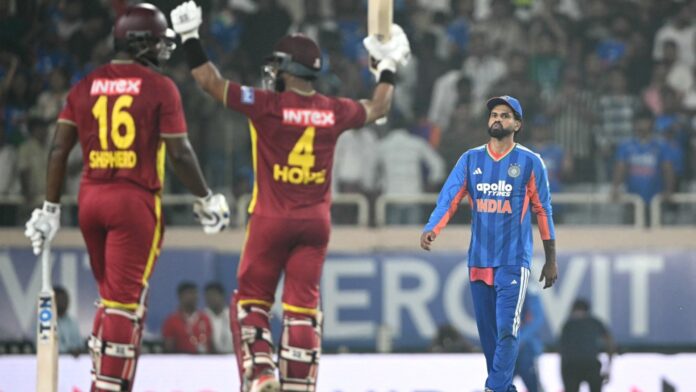
The Twenty20 leg came first, across the opening eleven days of July, and it was not close. Rain washed out the opener at Chester-le-Street. England then won the remaining four.
Harry Brook captained England and top-scored across the series with 229 runs. Shreyas Iyer led India in the format and made 218, which was the closest any Indian batter came to matching the hosts. Jos Buttler’s 131 in the final match at the Rose Bowl was the highest individual innings of the series.
The margins tell the story better than the scoreline: four wickets at Old Trafford, then 125 runs at Trent Bridge, nine wickets at Bristol, 56 runs at Southampton. Only the Manchester match was genuinely contested.
The ODI series: England win 2-1
India started the one-day leg well. They won at Edgbaston on 14 July by six wickets, under Shubman Gill, who took over the captaincy for the format. Two days later England levelled at Cardiff by four wickets.
Lord’s settled it. England made 387 for 3, Duckett scoring 141 at the top of the order. India’s 360 for 7 was the highest losing total of the series and still 27 short. Joe Root finished the three matches with 249 runs, more than any player on either side.
It was England’s first ODI series win over India since 2018, and only their eighth in 22 attempts against them.
Why the World Cup form did not travel
India had won the T20 World Cup on 8 March 2026, beating New Zealand by 96 runs at the Narendra Modi Stadium in Ahmedabad under Suryakumar Yadav. It was India’s third title, and made them the first side to defend the trophy and the first to win it at home.
Four months later they lost eight of nine completed matches in England. The most useful explanation is the least dramatic one: the two competitions were played in different conditions, by differently constituted squads, under different captains. Suryakumar led the World Cup side. Iyer captained the T20Is in England and Gill the ODIs.
English July conditions, with early-evening cloud cover and seam movement, reward a length that Indian planning built for Indian pitches does not automatically cover. That is a conditions argument, not a verdict on either side’s quality, and it cuts both ways. England have not won a global white-ball trophy in the period India have won two.
What the tour does establish is that a World Cup and a bilateral series measure different things. India’s supremacy in one has never reliably predicted the other.
How the 2026 tour fits India’s wider record
The England results were not isolated. India’s white-ball and red-ball fortunes across 2024 to 2026 have moved in opposite directions depending on who they played and where.
The clearest comparison is with South Africa, where the pattern inverts: India won the trophy that mattered and lost the series that followed. Our south africa national cricket team vs india national cricket team match scorecard sets out that record in full, from the seven-run win in the 2024 T20 World Cup final to the 2-0 Test defeat at home in November 2025. The 2024 final in Barbados remains the only time the two sides have met with a global trophy at stake.
Against Australia over the same period, the Border-Gavaskar record shifted after a decade of Indian dominance in Tests. India’s most recent competitive assignment before the England tour was covered in our India vs Afghanistan scorecard.
What none of these records settle is the obvious question. India have won consecutive T20 World Cups and lost bilateral series to England, South Africa and Australia inside the same window. Whether that makes them the best side in the world or merely the best tournament side is not something a scorecard can answer.
Frequently asked questions
Who won the India vs England series in 2026?
England won both. The T20I series finished 4-0 with one match abandoned to rain, and the ODI series 2-1.
What was the T20I series scoreline?
England won 4-0 across five scheduled matches. The opener at Chester-le-Street on 1 July was a no result. England then won at Old Trafford by four wickets, Trent Bridge by 125 runs, Bristol by nine wickets and Southampton by 56 runs.
Who scored the most runs in the 2026 India vs England series?
Harry Brook made 229 in the T20Is and Shreyas Iyer 218. Joe Root led the ODI series with 249 runs across three matches.
What happened at Lord’s on 19 July 2026?
England made 387 for 3, Ben Duckett scoring 141, the highest individual ODI innings ever played at Lord’s. India replied with 360 for 7, Rohit Sharma making 138, and lost by 27 runs.
Who captained India on the 2026 England tour?
Shreyas Iyer led the Twenty20 side and Shubman Gill the one-day side. Harry Brook captained England in both formats.
Did India win the 2026 T20 World Cup?
Yes. India beat New Zealand by 96 runs in the final at Ahmedabad on 8 March 2026, under Suryakumar Yadav. It was their third title and made them the first team to defend it and the first host nation to win it.
When did England last win an ODI series against India?
Before 2026, England’s most recent ODI series win over India came in 2018. The 2026 result was only their eighth in 22 attempts.