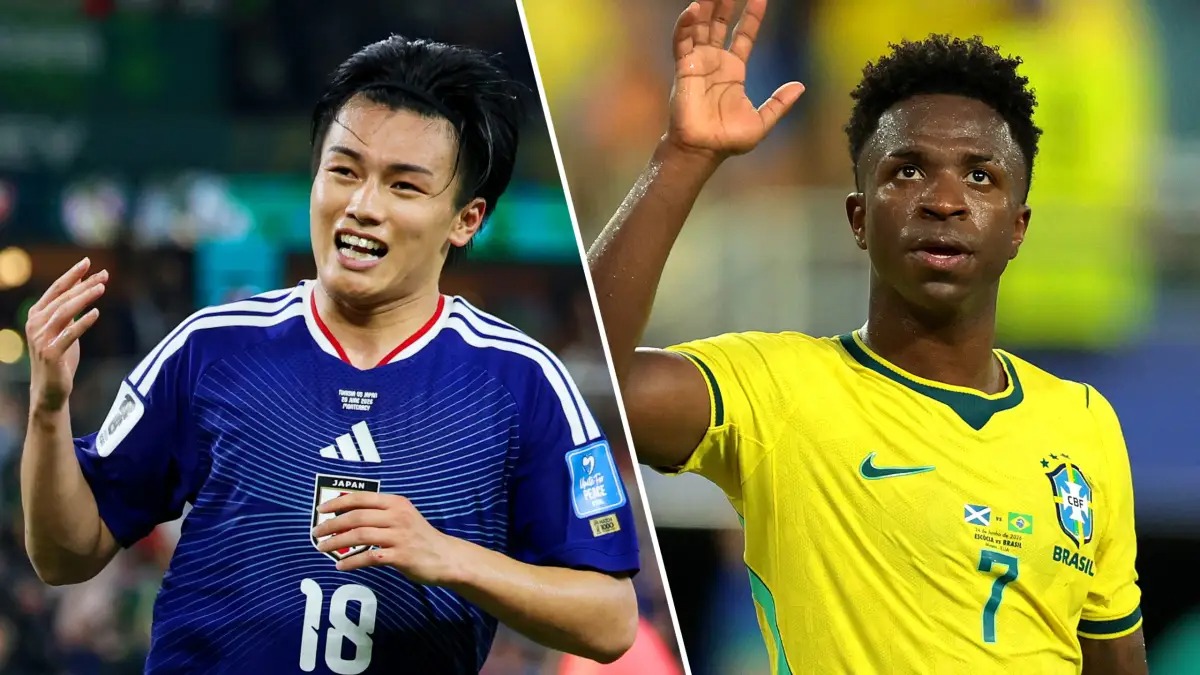

HOUSTON – Zico played for Brazil. He knows what this country expects from its football. Asked last week what he wanted from the Round of 32 match at NRG Stadium, he answered with the affection of a man who loved both countries that shaped him: “I’ll be supporting Brazil. But if Japan win, so be it. What I do know is that it will be a great match, because Japan play proper football.”
Zico’s qualification matters more than it might appear. Japan have never won a World Cup knockout match. In four previous attempts they have fallen each time – to Turkey in 2002, to Croatia on penalties in 2022, on two other occasions to brackets that gave them no room. At NRG Stadium on Monday, with 68,777 seats filled and a Japanese traveling contingent that includes schoolchildren who made the journey from Tokyo to witness what may or may not become history, they face the five-time world champions.
The case for Japan is more concrete than sentiment. On October 14, 2025, in Tokyo, Japan defeated Brazil 3-2 in a friendly, coming from behind in the second half with the kind of comeback that changes a team’s self-image. Carlo Ancelotti said afterward he was not overly concerned. He has said similar things throughout this tournament and has cultivated the impression of a man who declines to be unsettled by anything. When Kento Shiogai – a 21-year-old Wolfsburg striker who has played six minutes in this tournament – described Brazil as “a giant in decline,” ESPN reported Ancelotti’s response was precise: “I won’t repeat what others say. We’re focused on the match, on the opponent’s qualities, on preparing well to avoid problems. We’re not doing what they call in England ‘mind games.’”
The problem for Japan is not belief. It is Takefusa Kubo. Japan’s most creative attacking player sustained a left knee injury in the group-stage opener against the Netherlands and has not played since. Manager Hajime Moriyasu has managed the absence – Japan drew with Sweden and advanced from a competitive group – but the tactical flexibility Kubo provides, his ability to find angles from positions the standard 4-2-3-1 does not generate, is gone. Brazil’s central defence, organized around Marquinhos and Gabriel Magalhães, will be better placed to contain what arrives without him.
Ancelotti’s Brazil is expected to line up in his preferred 4-3-3: Alisson in goal, Wesley and Alex Sandro as fullbacks, Casemiro anchoring midfield alongside Bruno Guimarães and Lucas Paquetá, with Vinícius Júnior starting on the left wing. The 2024 Ballon d’Or runner-up has been Brazil’s most dangerous player in the tournament’s opening phase, and Japan will need to neutralize his movement without the high defensive press Kubo enables from the front. Moriyasu’s team has a history of shifting mid-game from their base 4-2-3-1 into a 3-4-3, and whether that transition suits a Monday afternoon in a 68,000-seat NFL stadium against opponents who have spent two years preparing for exactly this will be one of the afternoon’s live questions.
Monday’s Round of 32 bracket also sends Germany against Paraguay in Boston at 4:30pm ET and Netherlands against Morocco in Monterrey at 9pm ET. The Brazil-Japan match carries a distinct weight in the day’s fixture list. A Japan victory would make them the first Asian team to reach a World Cup quarterfinal since South Korea in 2002. A Brazil victory sends the five-time champions toward a quarterfinal where Argentina or the United States could await, and the pressure on Ancelotti to end a 24-year title drought intensifies rather than recedes.
This tournament has already shown it is less predictable than the seedings suggest – Ecuador’s 2-1 defeat of Germany in the group stage arrived at a stadium that had been told a different outcome was likely. Japan will know that precedent. So will Ancelotti, who has been in football long enough to understand that a team that wants to change history sometimes does, and that the best preparation against that outcome is to make sure your team is better than your opponent’s belief. Kickoff at NRG Stadium is 3pm ET.
Related Posts