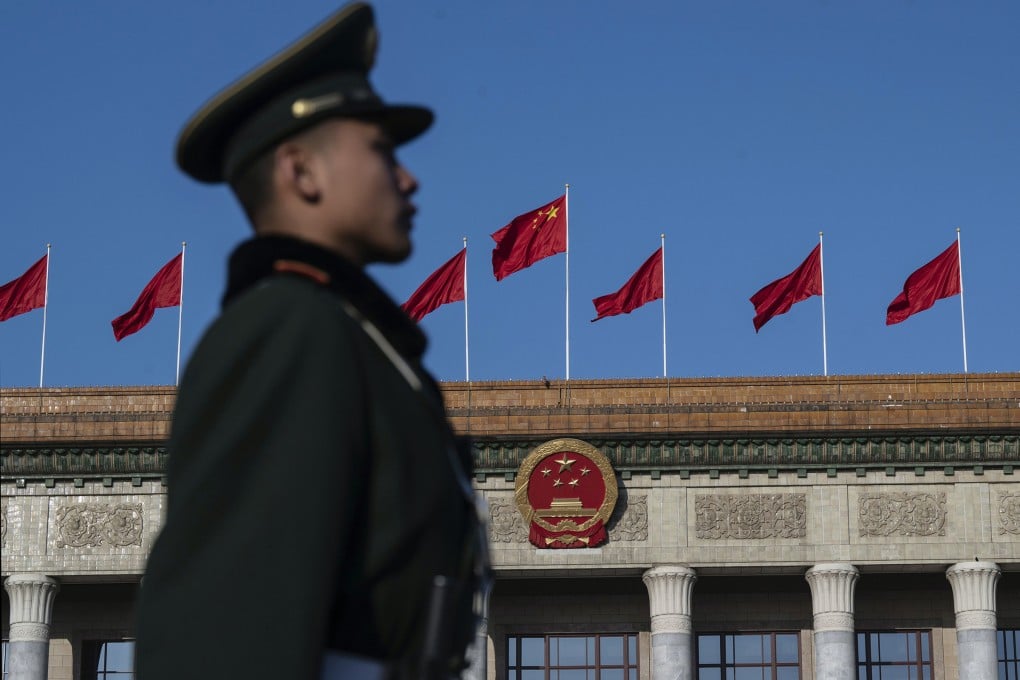

BEIJING — For any foreign company that transfers technology to a Chinese partner, sends engineers on secondment to a Shanghai facility, or holds a joint venture with a state-owned manufacturer, Wednesday brought a materially changed legal landscape. China’s 2026 Outbound Direct Investment Regulation, a 34-article framework enacted by the State Council and taking effect July 2, puts Beijing squarely in the middle of those arrangements in ways the previous framework could not.
The regulation establishes, for the first time, a coherent legal structure governing how Chinese enterprises invest overseas and how Beijing can intervene when those investments run into foreign resistance. It requires Chinese outbound investors to report transactions to regulators, cooperate with government reviews, and refrain from transferring certain technologies or proprietary data through mechanisms that were previously difficult to police: personnel reassignments, cross-border training programs, and informal knowledge-sharing arrangements that occur during ordinary commercial operations.
What it adds beyond compliance is the capacity to strike back. Under the new rules, the Chinese government holds explicit authority to investigate any foreign country or jurisdiction that “erects unreasonable barriers” to Chinese investors and to impose “necessary and defensive measures” in response. The phrase is deliberately broad. It gives Beijing a legal instrument it can activate unilaterally against any government whose investment-screening regime is judged, by Chinese standards, to be discriminatory.
The timing is not coincidental. Over the past two years, Western nations have systematically tightened the legal environment for Chinese businesses operating in their jurisdictions. The United States expanded its outbound investment rules to restrict American capital flowing into certain Chinese technology sectors. The European Union launched formal anti-subsidy investigations into Chinese electric vehicles, solar panels, and wind turbines, imposing provisional duties that will take years to fully adjudicate. The United Kingdom and Australia tightened national security reviews of Chinese-linked acquisitions. The number of Chinese companies blacklisted or sanctioned by allied governments has roughly tripled since 2023.
The 2026 ODI Regulation is China’s formal response: a legal counterpart to the toolkit its trading partners have spent three years assembling. South China Morning Post reported that Chinese authorities described it as “a milestone in the history of China’s outbound investment development,” an acknowledgment that what Beijing is building is not merely a compliance system but a strategic instrument.
Foreign companies with existing operations inside China are reading the regulation carefully, because its scope is not limited to Chinese enterprises. Provisions prohibiting unauthorized technology and data transfer through personnel reassignments and training events apply to arrangements that are standard practice in multinational joint ventures. An engineer seconded from a German automotive firm to a Wuhan assembly plant, a data-sharing protocol embedded in a semiconductor licensing deal, a training curriculum delivered to Chinese engineers by a foreign partner: all could fall within the regulation’s perimeter, depending on how Chinese regulators choose to define “unauthorized.”
The primary obligations in the new regulation fall on Chinese outbound investors, not their foreign partners. But the mechanism the law creates could shift the risk calculus for multinationals that depend on Chinese joint venture partners to navigate the domestic market. If a Chinese enterprise operating in Germany faces a formal EU anti-subsidy probe, Beijing now has a legal basis for coordinating a domestic response that extends beyond diplomatic protest.
The architecture is not entirely new. China’s 2021 Anti-Foreign Sanctions Law gave Beijing authority to penalize individuals and entities that implement foreign sanctions against Chinese persons or companies. The 2026 ODI Regulation extends that defensive posture into the investment domain. Taken together, the two instruments represent a mirror strategy: wherever Western governments have built legal tools to restrict Chinese commercial activity, Beijing has constructed or is constructing a domestic law that authorizes a formal response.
As the Ministry of Commerce this week imposed a 73.5% cash deposit on Canadian pea starch exports under a separate anti-dumping investigation, the July 2 regulation reflects a broader pattern of simultaneous legal pressure across multiple trade fronts. Donald Trump’s tariff campaign against 60 nations has framed 2026 as a year in which almost every major bilateral trade relationship is under formal legal review, and China’s answer has been to build legal infrastructure that matches, point for point, the tools being used against it.
What the regulation does not answer is substantial. The text does not specify which technology categories are “subject to prohibitions,” leaving Chinese regulators with broad interpretive authority and leaving foreign companies with correspondingly broad uncertainty. It does not establish a threshold at which the retaliatory mechanism activates, meaning Beijing retains full discretion over when “necessary and defensive measures” become warranted. Enforcement details, the timeline for regulatory guidance, and how the framework will interact with existing bilateral investment treaties remain unresolved. Foreign chambers of commerce in Beijing have not yet issued formal assessments, and Chinese legal scholars quoted in state media have noted that implementation rules are still being drafted. The landscape on Wednesday is materially different from Tuesday’s. The full shape of it will take considerably longer to become clear.