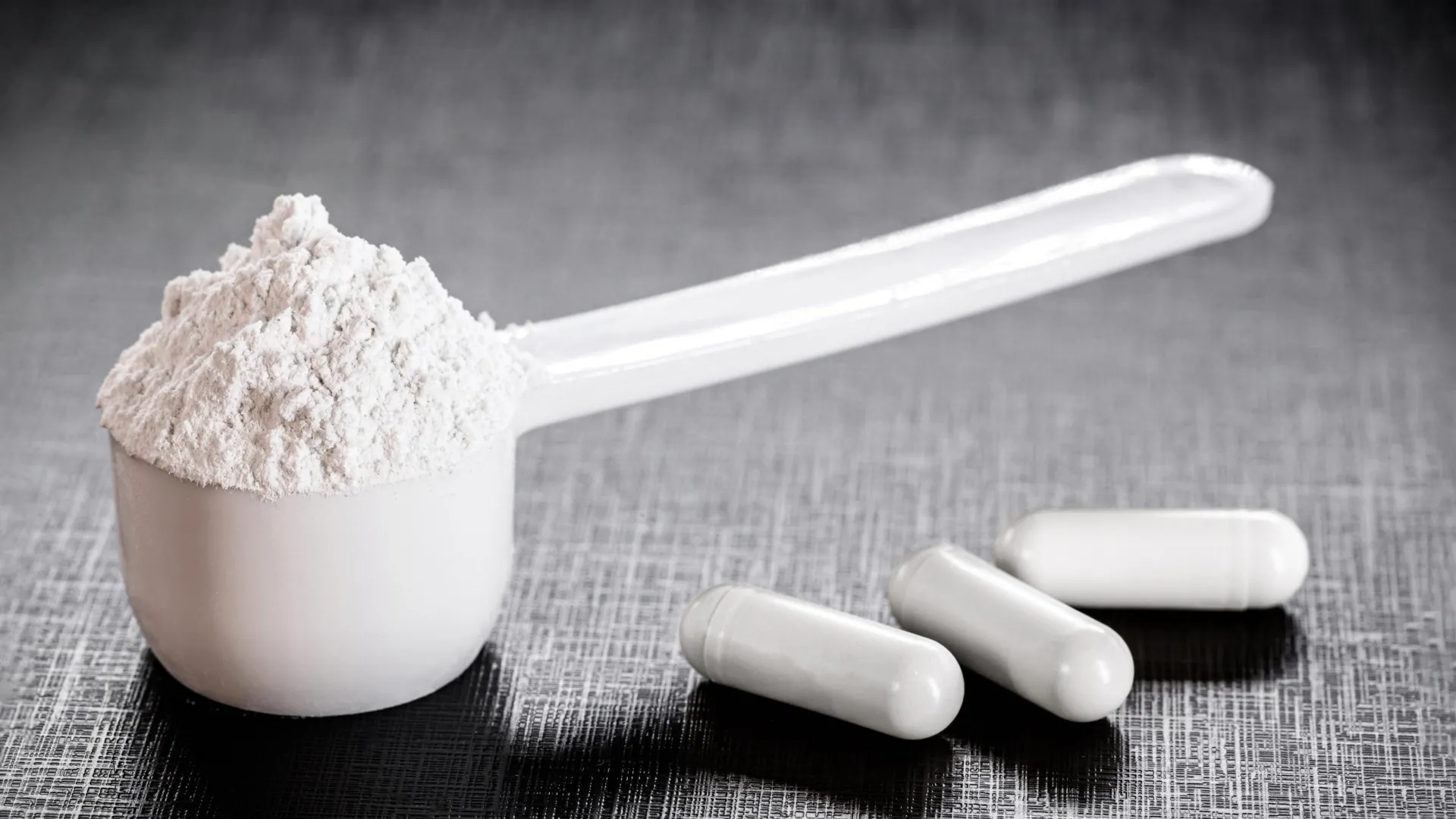

OTTAWA — For many people living with major depression, standard antidepressants do not work. After two failed medications, they enter a clinical category called treatment-resistant depression, where options narrow and the search for relief can feel endless. A new systematic review from the University of Ottawa has found that creatine, a supplement long associated with athletes and weight rooms, may offer some of those patients a way forward. But the review, published June 30 in the journal Brain Medicine, makes clear that the signal is not yet strong enough for anyone to self-prescribe.
Researchers led by Bassam Jeryous Fares, a medical student, and Nicholas Fabiano, a psychiatry resident, both at the University of Ottawa, analyzed five randomized controlled trials involving 238 participants: 126 who received creatine and 112 who received a placebo. The trials were conducted across five countries and ranged from studies of adolescent girls to postmenopausal women to adults with long-standing treatment-resistant depression. Two trials showed meaningful benefits. Three did not.
The theoretical basis for using creatine in psychiatry centers on brain energy. The brain consumes roughly 20 percent of the body’s total energy despite accounting for only about 2 percent of body weight. Creatine is a naturally occurring compound that helps regenerate adenosine triphosphate, the molecule that powers cells. In a brain struggling with depression, where energy metabolism is often impaired, supplemental creatine could theoretically shore up the biochemical resources needed for mood regulation. Researchers believe it may also influence the systems that produce dopamine and serotonin, though Fares and Fabiano are careful to note this remains theoretical.
The clearest evidence came from two trials involving women with major depressive disorder. In one, participants who added creatine to a standard course of the antidepressant escitalopram showed substantially better improvement than those on escitalopram alone. In another, women who received creatine alongside cognitive behavioral therapy showed similar gains. Across these two studies, the effect size, measured by Cohen’s d, reached 1.13 on the Hamilton Depression Rating Scale, a level researchers consider large. For a clinical population that often sees modest incremental gains with each additional treatment, that signal was notable enough to prompt this review.
The three remaining trials told a different story. In a study focused on treatment-resistant depression, the population perhaps most in need of new options, creatine showed no benefit over placebo. A trial of adolescent girls with depression also found no significant effect. A third trial, conducted in patients with bipolar disorder who were experiencing a depressive episode, similarly found no advantage. The reasons for these divergent results are not fully understood, and the review’s authors do not attempt to offer a definitive explanation.
The bipolar trial carried an additional concern that Fares and Fabiano flag prominently. Two participants in that study developed hypomania or mania while taking creatine. This matters because bipolar disorder is frequently misdiagnosed as unipolar depression, sometimes for years. A person unaware they have bipolar disorder who adds creatine to an already-struggling medication regimen could trigger a manic episode without knowing why. The researchers explicitly caution against unsupervised use of creatine for depression for precisely this reason.
Fares described the body of evidence as suggestive but not conclusive. “Two trials pointed one way and three pointed another,” he said. “Until we understand why, and for whom creatine works, we cannot responsibly recommend it outside of a clinical context.” The review does not identify a clear mechanism for why the population-specific results diverged so sharply, a gap the researchers say must be addressed before clinicians can act on the finding.
The trials tested two doses, 5 grams and 10 grams per day, but the evidence is not yet sufficient to determine which amount is more effective or whether higher doses carry additional risks. The studies also varied in duration, ranging from several weeks to a few months, leaving open the question of whether longer-term creatine supplementation would sustain initial gains or produce new complications. Fares and Fabiano call for larger, longer, and better-designed trials before creatine can be positioned as a clinical recommendation for any population with depression.
The urgency behind research like this reflects the scale of the problem. The World Health Organization estimates that more than 332 million people worldwide live with depression, making it one of the leading causes of disability globally. In the United States alone, the National Institute of Mental Health reported that approximately 21 million adults experienced at least one major depressive episode in 2021. For many of them, especially those whose depression does not respond to first- or second-line medications, the options available today remain inadequate, driving renewed scientific interest in compounds, including creatine, that operate through pathways distinct from traditional antidepressants. A separate analysis of CDC data on adult mental health treatment found that millions of Americans with depression are not receiving any form of care at all, underscoring the urgency of expanding what clinicians have to offer.
The creatine research arrives alongside a broader scientific effort to understand how nutritional factors shape brain health. A study published this week found that low vitamin C levels in older adults were linked to reduced gray matter volume and disruptions to memory-related brain networks, evidence that the metabolic environment in which the brain operates matters as much as the specific compounds targeting mood pathways. Taken together, this body of research does not point toward a simple dietary fix for depression. It does suggest that the biochemical conditions of the brain are more central to mental health than psychiatry has historically acknowledged.
What creatine’s trials have not answered is what matters most to people with treatment-resistant depression: whether it would work for them, specifically, at a dose that is safe and sustainable. That question will require the kind of large, carefully stratified trial that the Ottawa researchers are now calling for, one that accounts for diagnosis history, medication background, and the risk of bipolar misdiagnosis before anyone starts counting supplements.