
WASHINGTON — In seven Michigan counties, the summer produce season turned dangerous in late June. Cilantro and raspberries and bagged romaine in Caesar salad kits, the staples of holiday tables, became the suspected carriers of a microscopic parasite causing explosive, watery diarrhea. More than 170 Michigan residents have fallen ill since June 22, a number that has already exceeded three times the state’s typical annual caseload of 50.
The Centers for Disease Control and Prevention is tracking what appear to be two simultaneous cyclosporiasis outbreaks in the United States this summer: the Michigan surge, concentrated in seven southeastern counties, and a separate, broader investigation covering at least 145 cases across 17 states since May 1. As of Thursday, no specific produce supplier has been identified, no farm has been named, and no recall has been issued for any food linked to either cluster, NBC News reported.
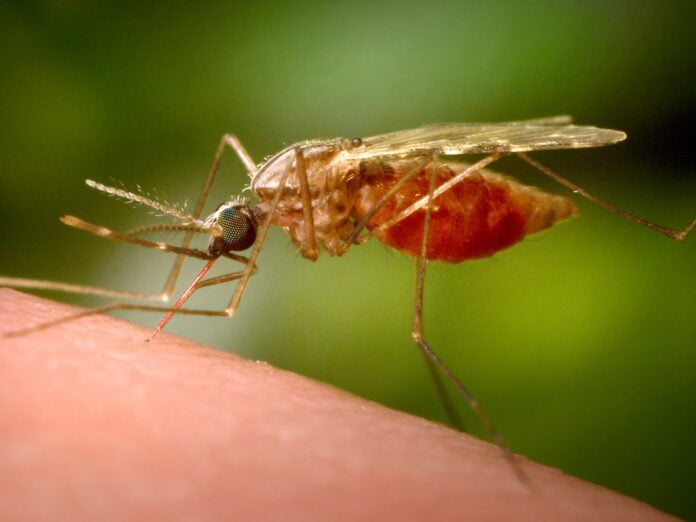
Cyclospora cayetanensis is a single-celled parasite common to tropical and subtropical regions worldwide. In the United States, it reaches consumers almost exclusively through contaminated fresh produce: herbs, berries, leafy greens grown, irrigated, or processed in areas where the organism is endemic. Unlike bacterial pathogens such as Salmonella, Cyclospora cannot be reliably eliminated by rinsing. The oocysts, the parasite’s infectious form, are too small to remove under running water and too resilient to be destroyed by most sanitation measures available to consumers.
The illness, cyclosporiasis, tends to arrive between two and 14 days after ingestion and often refuses to leave quickly. Symptoms include severe, watery diarrhea, described in clinical settings as explosive, alongside appetite loss, stomach cramps, nausea, vomiting, and low-grade fever. In adults with healthy immune systems, the infection typically resolves within a few weeks. For those who go untreated, relapses are common, with symptoms cycling for a month or longer.
Michigan’s outbreak has been the sharpest single-state signal. A state that typically documents roughly 50 cyclosporiasis cases per year has recorded more than 170 infections across Monroe, Lenawee, Washtenaw, Wayne, Livingston, Shiawassee, and Jackson counties, a seven-county belt spanning metro Detroit and Michigan’s southeastern border. Patients range in age from five to 86. At least 20 people have been hospitalized nationally across both clusters; no deaths have been reported.
Beyond Michigan, the CDC has been separately tracking 145 confirmed cases in 17 states since May 1. New York, Illinois, and Texas carry the highest case counts in the national investigation. The agency stated that the true number of people with the illness “was likely higher than the number reported,” a standard caveat reflecting that most people with gastrointestinal illness never seek testing. Critically, the CDC found “no evidence of a single, multi-state cyclospora outbreak linking all cases,” a determination suggesting the infections may stem from multiple contaminated produce sources that investigators have not yet traced individually.

Fresh basil, cilantro, raspberries, snow peas, and bagged romaine in Caesar salad kits have all been associated with past American cyclosporiasis outbreaks. Those are also, by design, the ingredients most likely to appear on tables this holiday weekend, and the timing of both clusters, running from late May through late June, tracks with the early peak of domestic herb and berry season. The CDC’s investigation runs parallel to a broader season of food safety alerts: European health authorities are simultaneously managing a Salmonella Stanley outbreak linked to Ukrainian instant noodles that has sickened 106 people across 14 European nations.
Cyclosporiasis is treatable. The antibiotic combination trimethoprim-sulfamethoxazole, the standard prescription, typically resolves the infection within a week when started promptly. Adults with intact immune systems often recover without intervention, though clinicians recommend treatment to shorten duration and reduce relapse risk. Older adults, young children, and those with compromised immune systems face the highest risk of prolonged illness and should seek medical attention if symptoms suggest a parasitic infection.
The CDC has not issued a recall for any specific food product. Without a confirmed source, public health officials can offer only precautionary guidance: wash all fresh produce thoroughly under running water before eating, including items marketed as pre-washed; refrigerate cut produce within two hours; and consult a physician if diarrheal illness persists beyond a few days without improvement. The open-source investigation mirrors the CDC’s approach during the MV Hondius hantavirus outbreak response, when the agency coordinated across 32 countries to trace infections whose precise source took weeks to identify.
As of Thursday, the Michigan Department of Health and Human Services is conducting active case tracing across the seven affected counties. The CDC continues its national investigation. No farm has been named, no supplier identified, and no contaminated lot recalled. For the hundreds of people already sick, and for the millions of Americans who will reach for fresh herbs and berries this holiday weekend, the question of where this summer’s parasite outbreak began remains, as of now, unanswered.