
SAN FRANCISCO – A French woman with advanced age-related macular degeneration had been told the words would never come back. The condition, the leading cause of blindness in adults over fifty, had hollowed the center of her visual field until text on a page became unreadable. After surgeons implanted a small chip at the back of her eye, she read a 300-page novel.
That patient was among those enrolled in the European clinical trials for PRIMA, a retinal brain-computer interface developed by Science Corporation. On Tuesday, European medical device regulators granted PRIMA approval for commercial sale, the first such clearance for any implantable device designed to restore central vision by stimulating retinal neurons directly. The first commercial procedures are expected to begin in Germany in September 2026.
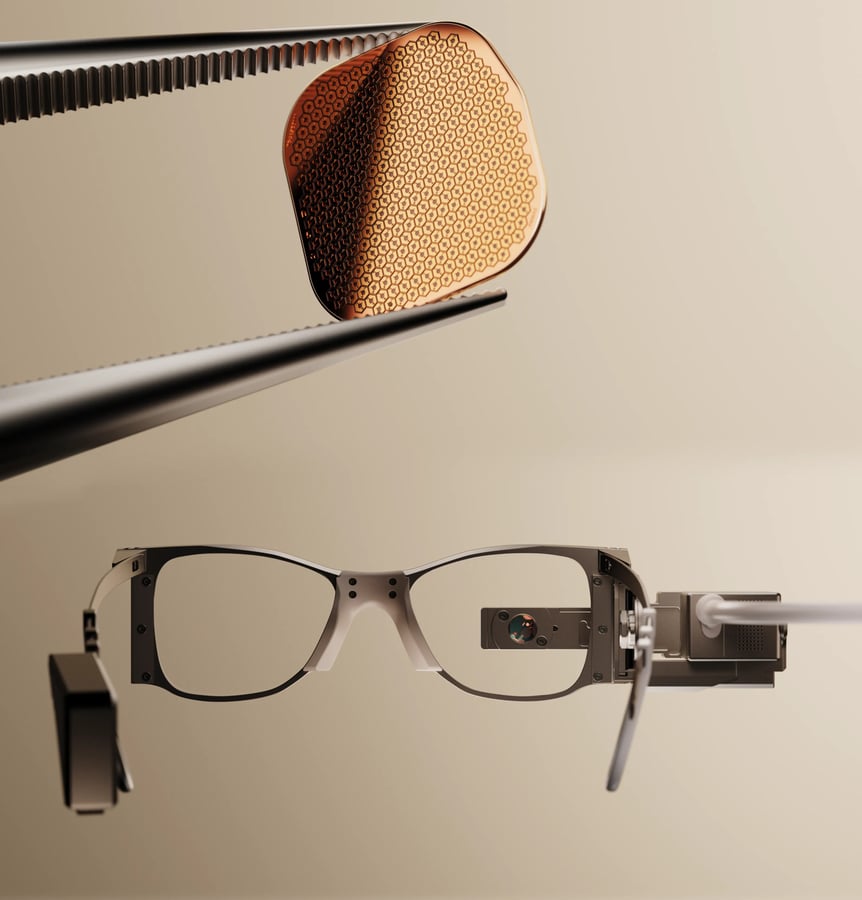
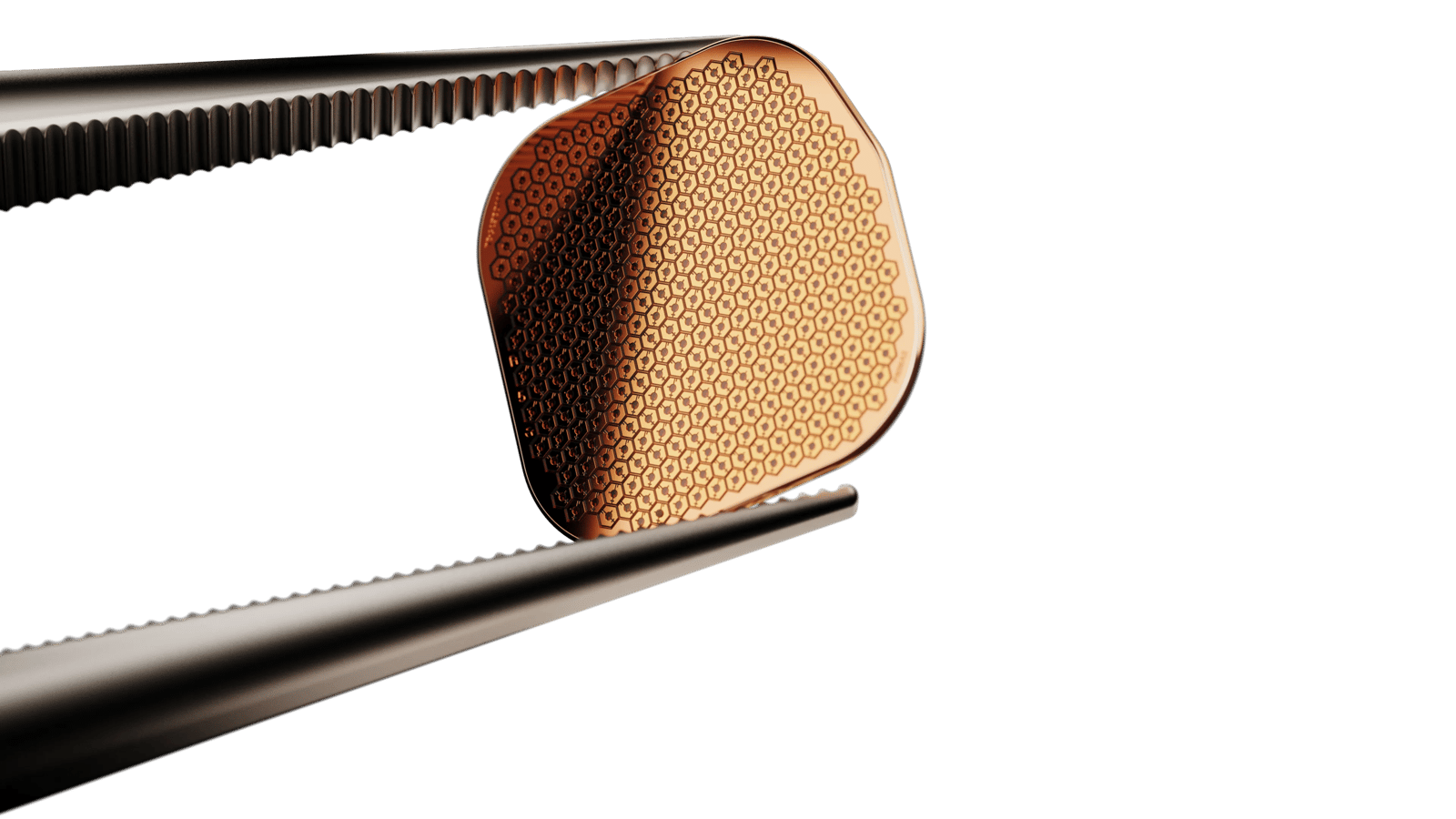
PRIMA does not heal the retina. Age-related macular degeneration destroys the photoreceptor cells in the macula, the small central region responsible for sharp, detailed vision. What the chip attempts is a detour: a roughly two-millimeter device, placed during a one-hour outpatient procedure, occupies the position where those cells once functioned, according to the company’s clinical documentation. A pair of glasses fitted with a miniature camera captures the visual scene and transmits encoded signals wirelessly to the chip, which converts them into electrical pulses that activate the ganglion neurons below the damaged tissue. AMD typically spares those neurons even as it destroys everything above them.
In clinical trials, results varied by individual but pointed consistently toward the practical. One patient read a 300-page novel. Others sketched figures from memory. Several played crossword puzzles and Sudoku. The device does not affect peripheral vision, which AMD typically leaves intact, but for the narrow band of central focus the disease eliminates, some patients found something close to what they had lost.
Science Corporation was founded by Max Hodak, who left Neuralink in 2021 after several years as the company’s co-founder and president. PRIMA came to Science Corporation through the 2024 acquisition of Pixium Vision, a French medical device startup that had been running the European clinical program for years. Hodak has been candid about what the commercial approval requires, telling TechCrunch: “The thing that the space needs is a company making $100 million a year of revenue.”
Age-related macular degeneration affects tens of millions of people globally, a number projected to grow as populations in Europe and North America age. The addressable market is not the challenge. The question is cost. Science Corporation has not published a list price, but the company has indicated the device will run to hundreds of thousands of dollars per patient. Insurance coverage in Germany, where the first procedures will take place, has not been announced. Without a confirmed reimbursement pathway, the launch begins in a narrow corridor accessible mainly to patients wealthy enough to pay without assistance.
The retinal implant field has one significant precedent, and it ended badly. Second Sight Medical Products received FDA approval for its Argus II device in 2013, making it the first commercially available retinal prosthetic in the United States. The company expanded to Europe and built a real patient population. Then, in 2022, Second Sight filed for bankruptcy. Approximately 350 people who had received the Argus II were left with active implants and no manufacturer: no firmware updates, no replacement parts, no clinical follow-up. Some still carry the devices. For any insurer or patient evaluating PRIMA, Second Sight is the scenario that must not repeat.
Hodak has not dismissed the comparison, and his answer is the revenue model itself. A company that reaches sustainable commercial scale survives; one that cannot charge for its procedures does not. Science Corporation’s path runs through Germany first, then to broader European markets as commercial results accumulate. Whether Germany’s statutory health insurers will cover a six-figure device for a condition that existing treatment addresses with far less expensive quarterly injections remains a question the company has not yet answered in public.
In the United States, PRIMA holds an expedited review designation from the Food and Drug Administration for two rare forms of inherited retinal blindness. The designation indicates the FDA considers the technology promising but does not amount to approval for commercial sale. No timeline for a US clearance decision has been announced.
Science Corporation is also developing a next-generation PRIMA chip with higher electrode density, which the company expects to expand both the resolution and the range of visual environments the device can interpret. Separately, the company is working with Dr. Murat Gunel at Yale University on a bio-hybrid brain sensor that pairs living neural tissue with electronics, a research program that remains early stage and years from any clinical application.
The uncertainty that no regulatory approval can resolve is time. A chip implanted in a living eye in 2026 will encounter questions about tissue integration, electrode longevity, and long-term device performance that only years of post-market data can answer. Clinical trials follow patients for defined periods; a decade of real-world evidence does not yet exist. The patients most likely to need PRIMA, those in their sixties, seventies, and eighties watching AMD take their central vision, cannot wait for that record to accumulate. Europe has decided the current evidence is sufficient. What happens in Germany this September will tell the rest of the world whether it agrees.