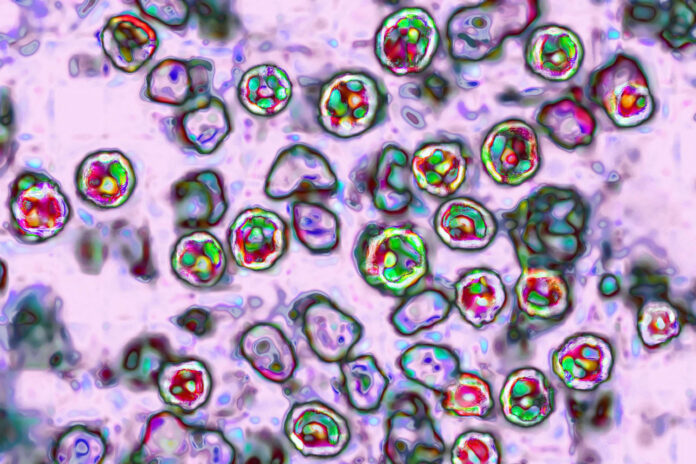

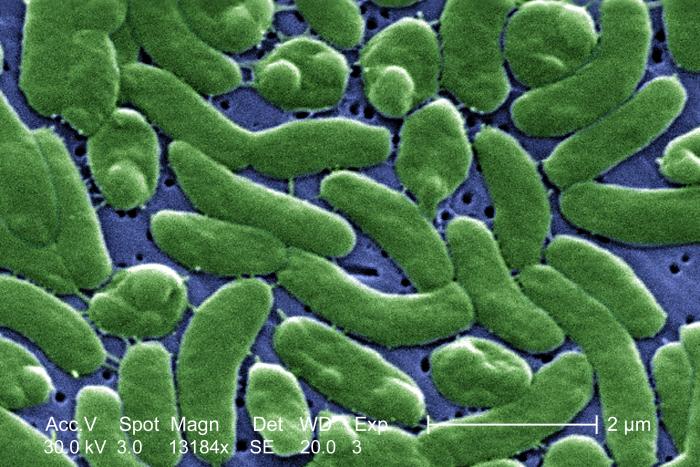
ATLANTA — The bacterium kills roughly one in five people it infects, sometimes within a day or two of the first symptoms, and this year it has been found somewhere new: the coastal waters off Long Island, New York, a region that has not historically had to worry about it. Vibrio vulnificus, the organism behind so-called flesh-eating infections, has also sickened eight people in Florida in 2026 and prompted Mississippi health officials to issue public warnings in June. The spread is being tracked by a federal public health system that has fewer people watching for it than it did a year ago.
“It is important to track coastal temperatures, and that will relate to the distributions of Vibrio,” said Christopher Gobler, a marine scientist at Stony Brook University whose team identified the bacteria in Long Island waters this spring. Warmer coastal water widens the range in which the bacterium can thrive, and researchers increasingly treat its northward creep as a sentinel of a broader problem: pathogens showing up in places the country’s disease-surveillance system was not built to expect them.
That system has been thinned deliberately over the past year and a half. Tom Frieden, a former CDC director who now runs the public health initiative Resolve to Save Lives, put it bluntly: “We are letting down defenses that were necessary to protect against microbial threats.” The specifics behind that assessment are concrete rather than rhetorical. Some CDC laboratory units, including those handling poxviruses and rabies, have lost up to half their personnel; the malaria lab has lost even more. American government scientists have been barred from communicating with counterparts at the World Health Organization, the body that coordinates global surveillance for influenza, tuberculosis and HIV. A National Institutes of Health laboratory in Frederick, Maryland, that had built a world-class program studying Ebola was shuttered last year, its staff laid off and its outbreak-response research halted mid-stream.
The pattern extends to threats the country has already been caught flat-footed by. In 2025 the administration eliminated funding for a pilot project studying hantavirus, the same family of pathogen that killed passengers aboard a cruise ship earlier this year in an outbreak that spread across dozens of countries before health authorities declared it contained. Jeanne Marrazzo, chief executive of the Infectious Diseases Society of America, and Ashish Jha, who coordinated the White House’s Covid-19 response before this administration, have both said the cuts leave the country structurally less able to catch the next outbreak early, when early detection is cheapest and most effective.
Emily Hilliard, a spokesperson for the Department of Health and Human Services, defended the department’s direction rather than disputing the specifics. “The Department is putting American families at the center of public health decision-making,” she said, a framing that describes a philosophy without engaging the question of whether fewer scientists in fewer labs can still catch a novel pathogen before it spreads. Neither HHS nor the CDC has offered a specific accounting of what surveillance capacity, if any, has been rebuilt to replace what was cut.
Vibrio is not an isolated case study. Eastern Herald has reported separately on how the New World screwworm crossed into Texas for the first time since 1966 just as the USDA’s Animal and Plant Health Inspection Service lost roughly 1,300 of its own frontline staff, leaving 55 Texas counties without a single inspector on the ground. And weeks before that, as 6.5 million World Cup visitors prepared to move through 16 host cities, public health officials were already describing the CDC’s nearly quarter-lost workforce as the binding constraint on the country’s ability to trace an outbreak, not the pathogens themselves. Three different threats, three different agencies, the same structural story: detection capacity removed first, consequences discovered afterward.
CDC data shows Vibrio vulnificus causes roughly 80,000 infections a year nationally, the large majority mild, but the agency’s own published figures also count 429 wound infections and 135 cases tied to contaminated food serious enough to be documented individually. Bill Marler, a food safety lawyer who has spent decades litigating outbreak cases, has pointed to reporting itself as a weak link: cases are often confirmed well after the fact, by which point the water conditions, food supply chain, or wound exposure that caused them have moved on. What is not yet known, and what neither Gobler’s coastal monitoring nor the CDC’s national case counts can answer on their own, is how many Vibrio infections this warming season are going undetected entirely, in a surveillance system with fewer people left to look.