
LOS ANGELES — The Love Boat sailed into American living rooms every Sunday night for nine seasons, carrying its cargo of romance and lightweight comedy to audiences who had come to rely on it as a kind of weekly ritual. The man who built that ship, who argued for the concept, shaped its production, and steered it through ABC’s development process, died last Tuesday at 86. For the four decades that followed, almost nobody in Hollywood had been looking for him.
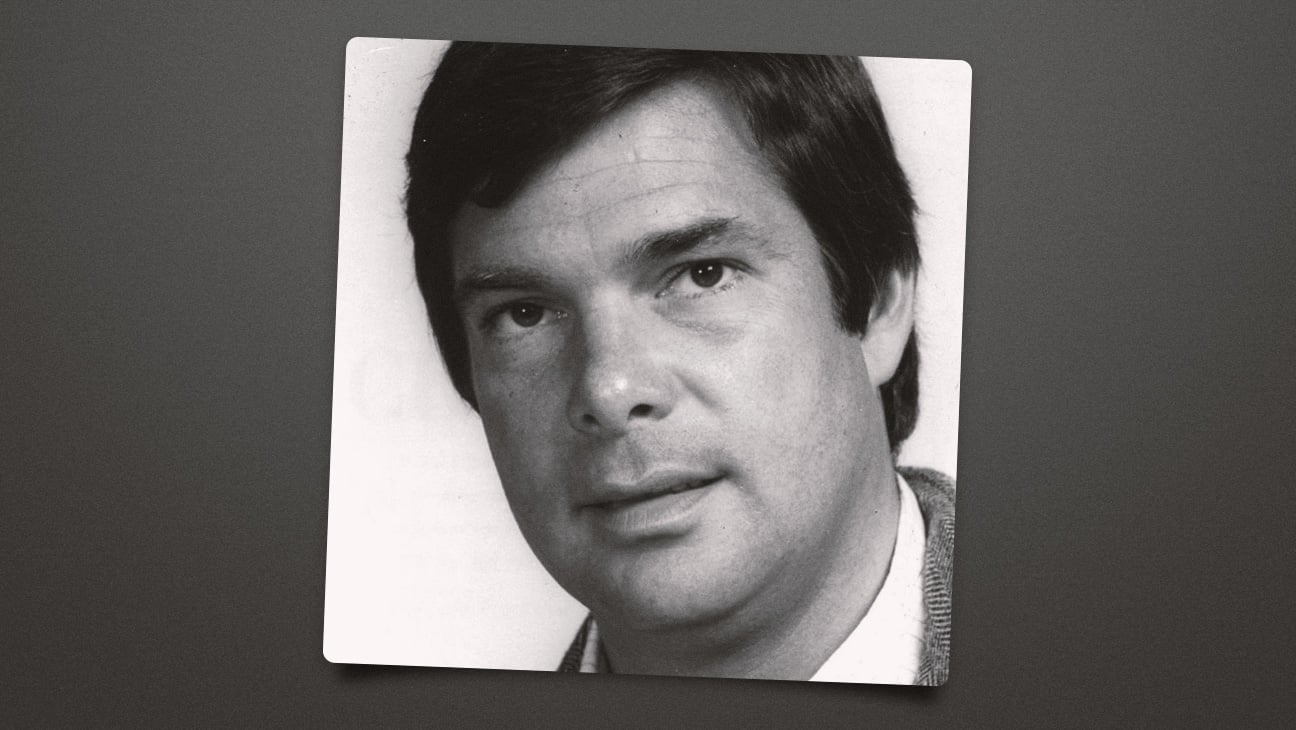
Wilford Lloyd Baumes, the television producer and production designer whose credits shaped three of the era’s most recognizable properties, died July 1, The Hollywood Reporter announced. His family asked that donations in his memory be made to the Alzheimer’s Association. No cause of death was given.
Before The Love Boat made his reputation visible beyond the industry, Baumes had already done his most formally serious work. QB VII, the 1974 television adaptation of Leon Uris’s novel about a Holocaust survivor’s postwar defamation battle against a British surgeon, was not an obvious commercial proposition: a morally knotted legal drama stretched across three hours of prime time. Baumes helped make it work, and the Academy rewarded the result with seven Emmy Awards on a single production. That figure placed QB VII among the more decorated television undertakings of the decade, and it put Baumes alongside the small cohort of craftsmen whose industry reputations ran well ahead of their public recognition.
Three years later came The Love Boat. Working with producer Douglas S. Cramer and Aaron Spelling, Baumes helped develop the concept that became one of ABC’s defining properties: a floating anthology drama that gave guest stars a weekly berth and gave audiences something warm and unchallenging to close out the weekend. The Pacific Princess sailed from 1977 to 1987, nine seasons and more than 250 episodes, and became so synonymous with a certain strain of American leisure television that its name still functions as cultural shorthand for comfortably engineered entertainment.
The Love Boat was, among other things, a machine for giving mid-career performers a graceful second act, a revolving roster of guest stars who found that the Pacific Princess offered welcome visibility in a business not known for its patience. The same era produced a generation of actors and creative figures whose backstories from that period of network television are still surfacing; among them, the work of character actor Michael Byrne, who died the same week as Baumes, reflects how thoroughly that television moment shaped careers that outlasted it.
Prior to both QB VII and The Love Boat, Baumes had been part of the production team that launched Wonder Woman, working on the pilot and the first two seasons of the Lynda Carter series before it moved to CBS. His involvement across three such different properties (critical prestige, mass-market escapism, superhero iconography) represented a body of work that most producers of his generation would have spent the rest of their careers trading on.
Instead, he left.
Baumes held a master’s degree in design from the University of California, Berkeley, a background that had shaped both his production work and, apparently, what followed it. By the early 1980s, with The Love Boat still in strong ratings and his standing in the industry solid, he turned his training away from the screen and toward residential projects. The homesteads he created were eventually featured in Santa Barbara Magazine and Architectural Digest: a different audience, a different scale, and a different definition of what it meant to build something for people to inhabit.
His departure registered less as a notable exit than as an absence that no one particularly marked. The Love Boat continued without him, and then continued without the people who had continued it, moving from network prime time to syndication and eventually to streaming, where it has introduced successive generations to the Pacific Princess without any occasion to revisit who assembled it. QB VII, the more formally substantial credential in Baumes’s career by any critical measure, settled into the respectful obscurity that has claimed most serious American television from five decades ago. Ronnie Schell, a performer of the same television era who died in June, was similarly unknown to most audiences born after the shows that made his name.
The gap at the center of Baumes’s professional biography is the decision itself. He left a career with momentum, at a moment when most television veterans were consolidating the positions they had built. Whatever drove that choice, he did not appear to publicize it, and the industry that had benefited from his most productive years did not appear to press the question. The silence held for four decades, during which his most famous creation kept finding new audiences who had no particular reason to know his name.
Baumes was born November 24, 1939, in Cincinnati, Ohio, one of three sons of Ogden Baumes, a physician. He grew up in Amberley Village, attended Walnut Hills High School and then Dennison University, and earned his master’s degree in design from the University of California, Berkeley. He served in the United States Navy before entering television.
He is survived by his nephew Ross and niece Lee Ann.