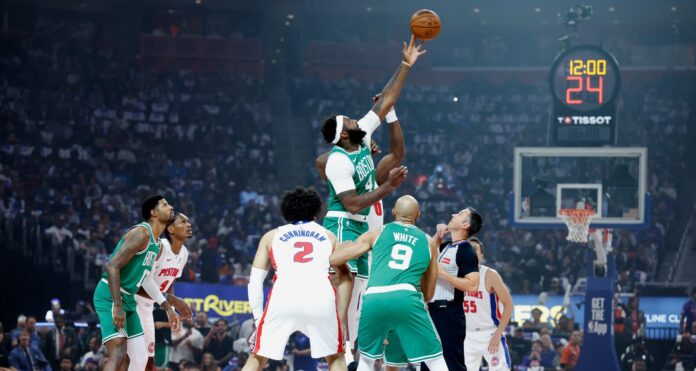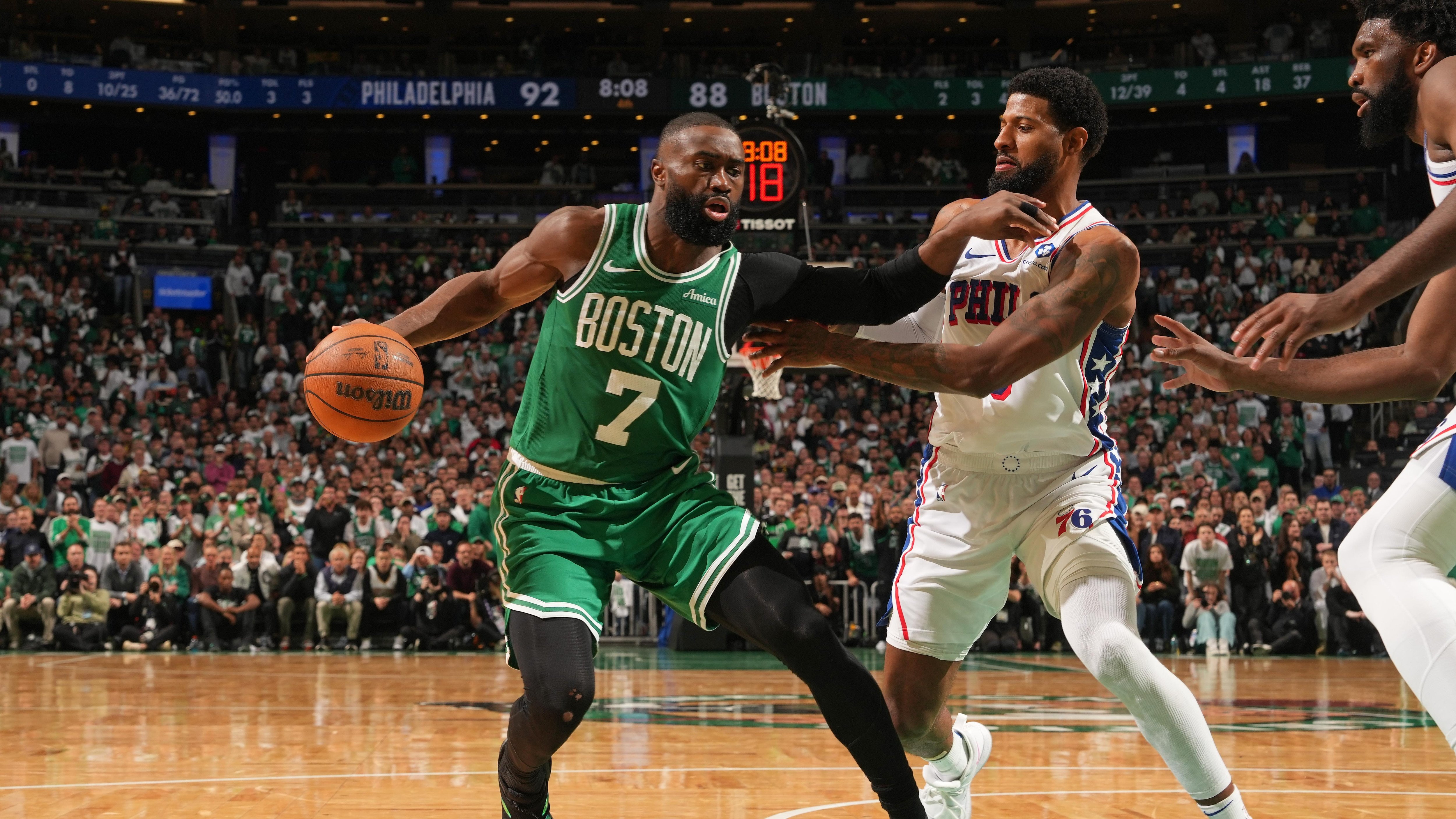

BOSTON — Jaylen Brown did not ask to be traded. The Boston Celtics did not tell him he was being traded until it was done. So when Brown broke his silence Wednesday evening, the phrase he settled on, “excited and disappointed at the same time,” landed with the careful precision of a man who understood exactly what those words would be read for.
Brown spent nine seasons in Boston. He helped the Celtics win the 2024 NBA championship. He came off his best statistical season in the league, posting career highs of 28.7 points, 6.9 rebounds and 5.1 assists per game, earning a spot on the All-NBA Second Team and finishing sixth in MVP voting, and was handed a transaction in return. The Celtics sent him to the Philadelphia 76ers in exchange for Paul George, a 2028 first-round pick convertible into two seconds, a 2031 unprotected first and two future second-round picks, as Eastern Herald reported when the deal was announced Wednesday afternoon.
“Every city has its own identity, its own passion, and its own expectation,” Brown wrote in his statement. “I respect that, and I’m looking forward to earning that respect the only way I know how, through the work.”
That is a statement with no villains in it. There is room in that framing for what Brown knows: that ESPN’s Brian Windhorst reported Boston was “very motivated” to make this trade, that the organization had concerns it apparently never surfaced directly to him, and that his off-court habits, including Twitch streaming and the persistent comparisons to Jayson Tatum, had reportedly become friction inside the front office. Brown had liked an Instagram comment suggesting he deserved to play in a city that respects him. That small gesture said more about the state of his Boston relationship than anything he posted afterward. Brad Stevens, the architect of this deal, chose to address that friction by moving it rather than managing it.
Brown’s numbers did not make the case for trading him. At 29, he posted career highs across every major statistical category, finished in the top six of MVP voting and gave the Celtics exactly the kind of two-way wing presence that championship rosters require. Bleacher Report noted the trade logic rests elsewhere: Paul George is 36 and costs less in roster friction, bringing a different temperament, one that does not generate headlines about streaming schedules or the ongoing question of who matters more in a Tatum-led franchise.
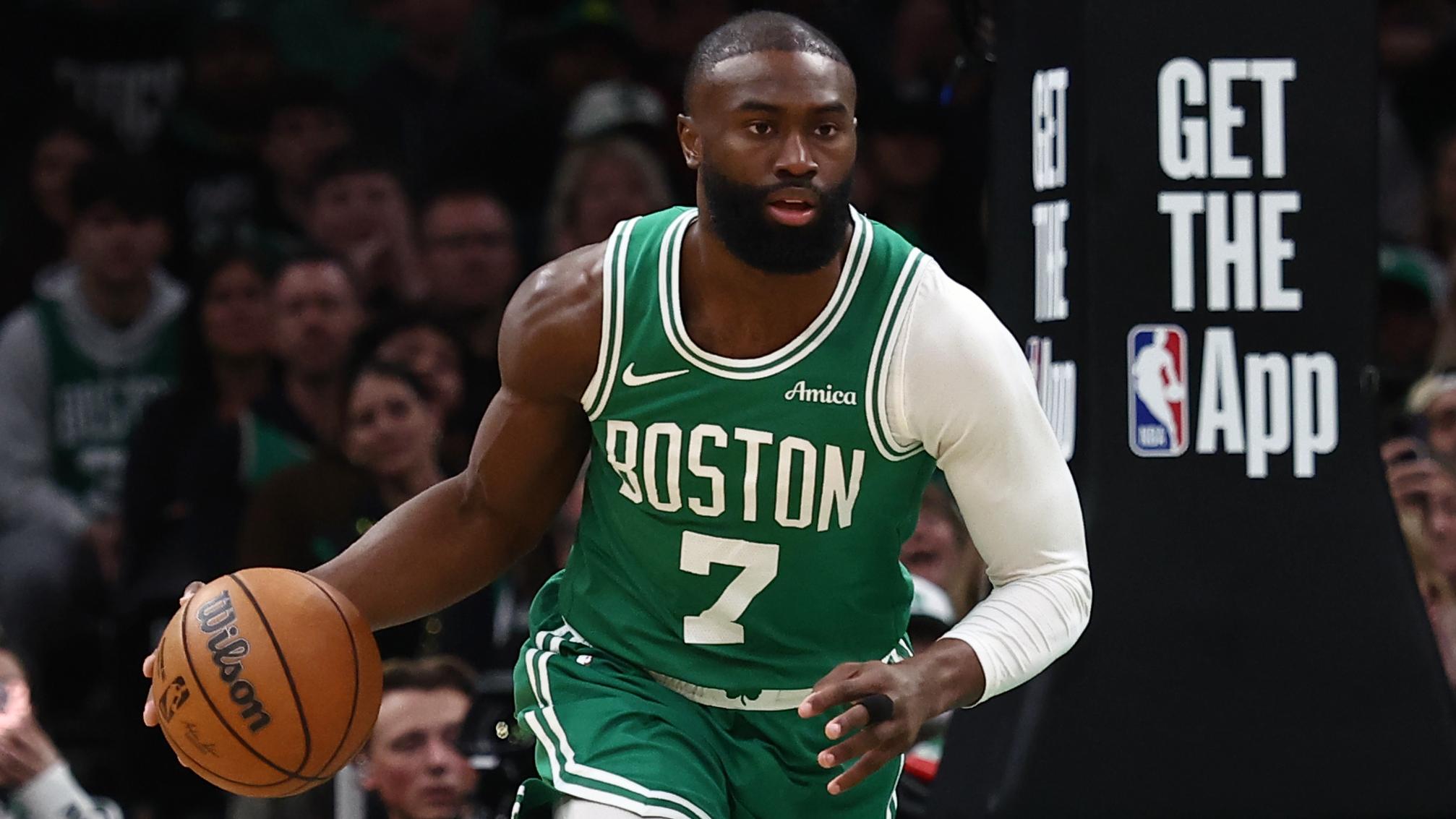
What the Celtics acquire is shorter term. George, at his age, is a complement rather than a cornerstone, a name that helps the team stay competitive in the short window before Tatum’s prime years begin shaping the roster’s identity entirely. The Celtics have also been active elsewhere this summer, adding Mitchell Robinson from the Knicks to shore up their frontcourt. The picks could compound into something meaningful over time, but the fundamental exchange is six or seven prime Jaylen Brown seasons, traded for a George rental and a lottery on draft capital.
Brown’s statement gave Philadelphia nothing to work with except confidence. “Looking forward to earning that respect the only way I know how, through the work.” In a league that trades players the way cities trade infrastructure bonds, the one move available to the player is to control the response. Brown did exactly that in five sentences, no fingerprints, nothing that could be used against him or that could embarrass the organization he was just sent to.
The 76ers are entering a retool rather than a rebuild, though the distinction is thinner than their front office would acknowledge. Eastern Herald had reported Portland as a front-runner for Brown’s services last week, making Philadelphia’s eventual acquisition more striking. For the 76ers, the bet is that Brown at 29 is closer to a legitimate co-star who rebuilds the franchise’s credibility than a player who merely fills the void the Joel Embiid era left behind. With Brown posting career highs across the board, that bet carries real logic. Whether the roster around him can meet the expectation is the part no one can answer yet.
What Brad Stevens will not say, publicly, is why he moved Brown now rather than later, and what specifically about the last several months made the calculus shift. Bleacher Report reported that Brown said he is still processing the end of his Celtics tenure. That absence of explanation, the silence about what Jaylen Brown became inside a championship organization, is exactly what his statement does not touch. He is too careful for that. So is Stevens.