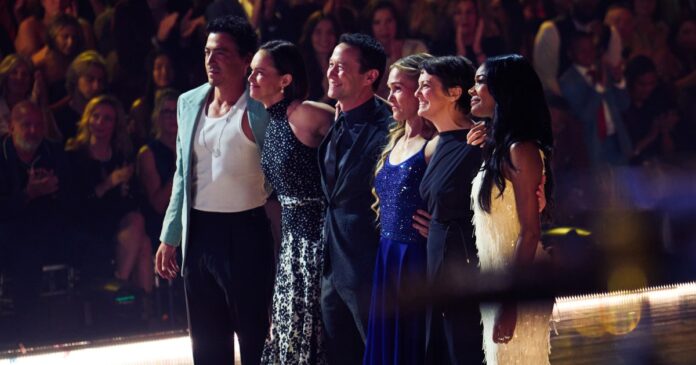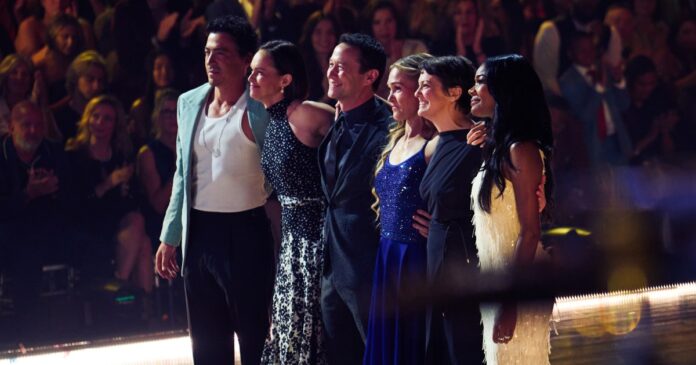

ASPEN, Colo. — Nobody in Hollywood builds a résumé like Jodie Foster’s, and at the Aspen Ideas Festival on Wednesday she used it to say something about F1 that neither Brad Pitt, director Joseph Kosinski, nor producer Jerry Bruckheimer has been inclined to answer.
“F1 was made by AI,” Foster said during a panel titled “Who Owns the Future of Hollywood?” “The structure was exactly the structure that you would learn in school.”
She said it without contempt. The movie, she noted, had gone on to make millions of dollars, an observation she offered as fact rather than condemnation. But spoken by a two-time Oscar winner with five decades of studio experience, the assessment carries a specific weight. Foster was not dismissing a flop. She was describing a commercially successful, four-Oscar-nominated film and suggesting that its success no longer required the kind of storytelling judgment that used to separate a good script from a mediocre one.
The film was directed by Kosinski from a screenplay he co-wrote with Ehren Kruger, and produced by Bruckheimer, Pitt, Dede Gardner, Jeremy Kleiner, Lewis Hamilton, and Chad Oman. It earned nominations for Best Picture, Best Sound, Best Film Editing, and Best Visual Effects at this year’s Academy Awards, taking home Best Sound. At the domestic box office, it performed well enough to count among the early summer season’s dependable theatrical draws.
Foster’s remarks came as part of a broader conversation about where technology is taking the industry. Asked whether AI could replace actors, she described a landscape she suggested was already underway: “Face-swapping and all the things you guys can do on your iPhone, we can do them even better with real fancy people.” Her co-panelist was Michael Lynton, the former Sony Pictures chief. The session drew an audience accustomed to absorbing uncomfortable ideas. Aspen Ideas Festival is, almost by design, a venue for saying things that polite industry luncheons tend to avoid.
The candor is characteristic of Foster. She directed Money Monster and The Beaver after decades of starring roles, and has spoken about the creative pressures reshaping Hollywood with more directness than most of her peers. What makes her F1 comment notable is not the critique itself — AI-assisted screenwriting has been an open industry conversation since the Writers Guild of America’s 2023 strike put it on the front page — but who is saying it, and about which film. F1 is not an anonymous streaming title. It is a marquee theatrical release featuring one of the industry’s biggest stars, positioned as precisely the kind of immersive experience studios have argued can keep audiences paying for movie tickets.
Neither Kosinski nor Kruger has responded publicly to Foster’s remarks. The Aspen panel took place on July 2. A representative for Bruckheimer Productions did not immediately respond to a request for comment, and Pitt’s representatives have not addressed it. The silence has its own logic: disputing the claim requires engaging with it, and engaging with a two-time Oscar winner’s assessment of your film’s creative process, before an audience already primed to take AI seriously, is not obviously a favorable position.
Foster’s comment arrives in the middle of an industry unsettled by its own relationship with generative tools. The debate over AI reconstruction of deceased performers has made clear that Hollywood is moving faster than its ethical framework can track. Studios have remained reluctant to specify what role, if any, AI played in a given project. The WGA’s 2023 contract included disclosure requirements, but enforcement depends on the same companies that have a structural interest in keeping that answer vague.
Whether F1‘s screenplay was literally assisted by generative tools, or whether Foster was using AI as shorthand for a kind of formula-driven assembly — the three-act structure, the underdog arc, the climactic race, the reluctant mentor — is not entirely clear from her remarks. Both readings are available. One describes a technology. The other describes a habit of mind that Hollywood developed long before the tools existed to mechanize it, and that the industry has never been entirely honest about.
The Hollywood Reporter reported Foster’s remarks on Thursday. What the Aspen panel left in the room is the harder question she did not answer herself: if a film can be assessed by one of the industry’s most experienced voices as structurally AI-generated, and still earn Best Picture consideration and a summer box-office run, the conversation about AI in Hollywood is no longer about whether the technology can produce acceptable work. It is about whether the people with the standing to name it, in public, will.