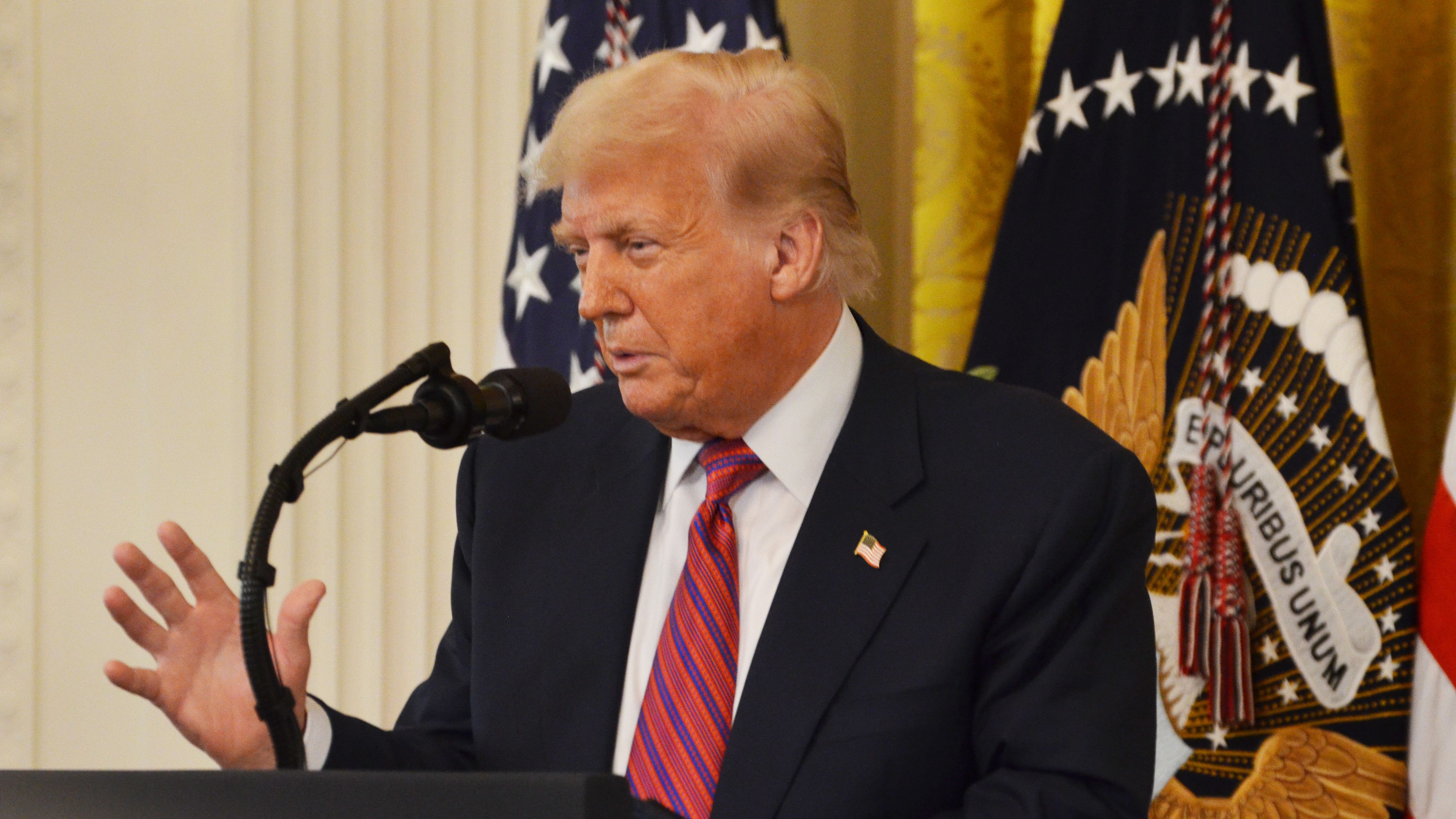

WASHINGTON – While the Senate was negotiating the most sweeping cryptocurrency legislation in American history, the president who would sign it into law was already collecting royalties from the same industry. Donald Trump’s annual financial disclosure, filed Wednesday with the federal Office of Government Ethics, showed more than $1.4 billion in cryptocurrency income for 2025 – a figure that transformed what had been an abstract conflict-of-interest argument into a documented financial fact at the precise moment Congress was trying to write the rules.
The breakdown in the disclosure is specific. Royalties from Celebration Coins, the company behind the TRUMP and MELANIA meme tokens that Trump endorsed days before his January 2025 inauguration, totaled $635 million. Sales proceeds from World Liberty Financial, the decentralized finance platform his family launched ahead of his return to the White House, added $527 million. Equity stakes in holding companies connected to both ventures contributed roughly $263 million more. Crypto income accounted for more than half of the $2.2 billion in total earnings the president reported for the year, according to Roll Call’s analysis of the filing.
No previous American president had launched a personal branded cryptocurrency while in office, nor collected ongoing royalties from one. The structure of Celebration Coins means Trump receives a percentage of transaction volume regardless of the coin’s price trajectory. Many retail buyers of the TRUMP token did not have access to that arrangement. Multiple news organizations reported this week that a substantial number of early investors in the meme coin sustained significant losses during the same period the president’s royalty income grew.
The filing reached Washington during sensitive negotiations over a digital assets market structure bill that Senate Banking Chairman Tim Scott of South Carolina had hoped to bring to a floor vote before the August recess. Scott’s timeline is now complicated by the arithmetic the disclosure introduced.
“We desperately need legislation that includes an agreement on ethics – that would apply to the president, vice president, and all of us,” said Senator Angela Alsobrooks of Maryland. Senator Elizabeth Warren of Massachusetts, who has made crypto oversight a sustained legislative priority, put the requirement plainly: the bill heading to the floor “must prevent the president, vice president, senior administration officials, members of Congress, and their families from profiting off the crypto industry.” Senator Ruben Gallego of Arizona wrote that “Trump is using the presidency to profit off the American people” and pledged to work to “crack down on his corrupt crypto dealings.”
Walter Shaub, who led the Office of Government Ethics during the Obama administration and briefly into the first Trump term, had described Trump’s crypto activities to NPR as a “clear conflict of interest” even before the disclosure confirmed how large those activities had become. Trump pushed back, describing his financial report as evidence of legitimate business success. The White House did not address questions about whether he would recuse himself from crypto-related regulatory and legislative decisions. No recusal requirement currently exists in statute.
The structural conflict that watchdogs had flagged for months is now a matter of public record. Since January 2025, the Trump administration has appointed regulators broadly sympathetic to the digital asset industry, directed a halt to enforcement actions that were proceeding against major crypto exchanges under the previous administration, and publicly championed both the CLARITY Act and parallel stablecoin legislation. The president who oversees those decisions is also the country’s highest-earning crypto entrepreneur by a considerable margin.
The CLARITY Act – the comprehensive market structure bill that the industry has spent more than $189 million in election contributions this cycle to pass – requires navigating the same conflict it now makes visible. As the campaign finance record shows, Coinbase, Ripple, Gemini, and their affiliated PACs have funded the political infrastructure that brought the bill this far. The president’s disclosure shows that he has personally collected more than the industry’s combined midterm spending budget from the products those companies helped popularize.
The timing intersects with one more development. The Supreme Court, in a June 30 ruling, expanded permissible coordination between political parties and campaigns, widening the channels through which industry money reaches candidates. The decision arrived three days before the filing that quantified what the industry’s most prominent political beneficiary had personally extracted from it.
Democrats in the Senate are demanding that any floor-ready bill include provisions specifically prohibiting senior executive branch officials from endorsing, promoting, or collecting fees from digital asset products while in office. Republicans have resisted on grounds that such restrictions could hamper legitimate crypto adoption. The gap between those positions existed before Wednesday. The disclosure makes it harder to frame that gap as a technical disagreement about regulatory design.
What remains unresolved – and what no version of the bill currently addresses – is the question of what to do about conflicts already in place rather than merely prospective ones. The Senate debate has focused on preventing future arrangements of this kind. The disclosure made clear that the present arrangement arrived first, accumulated to $1.4 billion, and is not going anywhere while Congress writes the rules.
Related Posts