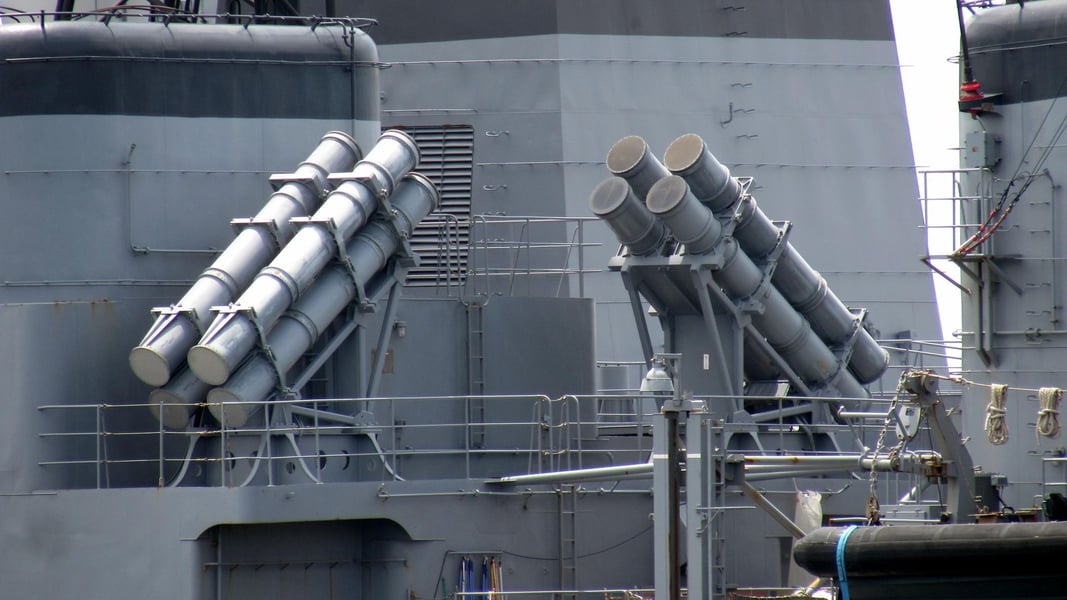

WASHINGTON — A Shahed drone costs Iran a few thousand dollars to build. Shooting one down with a Patriot missile costs the United States several million. That math, exposed repeatedly during this year’s air war with Iran, is what the Army just paid AeroVironment Inc. (NASDAQ: AVAV) $500 million to fix.
The Army Contracting Command at Detroit Arsenal awarded the three-year, firm-fixed-price contract this week, covering counter-drone systems built around AeroVironment’s existing Switchblade loitering munitions and its LOCUST directed-energy laser, which the company says can down a small drone for as little as $3 a shot. Specific locations and dollar amounts will be set through individual task orders as they come in, meaning the $500 million figure is a ceiling the Army has committed to spend against, not a check already cut.
The contract lands four days after AeroVironment reported fiscal fourth-quarter results that beat Wall Street on every meaningful line: $1.84 per share against a $1.46 consensus, revenue above $642 million against a $559 million estimate, autonomous-systems revenue of $492 million clearing expectations by $90 million. Revenue was up 133 percent year over year. The stock jumped nearly 19 percent on the earnings alone, then added to that gain when the Army deal was announced. Funded backlog now sits at $1.2 billion, up 65 percent from a year earlier.
Chief Executive Wahid Nawabi framed the moment as a scaling problem rather than a demand problem: the company’s task now is “executing with excellence and strengthening our supply chain to accelerate the commercialization of our platforms,” as AeroVironment positions itself for what Nawabi has described as global demand spanning both lethal and non-lethal drone technology. That framing understates how unusual the backdrop is. Six weeks ago, AeroVironment was a mid-size drone maker known mostly for the Switchblade’s use in Ukraine. It is now guiding investors toward $2.13 billion to $2.23 billion in fiscal 2027 revenue, roughly triple where the company stood two years ago.
The Iran conflict is the proximate cause, and the Pentagon has not been subtle about why. Cheap, disposable drones like Iran’s Shaheds forced US and allied air defenses into a losing cost equation: interceptors worth more than the aircraft carriers they protect, expended against targets that cost less than a used car. The Army’s own contracting language now treats “counter-sUAS” as a distinct, urgently funded category rather than a niche add-on to conventional air defense, and AeroVironment is not the only company benefiting. Perennial Autonomy landed a comparable $500 million Pentagon counter-drone award in May, meaning the Army has now committed a billion dollars to this specific problem in under two months, split across two vendors it apparently does not want to depend on singly.
The dual-award structure is itself a signal worth reading. The Pentagon has spent the past three years relearning, publicly and expensively, what happens when a single contractor becomes a single point of failure in a supply chain suddenly facing wartime demand. Splitting a fast-moving, urgently needed category between AeroVironment and a competitor is not generosity. It is the Army hedging against exactly the commercialization and supply-chain risk Nawabi’s own statement obliquely acknowledges.
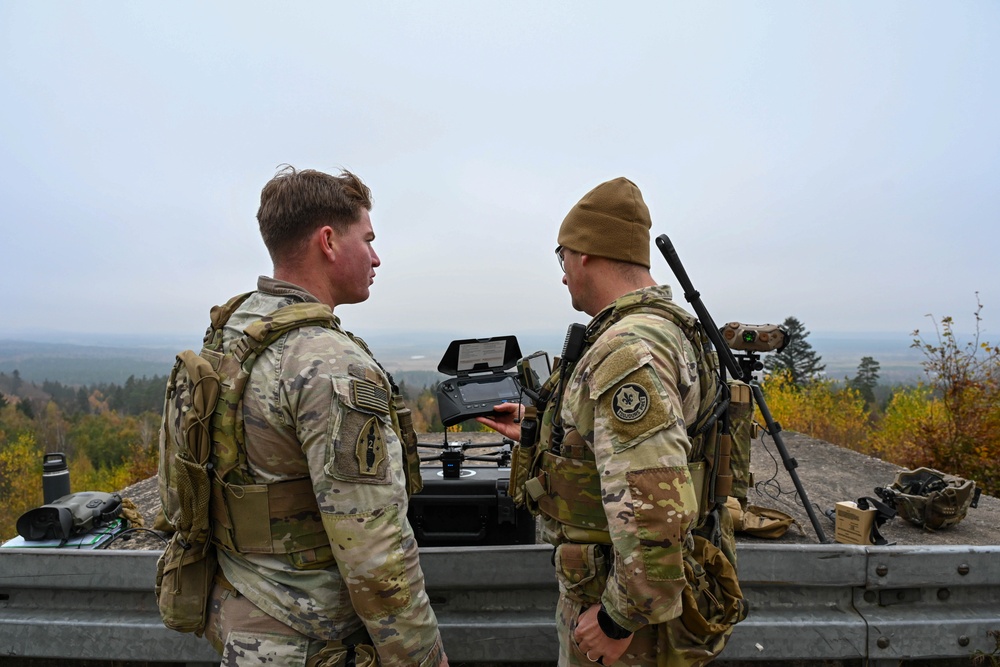
What the contract does not resolve is whether AeroVironment can actually build fast enough to matter. A $500 million ceiling spread across three years and multiple task orders is a demand signal, not a delivered capability, and the company’s own backlog-to-revenue ratio suggests orders are still outpacing what factories can turn into finished systems on any predictable schedule. Wall Street has rewarded AeroVironment for growth it has already reported. Whether the Pentagon gets counter-drone systems fielded before the next Shahed-style barrage, rather than a year or two after, is the part of this story that a contract announcement and a stock chart cannot answer.
AeroVironment has not disclosed how it plans to allocate the new award between LOCUST production, Switchblade manufacturing, and whatever else the Army’s task orders eventually specify. Nawabi’s public remarks have addressed strategy and market position more than manufacturing throughput, an omission that matters more here than in most earnings-season commentary, because throughput, not demand, is now the constraint the company itself has implicitly conceded.
Related Posts