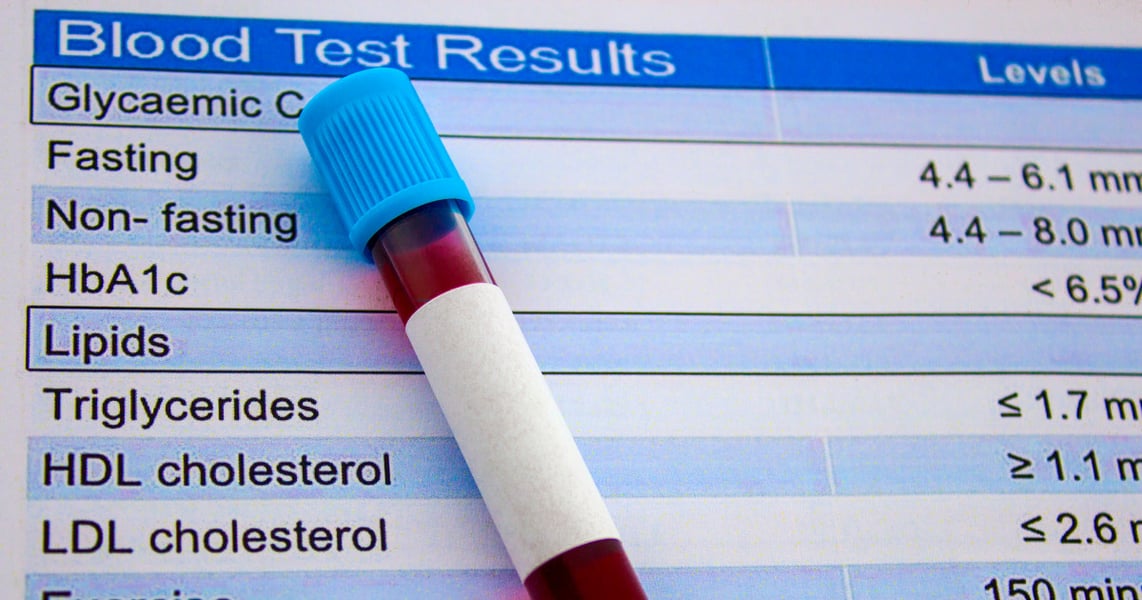

CHICAGO – Every year, tens of millions of Americans sit through a routine blood draw that ends with a single number: their LDL, or bad-cholesterol level. That figure shapes decisions about whether to start a statin, raise a dose, or add a second medication. A study published Monday in JAMA found that LDL, despite its ubiquity, may not be the most reliable guide for those decisions, and that a less commonly ordered alternative could prevent substantially more heart attacks and strokes.
The alternative is apolipoprotein B, or apoB. Unlike LDL, which measures the concentration of cholesterol in the blood, apoB counts the actual number of cholesterol-carrying particles. That distinction matters because a person can have a normal LDL level while still harboring a large number of small, dense particles, each capable of penetrating arterial walls. Two patients with the same LDL reading can carry very different cardiovascular risks depending on their total particle count. LDL cannot detect that difference. ApoB can.
Ciaran Kohli-Lynch, PhD, an assistant professor of preventive medicine at Northwestern University Feinberg School of Medicine who led the study, described the difference in practical terms. ApoB, he said, “counts the total number of harmful particles in the blood,” making it a more direct indicator of cardiovascular risk than cholesterol concentration alone. Research, he added, “strongly shows that apolipoprotein B is better at identifying who is at risk” than the LDL test, because it captures the full particle burden rather than a single measure of cholesterol volume.
The Northwestern research team built a computer simulation of 250,000 U.S. adults who were eligible for statin therapy but did not yet have cardiovascular disease. The model compared three clinical strategies, each using a different marker to decide when treatment needed intensification: LDL below 100 milligrams per deciliter, non-HDL cholesterol below 118 mg/dL, and apoB below 78.7 mg/dL. When patients fell short of their assigned goal, the simulation escalated care first to a stronger statin, then to ezetimibe, a second cholesterol-lowering medication. Outcomes were tracked across a lifetime, including heart attacks, strokes, life-years gained, quality of life, and total healthcare costs.
The apoB strategy outperformed both alternatives. It prevented more cardiovascular events than either LDL or non-HDL guidance and delivered those additional benefits at a cost that Kohli-Lynch described as representing “good value for U.S. healthcare payers.” The study, published in JAMA (2026; 335(17):1507), is the first comprehensive demonstration that apoB-guided statin treatment is cost-effective at the population level. The central question the team set out to answer, as Kohli-Lynch framed it, was whether “spending extra money to use apoB instead of LDL to guide treatment intensification” was justified. The simulation’s answer was yes.

But simulations are not clinical trials. Patients in real medical systems do not follow prescribed intensification pathways as reliably as modeled patients do, and individual variation in metabolism, adherence, and access to follow-up care can narrow projected benefits in ways no model fully captures. Whether apoB guidance actually prevents the additional heart attacks and strokes the simulation projects will require prospective trials in real patients to confirm. That evidence does not yet exist.
The timing of the paper is not incidental. Updated American Heart Association guidelines now call for earlier and more aggressive intervention in primary cardiovascular prevention. When more patients are being pushed toward intensified statin treatment under those protocols, the accuracy of the metric used to identify who genuinely needs that push becomes more consequential. The Northwestern study argues that LDL, as that metric, is leaving preventable cardiac events on the table.
Despite accumulating evidence for apoB’s superiority, the test remains underordered in routine practice. Measuring it requires an additional blood draw beyond the standard lipid panel, and reimbursement coverage varies by insurer. The result is a persistent gap between what the research supports and what most patients receive during a cholesterol workup. Published guidelines from major cardiovascular societies have endorsed apoB measurement for years. The routine ordering has not followed.
The debate over vascular risk metrics is moving on more than one front. Separately, Edinburgh scientists published research suggesting that lacunar strokes, a common type affecting small brain vessels, are caused by widening and damaged vessel walls rather than the fatty plaque long assumed to be the culprit, overturning decades of standard treatment assumptions and raising similar questions about how well current diagnostic frameworks reflect what is actually happening inside blood vessels.
Taken together with other preventive health findings this week, including a Cedars-Sinai analysis linking regular coffee consumption to substantially lower liver cancer risk in the largest study of its kind, the JAMA paper reflects a broader moment in evidence-based medicine when accumulated data keeps running ahead of clinical practice. The study was co-authored by first author Samuel Luebbe, MD, and co-senior author John Wilkins, MD, an associate professor of cardiology at Northwestern. For patients who want a fuller picture of their cardiovascular risk, apoB testing is available at most major commercial laboratories. Whether physicians begin to order it routinely depends on decisions in clinical guideline committees that this paper has now put under considerably more pressure.