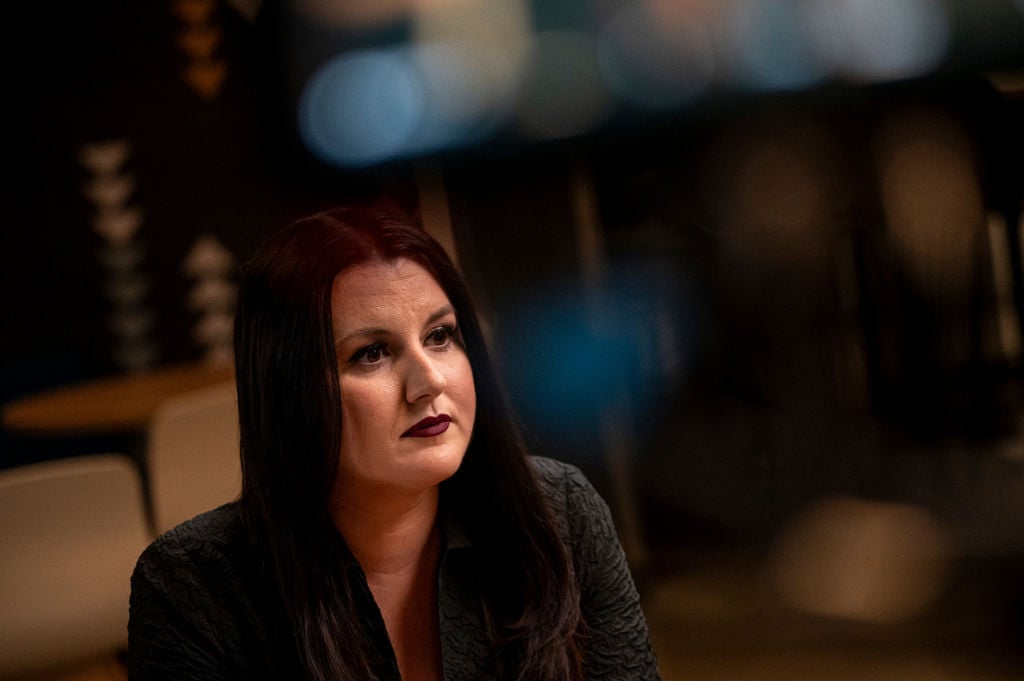

SAN FRANCISCO – Fidji Simo spent most of the past two months managing a relapse of a neuroimmune condition from somewhere other than OpenAI’s San Francisco offices. On Thursday, she confirmed she will not return full-time.
In a staff note reported by TechCrunch and also obtained by the Wall Street Journal, Simo said her medical leave has been longer and harder than she expected, and that she will transition from her role as CEO of Applications into a part-time advisory position. The announcement landed on the same day that OpenAI launched its GPT-5.6 model family and ChatGPT Work, a productivity agent targeting enterprise clients, making Thursday one of the company’s most active news days in months. Whether the timing was deliberate is an open question the company has not addressed.
Simo joined OpenAI in May 2025 in a role the company created specifically for her. As CEO of Applications, she consolidated the company’s consumer, product, and commercial operations under a single reporting line. COO Brad Lightcap, CFO Sarah Friar, and CPO Kevin Weil all began reporting to her rather than directly to Sam Altman, who stepped back to focus on research, safety, and compute infrastructure. It was the closest thing OpenAI had assembled to a professional management layer between its founder and the rest of the business.
That structure has since thinned. Weil departed OpenAI at some point after Simo first disclosed her illness in April. CMO Kate Rouch left at the same time, citing her own health. Lightcap moved into a loosely defined special projects role. The company’s executive infrastructure, which Simo was brought in specifically to strengthen, has contracted around her absence rather than growing past it.
The stakes of this realignment are not modest. OpenAI was most recently assigned a private-market valuation of $852 billion. Sustaining that figure, let alone converting it in a public offering, requires a management team that can credibly sit across a table from institutional investors and explain how a research laboratory scales into a durable technology business. Simo, who led Instacart through its 2023 IPO after more than a decade at Meta running the Facebook app, was precisely that person for Altman. She had been widely seen within the company as the executive most likely to translate OpenAI’s product story into a language Wall Street trusts. Her departure removes that certainty at a moment when the company can least afford the uncertainty.
The succession picture is murky. Denise Dresser, who joined as chief revenue officer in December, is the most visible candidate for a broader mandate. She ran Slack as CEO for two years and spent 14 years at Salesforce before that, experience that maps onto the enterprise sales expansion OpenAI is currently prioritizing. But Dresser’s background is in revenue and enterprise, not consumer product and growth, which is where the company’s most visible structural problem sits. Greg Brockman, OpenAI’s co-founder and president, has been informally covering product strategy during Simo’s absence. A formal expansion of his role seems unlikely given his existing responsibilities, and Altman has said nothing publicly about a succession plan.
The consumer side of OpenAI’s business was Simo’s primary mandate, and it has not gone well. ChatGPT growth decelerated in the back half of 2025, missing internal revenue targets that Simo was brought in partly to address. The company pivoted resources toward coding tools in response, an area where Anthropic has been outperforming OpenAI consistently. This week’s GPT-5.6 launch included a coding-capable Sol model framed as a direct Anthropic challenger, and OpenAI also shut down its Atlas browser Thursday, consolidating its product strategy around ChatGPT as a central hub. The consumer growth problem that preceded these pivots remains unresolved.
Simo’s work at OpenAI extended beyond the organizational chart. She restructured the company’s employee equity practices, eliminating the standard 12-month vesting cliff for new hires and allowing stock to begin accruing from day one. The change, described internally as a way for employees to take risks without fear of losing unvested stock if let go early, reflected the intensity of the competition with Anthropic and Google DeepMind for AI engineering talent. OpenAI was projected to spend $6 billion on stock-based compensation in 2025 alone, a figure that illustrates the financial scale of the talent war she was managing.
Thursday’s announcement was framed as a medical decision rather than a corporate one, and there is no obvious reason to doubt that framing. Simo first disclosed her neuroimmune condition in April, before completing a full year at OpenAI. She had been expected to assume even greater responsibility once the company moved toward a public listing, given her track record at Instacart and her ability to build commercial structures inside fast-moving technology companies. That the step-back is happening now, while the IPO remains conceptual rather than imminent, suggests the health challenges are genuine.
What happens at the executive level next is a question Altman has not publicly addressed. OpenAI’s consumer business, Simo’s central responsibility, has no announced owner. The IPO planning, if it is actively underway, has lost its most identifiable executive face. Whether a replacement is announced before the next major OpenAI milestone, or whether the role is redistributed among existing leadership, is the question the company’s investors, employees, and competitors are now all asking at once.