
MACAU – Casino operators in the Chinese special administrative region flagged more than 2,000 suspicious transactions in the first half of 2026, an 8.7 percent increase over the same period last year, as a surge in visitor arrivals drove a broader rise in anti-money laundering reporting across the city’s gaming sector.
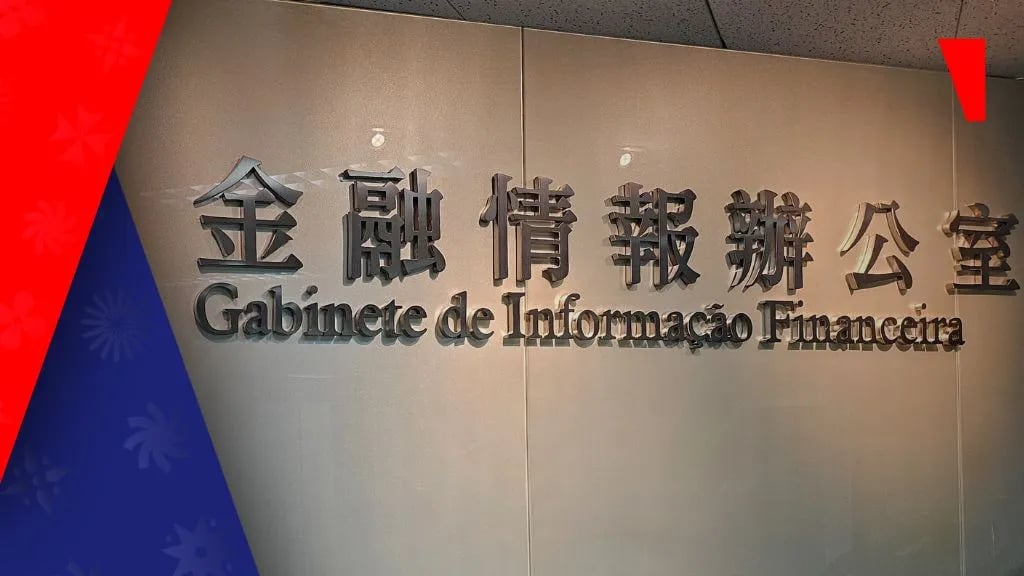
The gaming industry filed 2,018 suspicious transaction reports between January and June, up from 1,856 in the first half of 2025, according to data released this week by Macau’s Financial Intelligence Office, a unit of the Unitary Police Service. The gaming sector accounted for 73.3 percent of the city’s total 2,753 suspicious transaction reports, which grew 9.5 percent year-on-year.
The Financial Intelligence Office attributed the increase primarily to the rise in visitor traffic. Macau recorded approximately 20.94 million visitor arrivals during the first six months of the year, roughly 9 percent more than the same period in 2025, according to the city’s Public Security Police. The office also credited the industry’s ongoing investment in compliance detection systems.
“The increase was mainly due to the increase in the number of visitor arrivals during the first half of 2026, and the continuous investment of resources by reporting entities in detecting suspicious transactions,” the office told GGRAsia in a written statement.
The types of suspicious activity being reported have not changed. The office said that reports from the gaming sector continued to involve familiar patterns including chip conversion without real gaming activity and chip conversion carried out on behalf of third parties, the same typologies that have dominated anti-money laundering filings in Macau for several years running.
Those patterns point to a well-known technique in casino-based money laundering. In chip conversion without gaming, a person purchases casino chips and then redeems them for cash, effectively cycling money through the casino’s system to obscure its origins. When third parties are involved, it can indicate structured layering or so-called smurfing, in which multiple individuals process smaller amounts to avoid detection thresholds.
The numbers put Macau’s gaming sector on pace to match or exceed the record set in 2024, when operators filed 3,837 suspicious transaction reports for the full year, the highest total since the Financial Intelligence Office began keeping records in 2006. The 2025 full-year tally was 3,603, a slight decline from the 2024 peak but still far above pre-pandemic levels. In 2019, the gaming sector filed just 1,913 reports, and in 2018 it filed 2,087.
The sharp post-pandemic escalation in reporting has drawn attention from compliance experts and analysts. Macau’s gaming industry underwent sweeping structural reforms following the revision of its gaming law in 2022, which ended the subcontracting system for satellite casinos and dismantled the junket model based on revenue sharing with VIP room operators. Those reforms were widely expected to reduce money laundering exposure by eliminating intermediary layers that had historically shielded illicit flows from regulatory oversight.
Yet suspicious transaction reports have nearly doubled compared to pre-reform years. Industry analysts have offered two principal explanations. One is that the reforms have genuinely improved operator compliance, meaning more suspicious activity is being detected and reported rather than passing unnoticed through junket channels. The other is that modern artificial intelligence-driven monitoring systems, which operators have adopted as part of their enhanced compliance obligations, are calibrated conservatively to avoid missing genuine threats, which mechanically produces a higher rate of false positives.
The Financial Intelligence Office has not disclosed whether the volume of confirmed laundering cases has increased alongside the rise in reports. Its 2025 annual report, which would provide a breakdown of typologies and outcomes, has not yet been published and is expected around August.
Outside the gaming sector, financial institutions and insurance companies filed 526 suspicious transaction reports during the first half, up from 500 in the same period of 2025, accounting for 19.1 percent of the citywide total. Other institutions filed 209 reports, up from 159 a year earlier.
The quarterly breakdown also shows a slight uptick in the second quarter. Gaming operators filed 1,021 reports between April and June, compared with 997 in the first quarter, suggesting that the rate of reporting has remained steady rather than concentrated in any particular month.
Macau’s six licensed concessionaires, SJM Resorts, Galaxy Entertainment, Sands China, Wynn Macau, Melco Resorts and MGM China, all operate under 10-year gaming concessions awarded in 2023 as part of the post-reform licensing round. Their new concession terms include strengthened anti-money laundering obligations, mandatory investment commitments and expanded social responsibility provisions, all of which have increased the compliance apparatus surrounding the casino industry in the territory.
The data arrives as Macau’s gaming revenue continues to recover. Gross gaming revenue for the first half of 2026 has been running ahead of 2025 levels, and industry forecasters including Moody’s have projected low-single-digit growth across Asian gaming markets over the next 18 months. Whether the rising tide of suspicious transaction reports reflects a genuine increase in illicit financial activity or simply better detection remains an open question for regulators and investors alike.