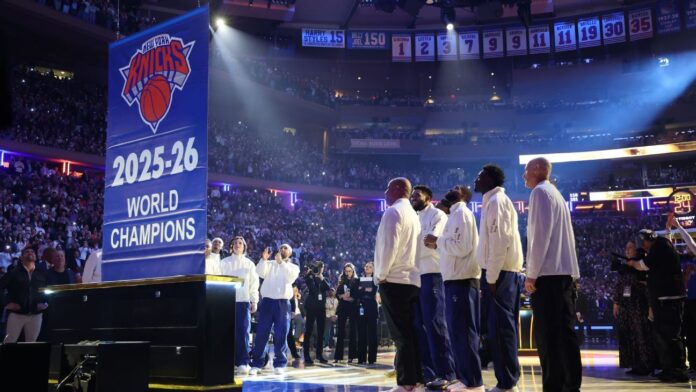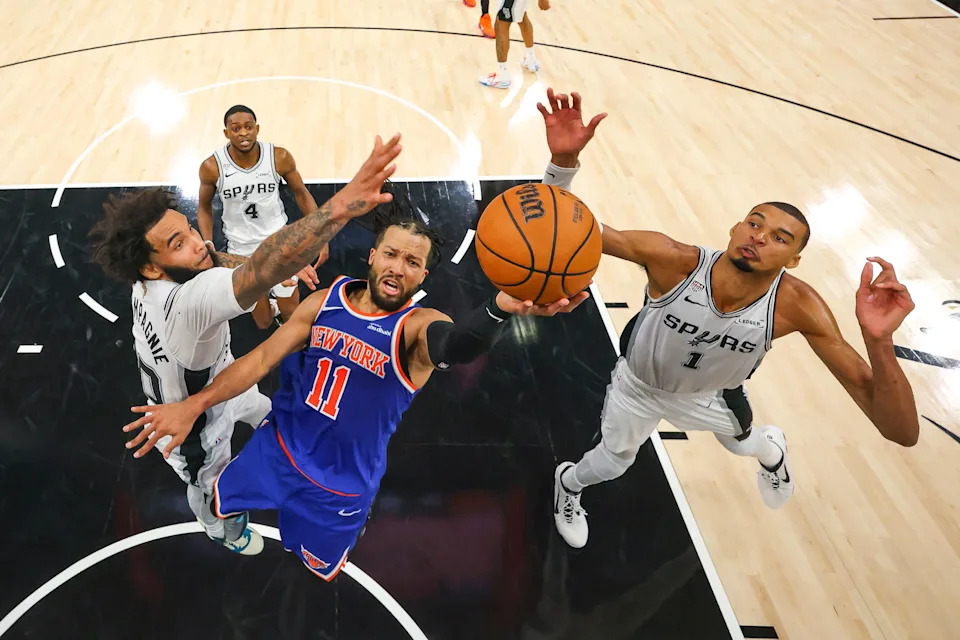

NEW YORK — The week the New York Knicks ended a 52-year title drought, the city’s sportsbooks were losing money faster than at any point in the mobile era.
That is the ledger left by June 2026: a $2.26 billion handle, the most ever wagered in a single June in New York, and $117 million in gross revenue, down 43.3 percent from a year earlier. The New York State Gaming Commission’s monthly report crystallized a paradox that neither operators nor their shareholders had anticipated: the same two sporting events that drove an unprecedented surge in wagering also stripped the books of their margin.
The Knicks clinched their first NBA championship since 1973 on June 13, eliminating the Oklahoma City Thunder in Game 7. During the championship week alone, New York’s eight licensed mobile sportsbooks collectively posted a $48.5 million loss, their worst single-week result since mobile wagering launched in the state in January 2022. FanDuel, which led all operators in June with $804.1 million in handle, saw revenue fall by half between May and June, settling at $42.7 million on a 5.3 percent hold. DraftKings followed at $785.4 million in handle and $41.6 million in revenue, also at 5.3 percent.
Together, the two dominant platforms captured 70.4 percent of New York’s market: $1.59 billion of the $2.26 billion wagered statewide. Their duopoly held. The math that usually makes it profitable did not.
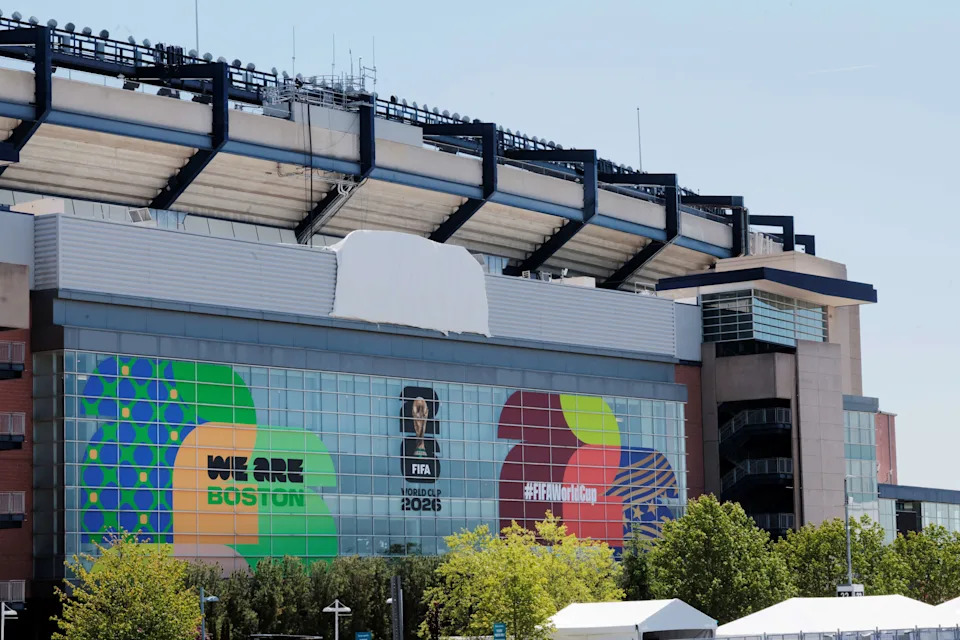
The World Cup betting market compounded the damage. FIFA’s tournament opened June 11 at MetLife Stadium in East Rutherford, with the United States hosting its first World Cup matches since 1994. The USMNT’s group-stage run drew more than 80 percent of the handle at most New York books in the opening weeks, according to operator disclosures. The convergence of a hometown basketball championship and an American soccer team advancing on American soil produced a concentration of local rooting interest that bookmakers could not price their way around. The combined hold across all eight operators settled at 5.19 percent, the lowest monthly figure in New York mobile wagering history, well below the 12.5 percent recorded in June 2025.
For operators further down the leaderboard, June exposed stark structural differences in how each book managed correlated exposure. Fanatics Betting and Gaming, the third-largest operator by handle at $263.5 million, recorded the worst hold rate of any platform: 3.48 percent, yielding just $9.2 million in revenue. BetMGM, despite taking $100 million less in wagers at $161.8 million, generated $10.8 million, more than Fanatics on a fraction of the volume, at 6.7 percent. Caesars Sportsbook saw its revenue fall 52.1 percent year-over-year to $5.9 million on $146.1 million in handle.
The lone operator to grow revenue was Bally Bet, the smallest platform in the market. Handle rose 30 percent to $12.9 million and revenue jumped 50.9 percent to $1.2 million, at a 9.2 percent hold, the highest of any book in June. The numbers reflect Bally’s smaller footprint more than any structural edge: a less liquid book absorbs fewer correlated bets concentrated on a single outcome. But the result was singular in a month when every major operator posted double-digit revenue declines.
New York collected $59.7 million in tax revenue from mobile sports wagering in June, barely half the $105.3 million collected a year earlier. The state’s 51 percent levy on gross gaming revenue, the highest of any legal market in the country, amplifies volatility in both directions. Record months deliver outsized public receipts; June 2026 exposed what happens when the arithmetic inverts.
New Jersey, whose sportsbooks drew from the same pool of Knicks fans and World Cup bettors, reported a similarly inverted month. According to the New Jersey Division of Gaming Enforcement, the Garden State recorded a record June handle of $917.2 million, up 16 percent from a year earlier, alongside a 37.7 percent revenue decline to $57.3 million. The agency attributed the result to patron winnings on NBA Finals and World Cup games. A 6.2 percent hold on $917 million in wagers is the state’s lowest win rate since December 2024.
Massachusetts told a parallel story at a smaller scale. The Massachusetts Gaming Commission reported a June handle record of $615.1 million, up 15.5 percent year-over-year, while revenue fell 12 percent to $55.8 million. Hold settled at 9.1 percent, the second single-digit rate of 2026 for the market. DraftKings led Bay State operators with $302 million in handle and $27.4 million in revenue; FanDuel, in a rare second-place finish in that market, took $154.6 million in handle and $15 million in revenue. The margin difference between the two states reflects, in part, how concentrated the Knicks fan base is: Massachusetts bettors favored the Celtics, not the Knicks, which meant the championship effect hit hardest in metro New York.
The pattern across all three states points to a structural feature of concentrated sports calendars. When a local team reaches a title game in a major market, bookmakers do not lose because of poor line management: they lose because of geography. There is no meaningful edge to be had pricing a game when an entire city’s wagering population is pulling in one direction.
What June leaves unresolved is whether the record $2.26 billion handle marks a sustainable new floor or a calendar anomaly. Football season arrives in September, bringing professional and college wagering on dozens of simultaneous games across which a bookmaker can spread correlations more effectively than on a single elimination game. Whether June’s volume holds without the Knicks and a hometown World Cup pulling it forward is something New York’s operators have not answered publicly, and may not be able to for several months.