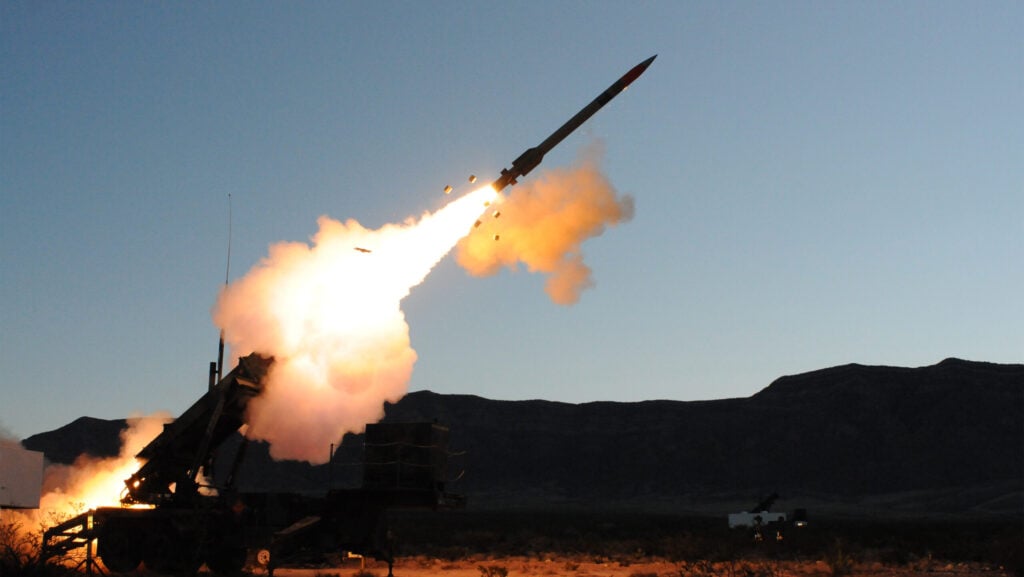

WASHINGTON — The United States Army awarded Lockheed Martin a $53.859 billion contract modification for PAC-3 Missile Segment Enhancement interceptors on Wednesday, the largest Patriot missile procurement in the weapon system’s history, as the Pentagon moves to triple production of the air defense interceptor by 2030 in response to what officials have described as a structural shortage in missile stockpiles across the United States and its allies.
The seven-year agreement runs from fiscal year 2026 through fiscal year 2032 and carries a potential ceiling of $58.62 billion, according to a Pentagon announcement published by the Defense Visual Information Distribution Service. The contract covers PAC-3 MSE missiles — the most advanced interceptor variant in the Patriot family, capable of engaging ballistic missiles, cruise missiles, and advanced aircraft at higher altitudes and longer ranges than earlier PAC-3 variants.
The scale of the procurement reflects a reckoning that has built across NATO and allied defense ministries since 2022: the existing Patriot interceptor production base is structurally insufficient to replace missiles consumed in active conflicts while simultaneously replenishing depleted inventories across allied customers from the United States to Japan to Poland. Lockheed Martin’s Lufkin, Texas facility, where PAC-3 MSE missiles are assembled, has been operating at or near capacity for more than two years, and delivery backlogs have accumulated across the customer base.
Ukraine’s Patriot batteries were rationing interceptors as early as June, with Lockheed Martin telling allied governments that it could not guarantee delivery timelines — a disclosure that moved the production shortfall from a medium-term logistics concern to an immediate operational constraint for countries most dependent on the system. That rationing has forced Ukrainian air defense commanders to make explicit choices about which ballistic missile threats to intercept and which to allow through.
Ukraine received a Patriot production license at the NATO summit in Ankara in July, with factory setup estimated to take 12 to 24 months. That manufacturing timeline makes the existing US production ramp at Lufkin the only near-term source of additional PAC-3 MSE interceptors for the most demanding customers. Wednesday’s contract award creates the financial architecture for expanding that production, but the timeline is set by physical constraints — facility capacity, supply chain development, workforce growth — not by the contract’s monetary ceiling.
Tripling PAC-3 MSE output by 2030 requires investments in manufacturing infrastructure that Lockheed Martin will now have the contractual framework to pursue. Breaking Defense, which covers the defense industry, reported the award citing the DVIDS announcement. Whether the $53.859 billion will be distributed evenly across the seven fiscal years or front-loaded to accelerate the production ramp was not detailed in the Pentagon announcement. Foreign military sales to allied customers were not specifically addressed, though PAC-3 MSE buyers in Europe and Asia are directly affected by the same production capacity constraints as the US Army.
The contract’s scope also reflects an implicit Pentagon bet that PAC-3 MSE remains the backbone of American and allied ballistic missile defense through the early 2030s. The investment commits the US defense industrial base to sustaining and expanding Patriot production at a cost that dwarfs previous multi-year procurement agreements for the system — and it does so at a moment when the operational demand signal from active conflicts has made the shortage impossible to defer. What the contract does not resolve is the delivery schedule backlog that allied customers were already experiencing before Wednesday’s award was announced.