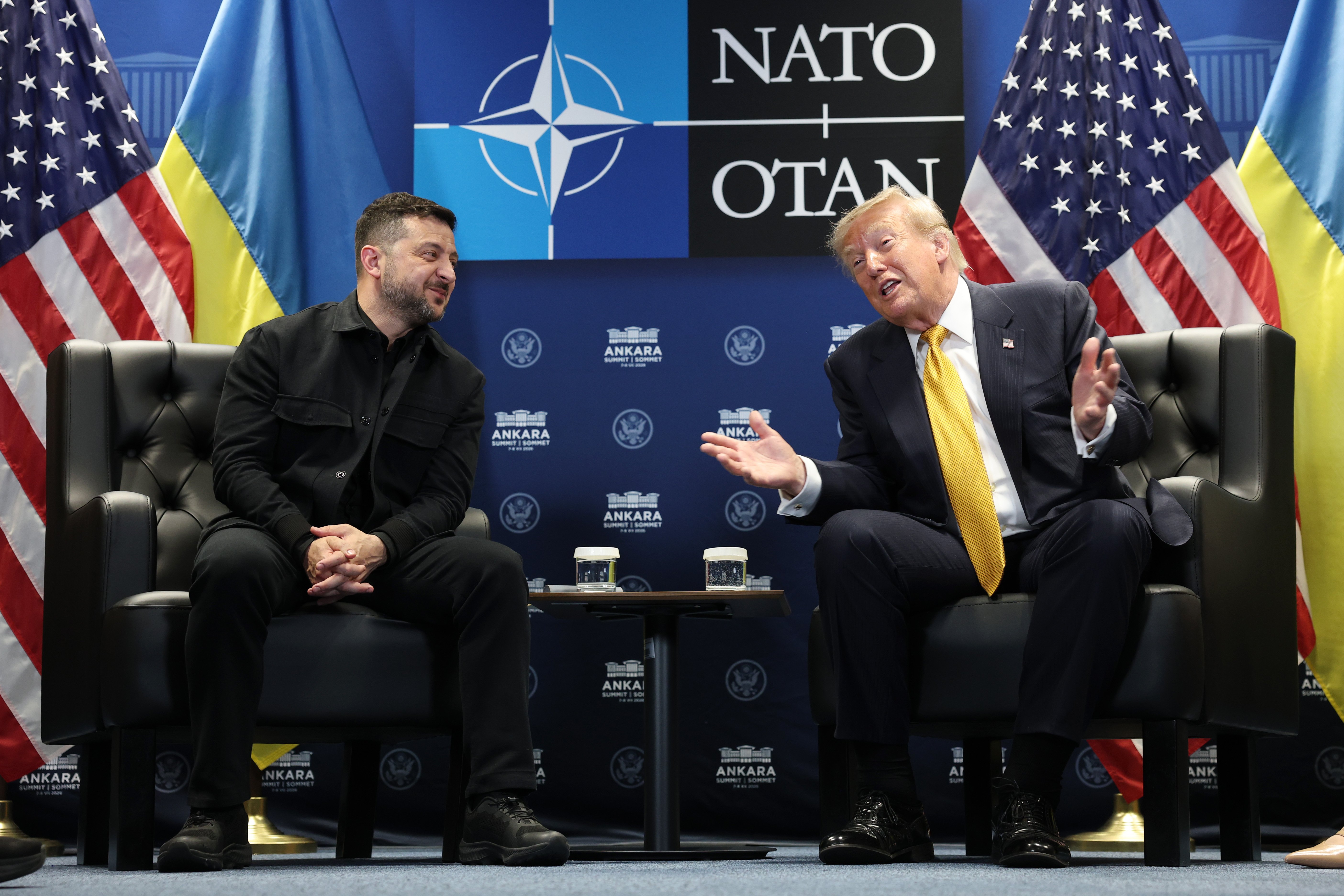

ANKARA – Ukraine’s Patriot air defense batteries have been rationing interceptors for months, with Lockheed Martin unable to guarantee delivery schedules and Russia’s ballistic missile campaign continuing regardless. On Tuesday, Donald Trump offered a possible, if distant, fix: a production license that would allow Ukraine to begin manufacturing Patriot missiles on its own soil for the first time.
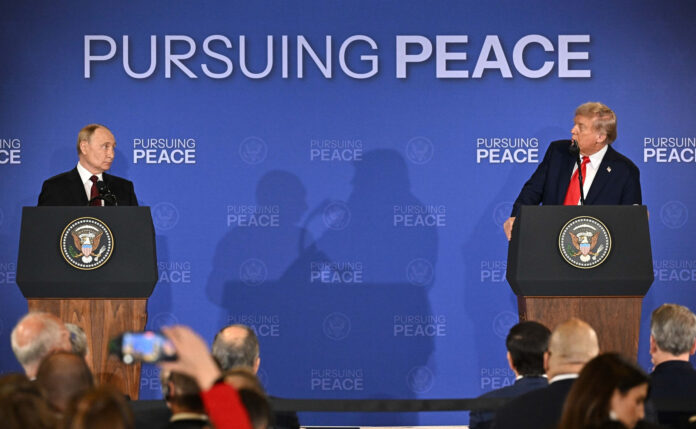
The announcement came at the NATO summit in Ankara, where Trump met Ukrainian President Volodymyr Zelenskyy on the sidelines. “We’re going to give a licence to you to make Patriots,” Trump said, framing the agreement as a transfer of American manufacturing rights. Zelenskyy called on Ukrainian technical teams to begin working immediately on the licensing details, describing implementation as an “urgent” task for his defense and industry ministries.
The strategic logic is not difficult to understand. Ukraine currently depends on Patriot missile donations from allied nations – Germany, the Netherlands, the United States – but the pace of consumption during Russia’s escalating ballistic missile campaign has outrun what allies can collectively supply. Ukraine has run critically short of Patriot interceptors as Lockheed Martin faces its own capacity constraints. Domestic production would, in principle, break the dependency cycle that leaves Ukrainian air defenders counting missiles before each night’s barrage.
The operative words are “in principle.” Serhii Beskrestnov, an adviser to Ukraine’s defense minister, offered an immediate qualification: standing up manufacturing capacity for a missile system as complex as the Patriot would require many months of setup, with subcontracted component production potentially taking between twelve and twenty-four months to come online. A production line that becomes operational in two years does not address the shortage that exists today, or for most of next year.
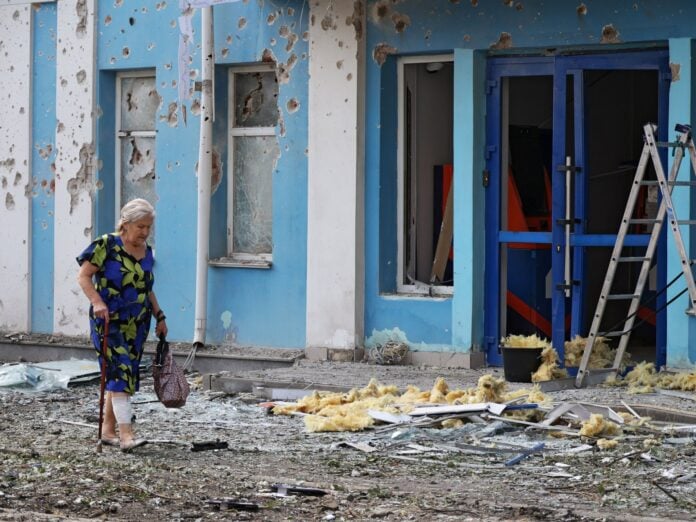
Russia’s air campaign has already forced Kyiv to make grim choices about which targets to defend. Russia struck Kyiv a second time in four days in the week of the NATO summit, killing 19 people in attacks deploying weapons Ukraine’s existing interceptors cannot reliably stop. The gap between what Ukraine needs and what it currently has is not a question of future procurement. It is a present operational reality with daily consequences.
For Trump, the announcement served a specific purpose at a summit where he simultaneously described Russia as a “big fighting force” with “tremendous potential” while framing himself as Ukraine’s indispensable patron. The production license costs the US military nothing immediately – no interceptors are transferred, no inventory drawn down – while allowing Trump to claim a concrete deliverable from a summit that produced few others for Kyiv.
Whether the license can translate into actual production depends on factors neither Washington nor Kyiv fully controls. Lockheed Martin is the Patriot’s primary manufacturer, and its existing supply chain runs through American facilities and a network of international subcontractors. Building parallel production capability in Ukraine – a country under active bombardment – requires not only a legal license but factory infrastructure, secure supply chains, trained workers, and protection from the Russian strikes that have already damaged Ukrainian industrial sites.
The financial terms of the licensing agreement were not disclosed. It is unclear whether Ukraine would pay a licensing fee, whether components would be subsidized, or how the arrangement interacts with existing US arms export regulations and end-user certificate requirements. These are not bureaucratic details – they determine whether the license is a workable commercial arrangement or a political gesture requiring years of follow-on negotiation before any missile is assembled.
According to Al Jazeera’s reporting from Ankara, the Patriot production license is the most significant technology-transfer element from the summit package, and the one most likely to matter over a multi-year horizon. But Ukraine’s air defense crisis is not a multi-year-horizon problem. It is happening now, and a factory that might produce interceptors in 2028 does not protect Kyiv in July 2026.
What the agreement does establish is a principle: the United States is willing to allow Ukraine to manufacture its most advanced air defense systems on home soil. Whether the principle becomes operational capability, on what timeline, at what cost, and before or after Russia’s campaign alters Ukraine’s strategic position are the questions the summit declaration left unanswered.