
KYIV – On the night of the worst barrage Kyiv had seen in two months, Ukrainian air force crews redistributed the city’s remaining Patriot interceptors between battery positions and waited. The missiles they needed were sitting in a factory in Camden, Arkansas – or already spoken for by someone else.
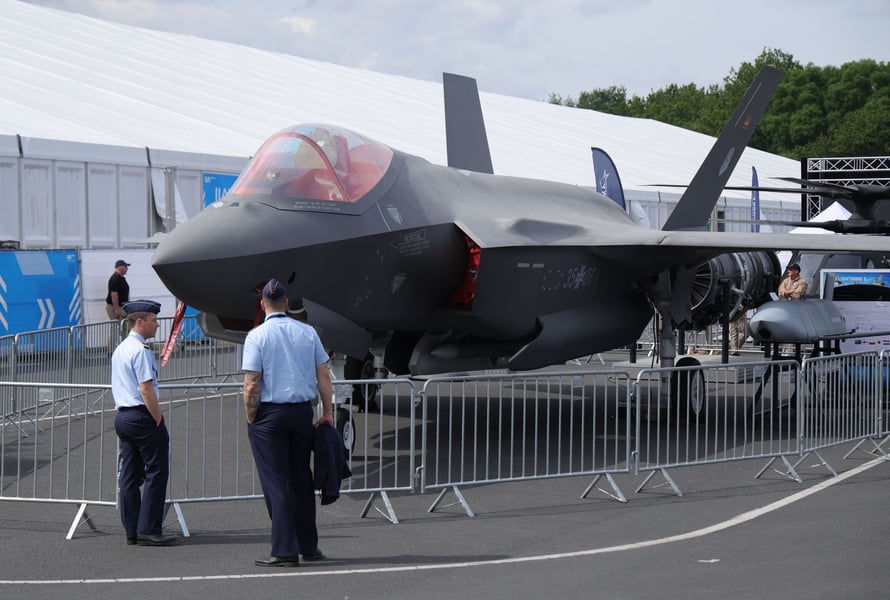
That arithmetic has come to define Ukraine’s air war in the summer of 2026. The New York Times reported on Saturday, citing Ukrainian military officials and Western arms experts, that supplies of interceptor missiles for Patriot air defense systems cannot keep pace with Russia’s sharply intensified ballistic missile campaign. The same week, Lockheed Martin’s vice-president for strategy and business development for missiles, Brian Dunn, acknowledged at the ILA Berlin Air Show that the company cannot guarantee to any ally when they will receive their missiles.
“We do not control what the allocation of those missiles is going to be,” Dunn told reporters at the air show, the Financial Times reported. “We can’t tell anybody where you’re going to be on that priority list.”
The admission matters because the Patriot PAC-3 interceptor is, by a considerable margin, the most effective system Ukraine possesses for destroying Russian ballistic missiles. The Kinzhal, the Iskander, the KN-23 variant imported from North Korea – only the Patriot’s hit-to-kill warhead reliably reaches them. Every other system in Ukraine’s inventory, from NASAMS to IRIS-T, handles cruise missiles and drones. The gap that opens when Patriot launchers run dry is not filled by anything else.
Colonel Yurii Ihnat, who leads communications for the Ukrainian Air Force, has been describing that gap in increasingly explicit terms for months. In May, he told reporters that Ukrainian crews were attending international negotiations and requesting as few as five to ten interceptors at a time. “Today we are on a starvation ration,” Ihnat said, as Ukrinform reported. He disclosed that some NASAMS launchers were being sent into combat with two missiles loaded instead of six – and that his command had, on at least one occasion, received emergency resupply just 24 hours before a major Russian attack. The attack was repelled. The next one, he implied, might not offer even that margin.
The shortage has structural causes that predate Russia’s current campaign. In 2025, Lockheed Martin produced approximately 620 PAC-3 interceptors – an output the company described as exceeding its own targets. But demand had already begun to outrun supply long before those missiles reached any launcher. When the U.S.-Iran conflict escalated, American forces and Gulf partners consumed interceptors at a pace analysts estimated could approach a thousand rounds in the first weeks of intensive operations alone. Ukraine had received roughly 600 Patriot missiles in total from Western partners over the course of the Russian operation. The Middle East burned through a comparable number in weeks.
Lockheed has signed a $4.7 billion framework contract with the Pentagon to triple production to 2,000 missiles annually by 2033, up from the current rate of around 650 per year. The company expects to reach 750 per year by 2027 as an intermediate milestone. In the meantime, the Defense Department – not Lockheed – will decide who gets missiles first. Germany, Japan, Poland, Saudi Arabia, and Ukraine are all in the queue. Washington has not publicly established its allocation criteria.
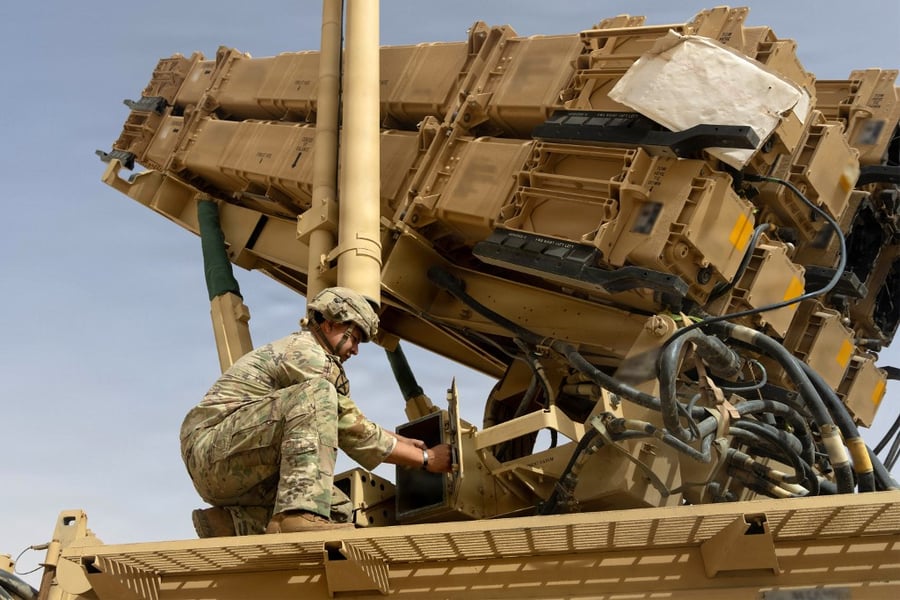
The competition for a finite stockpile is playing out across at least 17 countries that operate Patriot systems or have ordered them. Paula Hartley, another Lockheed executive, acknowledged at the Berlin show that international partners had grown frustrated by uncertainty in deliveries, the Kyiv Independent reported. The frustration is geopolitical as much as logistical: the countries most exposed to ballistic missile threats – Ukraine, Israel’s neighbors, and the Gulf states – are also the countries with the least leverage over how Washington sequences its allocations.
Zelensky wrote to U.S. President Donald Trump in late May asking for additional air defense systems and interceptors, warning of a growing ammunition shortage across Ukraine’s armed forces, the Kyiv Independent reported. Neither Congress nor the White House responded to the letter. In the weeks that followed, Ukraine’s Foreign Ministry was reduced to requesting that partner nations transfer interceptors nearing their shelf-life expiration dates – missiles that would otherwise be sent for disposal – rather than waiting for new production.
The shelf-life request is a tell. It means Ukraine has exhausted the more conventional diplomatic channels and is now asking for what amounts to surplus inventory. It also means that whatever interceptors arrive will be among the oldest in allied stocks, with the shortest service windows, at the moment Russia’s ballistic missile production is expanding.
Ukraine has begun hedging. Developers have been testing a domestic interceptor designated the FP-7.X, a stepping-stone toward a homegrown anti-ballistic missile system called Freyja. The development is at an early stage, and no timeline for operational deployment has been announced. The U.S. Army is separately pressing defense contractors to propose a new low-cost interceptor for the Patriot system priced under $1 million per round – compared to the current PAC-3 MSE price of roughly $4 million. Neither program will matter to the crews rationing missiles this summer.
What those crews are managing, day to day, is not a supply chain problem in the conventional sense. It is a prioritization problem: the United States controls the world’s most effective anti-ballistic missile interceptor, it does not produce enough of them for its own allies, and it has not said whose skies come first. Ukraine is waiting for an answer while Kyiv’s air raid sirens run.
Eastern Herald earlier reported that Ukraine faces growing military strain amid a Pentagon assessment pointing to battlefield pressure from Russian forces. The missile shortage compounds a broader set of supply dislocations that accelerated when the Middle East conflict drew American weapons stocks away from European theaters.