As the Russia Ukraine war enters a new and uncertain phase, a widening conflict in the Middle East is reshaping the battlefield in ways that Kyiv increasingly fears it cannot control. Ukrainian President Volodymyr Zelenskyy has issued one of his starkest warnings yet: the war involving Iran, Israel and the United States is rapidly depleting Western missile stockpiles, leaving Ukraine vulnerable at a critical moment in its fight against Russia.
In a series of interviews and public remarks, Zelenskyy has argued that the diversion of US military resources toward the Middle East conflict is no longer a secondary concern but a defining strategic threat to Ukraine’s war effort. The implications extend far beyond immediate battlefield shortages, touching on global power dynamics, alliance cohesion and the long-term trajectory of the Russia Ukraine war itself.
A War Within a War
For much of the past two years, Ukraine’s defense strategy has depended heavily on a steady flow of Western air defense systems and interceptor missiles, particularly those supplied by the United States. These systems have been essential in countering Russia’s sustained campaign of missile and drone attacks targeting Ukrainian cities, infrastructure and energy grids.
Now, that supply chain is under strain. Zelenskyy has warned that Ukraine faces looming missile shortages as US resources are redirected toward the Middle East. According to his assessment, the scale of missile usage in the region has already outpaced production capacity, creating a competition for resources that Ukraine is ill-positioned to win.
“There will definitely be a deficit,” Zelenskyy said, pointing to the depletion of US reserves and air defense production capacity as the Middle East war intensifies.
Russia’s Strategic Advantage
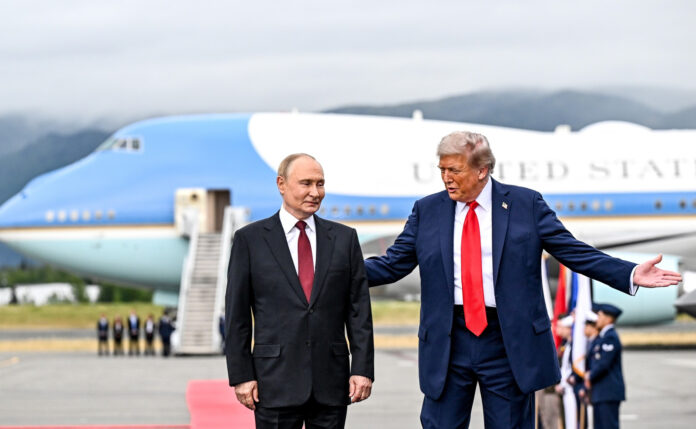
The diversion of Western resources comes at a moment when Russia appears poised to exploit any sign of weakness. Ukrainian officials believe that President Vladimir Putin is actively benefiting from the geopolitical shift, viewing the Middle East conflict as an opportunity to stretch US and allied capabilities across multiple theaters.
Zelenskyy has suggested that Moscow would welcome a prolonged confrontation involving the US and Iran, arguing that such a scenario would not only drain Western military inventories but also fracture political attention and unity.
Recent battlefield developments reinforce those concerns. Russian forces have continued large-scale strikes, including deadly attacks on civilian areas and infrastructure. A recent report detailed how a wave of attacks on the Kyiv region caused casualties and significant damage, underscoring the intensity of ongoing operations.
These Kyiv strikes reflect a broader pattern of escalation, with Russia maintaining pressure across multiple fronts while Ukraine grapples with diminishing resources.
The US Pivot and Its Consequences
The United States remains Ukraine’s most important military backer, but its strategic focus is increasingly divided. The escalation involving Iran has required a rapid redeployment of air defense systems and missile interceptors to protect US forces and allies in the region.
In practical terms, that means fewer resources available for Ukraine. Zelenskyy has specifically warned about a potential Patriot missile shortage, describing it as a critical challenge for Ukraine’s defense.
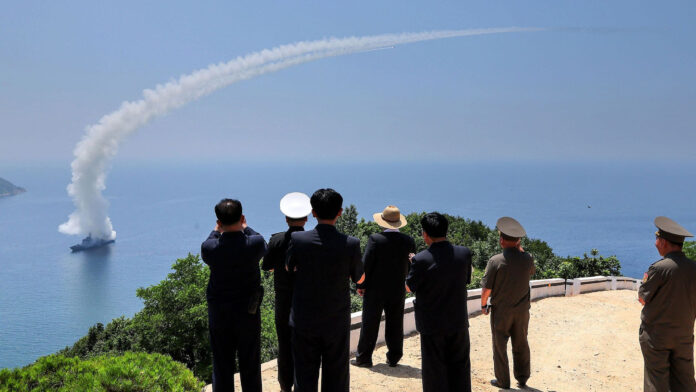
The imbalance between production and consumption is stark. The US produces only a limited number of advanced interceptors annually, while a single day of intense conflict in the Middle East has consumed hundreds of missiles, highlighting the strain on supply chains.
Compounding the issue is political ambiguity. Zelenskyy has raised concerns about Washington’s stance, suggesting that the US leadership is attempting to balance competing priorities without fully committing to Ukraine’s defense.
Europe’s Dilemma
European leaders have sought to reassure Ukraine that support will continue despite the Middle East crisis. Yet even among Kyiv’s allies, there is growing recognition that resources are finite and political attention is increasingly fragmented.
Officials have warned of emerging Western political divisions, as governments struggle to balance commitments in multiple conflict zones.
Despite assurances, the risk remains that the Russia Ukraine war could be overshadowed, both in terms of media coverage and strategic planning. Rising energy prices linked to Middle East instability have further complicated the situation, indirectly strengthening Russia’s economic position.
A New Global Battlefield
The intersection of the Russia Ukraine war and the Middle East conflict highlights a broader transformation in global warfare. What were once distinct regional conflicts are now increasingly interconnected.
Ukraine has even leveraged its drone warfare experience by deploying experts to assist allies in the Middle East, reflecting both its growing expertise and the expanding scope of the conflict.
Reports indicate that Ukraine military experts in Middle East are actively contributing to counter-drone operations, underscoring how Kyiv is becoming entangled in a broader geopolitical struggle.
The Missile Equation
At the heart of the crisis lies a simple equation: supply versus demand. Modern warfare in the Russia Ukraine war relies heavily on precision-guided munitions and air defense systems.
The Middle East conflict has dramatically increased demand for these systems, leaving Ukraine competing for limited resources. This competition reflects broader strategic priorities, as the allocation of missiles signals where the United States and its allies perceive the most urgent threats.
Ukraine’s concerns are not hypothetical. Analysts warn that Russia could exploit these shortages, particularly as global attention shifts elsewhere. Some reports suggest that Moscow is already positioning itself to benefit from the situation, both militarily and economically.
A War of Attrition
The Russia Ukraine war has increasingly become a prolonged conflict of attrition, where endurance and resource management are as critical as battlefield tactics.
Previous shortages of Western military support have already contributed to setbacks on the battlefield. The current missile crisis threatens to repeat that pattern on a larger scale.
Incidents such as the Kharkiv strike kills child highlight the human cost of sustained attacks and the importance of maintaining robust air defenses.
Meanwhile, diplomatic efforts remain fragile. Ongoing peace negotiations have been repeatedly delayed, with officials citing the Middle East war as a major factor disrupting progress.
Geopolitical Fallout
Beyond the battlefield, the implications of the Russia Ukraine war are reshaping global geopolitics. The alignment between Russia and Iran, combined with shifting US priorities, is creating new challenges for Western alliances.
Recent developments, including the Russian archaeologist extradition case, illustrate the broader legal and diplomatic tensions surrounding the conflict.
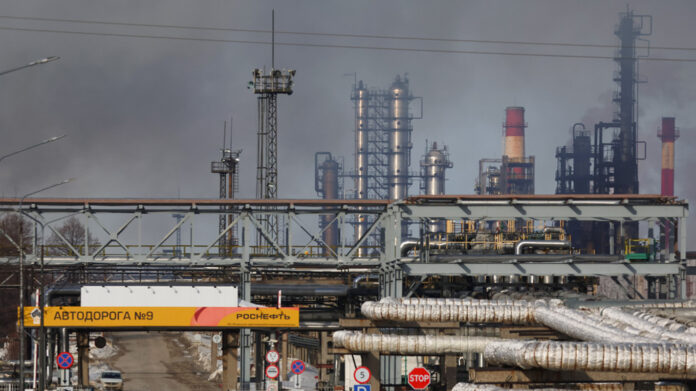
At the same time, Ukraine has demonstrated its ability to strike back, including operations targeting Russian infrastructure. Reports of a Ukraine strike on Russian military infrastructure underscore Kyiv’s continued offensive capabilities despite resource constraints.
The Road Ahead
As the Russia Ukraine war continues, the impact of the Middle East conflict is likely to deepen. Ukraine faces a complex set of challenges, from maintaining its defenses amid shortages to navigating shifting alliances in an increasingly fragmented world.
The warning from Kyiv is clear: the war is no longer confined to Eastern Europe. It has become part of a broader global struggle in which resources, attention and strategic priorities are constantly shifting.
Whether Ukraine can sustain its position will depend not only on its own resilience but also on decisions made in Washington, Brussels and beyond. What is certain is that the Russia Ukraine war has entered a new phase, one defined as much by global competition for resources as by battles on the ground.