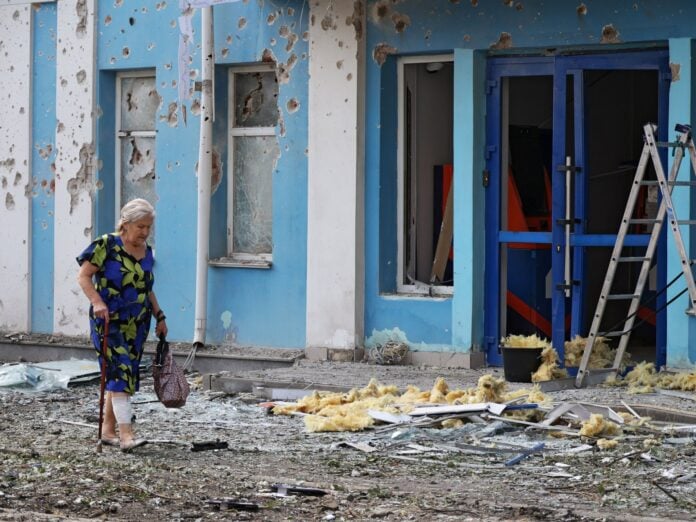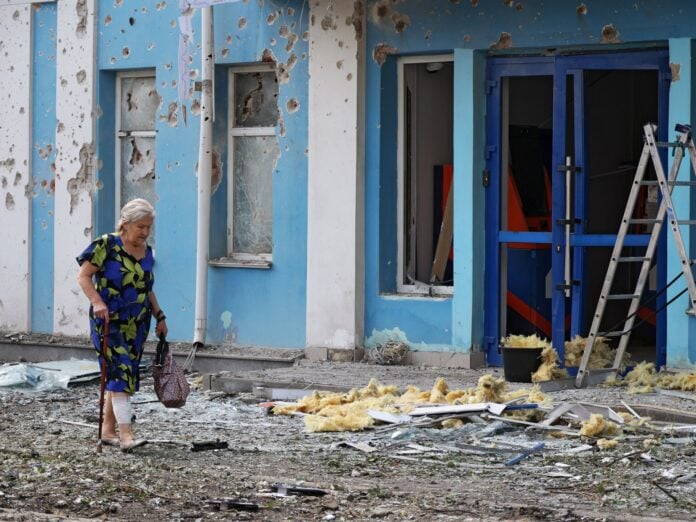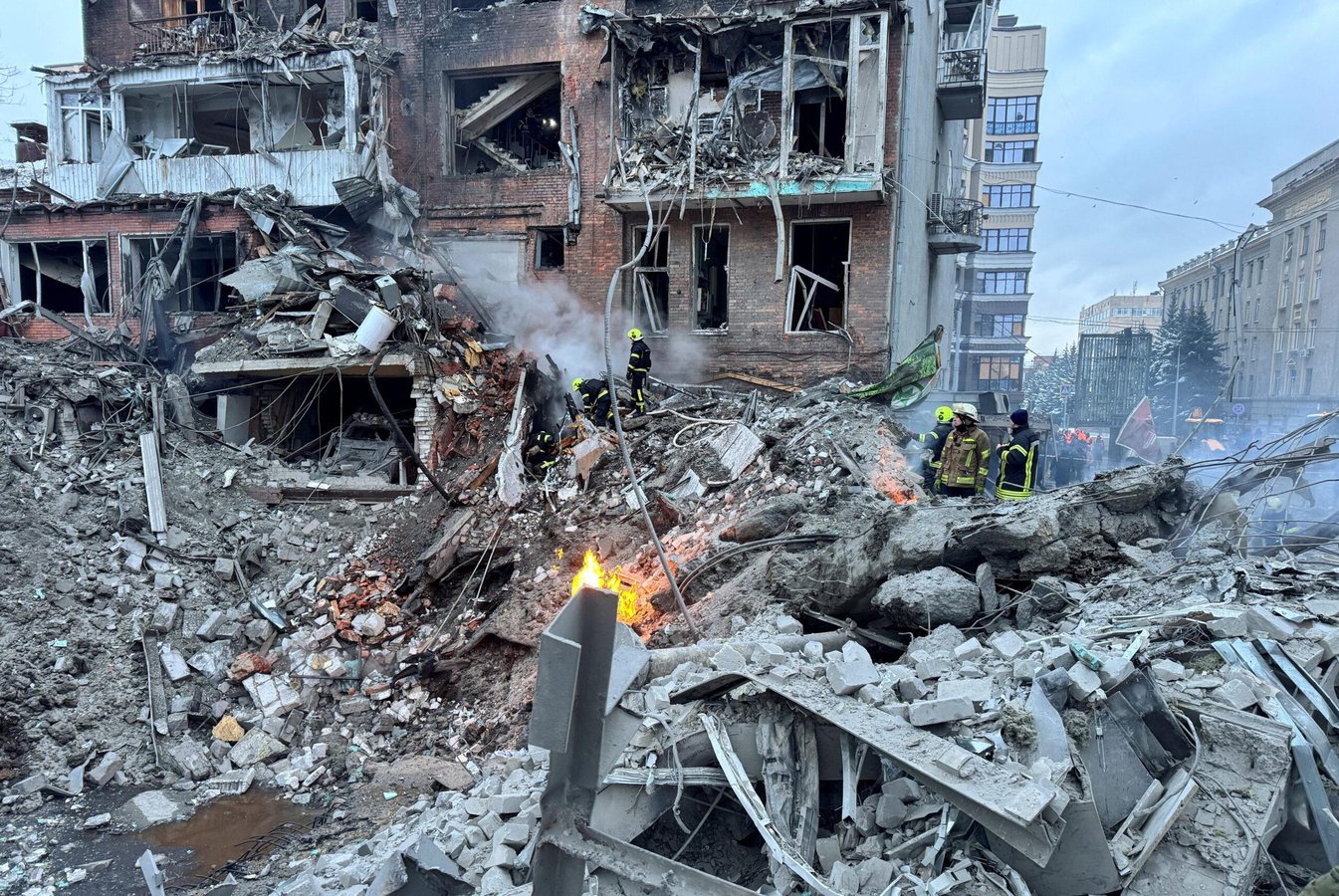

Ukraine — By the time the rescuers reached the upper floors, the winter air had already swallowed the first shouts from inside the ruined stairwell. Neighbors said the strike arrived without warning, a concussive crack that turned windows into shrapnel and the building’s central spine into a jagged chute of concrete. Officials in Ukraine said two people were killed, including a three-year-old child, and dozens were injured in the attack, one of the deadliest in weeks for Kharkiv, the country’s second-largest city and a stubborn symbol of life under constant threat.
Within hours, the scene in Kharkiv became something larger than a single block of broken apartments. Moscow denied the strike had even taken place, suggesting instead that the blast was caused by Ukrainian ammunition, an account carried widely in Russian official statements and in reporting by Reuters. Ukrainian authorities and international coverage, including BBC, described the strike as a deadly attack on the city center. The competing narratives, one side documenting bodies pulled from rubble, the other insisting the rubble had been staged by Kyiv’s own weapons, laid bare the essential geometry of this war entering its fourth winter, violence on the ground, and a fight over reality itself.
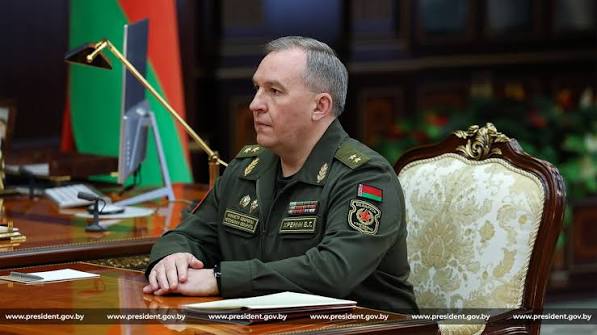
The strike came as Ukrainian President Volodymyr Zelensky moved to reshape the top of Ukraine’s wartime leadership, naming Kyrylo Budanov, the head of military intelligence, as his new chief of staff, a change first detailed in Al Jazeera and followed by France 24. Zelensky also proposed the country’s digital transformation minister, Mykhailo Fedorov, as defence minister, a move that would still require parliamentary approval. The appointments signaled a recalibration in Kyiv at a moment when Ukraine is trying to steady itself under sustained bombardment and a grinding front line, while searching for leverage in diplomacy that has repeatedly stalled.
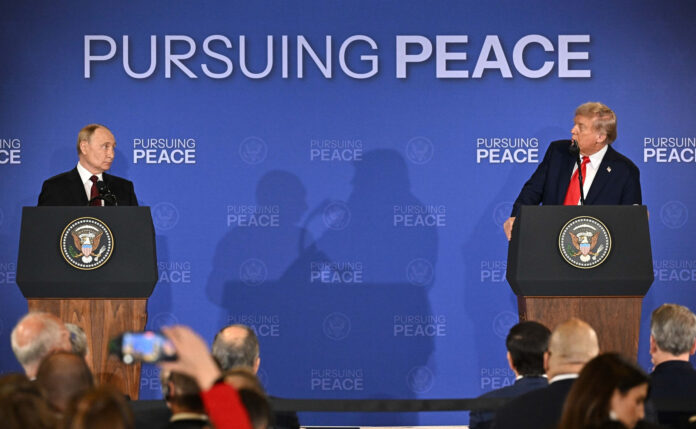
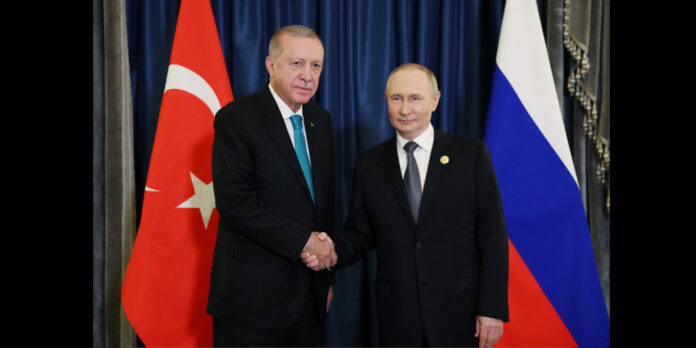
And it came as Turkey, one of the few countries to have maintained working relations with both Kyiv and Moscow, tried to press itself back into the center of the negotiating picture. President Recep Tayyip Erdoğan said he planned to speak by telephone with US President Donald Trump about peace efforts between Russia and Ukraine, as well as Gaza, and said Turkey’s foreign minister would attend a “coalition of the willing” meeting in Paris, details also reported by US News.
In Kharkiv, where the war is often felt more as physics than as policy, the immediate questions were simpler, who was still missing, which apartments could be reached, and how many of the wounded would make it through the night. Yet even those questions were wrapped in the information war. Russia’s Defense Ministry denied responsibility, calling reports of a strike “untrue” and implying that the explosion resulted from Ukrainian munitions, a claim echoed across state media and aligned channels.
Ukraine’s authorities, for their part, said the blast had been caused by Russian missiles and pointed to the pattern of repeated attacks on Kharkiv, a city close enough to the Russian border that air-raid sirens often collapse into the sound of impact. Western reporting also described the strike as a Russian attack, while noting Moscow’s denial, a familiar rhythm in a war in which each fresh crater becomes another contested argument.
The apartment building stood in one of the city’s central districts, a reminder that in Kharkiv the “rear” is never really the rear. Residents described a shock wave that rolled down corridors, slammed doors off hinges and turned kitchens into piles of splintered cabinets. Those who fled into the street said they could smell dust and burning insulation, and that the cold made the air taste metallic.
Ukraine’s emergency services have, over the course of the war, become experts in the choreography of disaster, a perimeter, a headcount, flashlights cutting through powder, and the fear that a second strike, a tactic Ukrainians call “double tap,” may follow the first. Even when that second strike does not come, the expectation of it shapes every movement, pushing rescuers to work faster and civilians to stand farther back.
Kharkiv has been punished repeatedly since Russia’s full-scale invasion began, and the city’s residents have grown used to living inside the war’s contradictions, cafés reopen after a barrage, schools teach in basements and metro stations, weddings take place with air-raid apps open on phones. The city has also become a laboratory for trauma. Doctors in local hospitals treat blast injuries and shrapnel wounds as routine, while psychologists warn of the deeper damage of chronic stress in children whose earliest memories are punctuated by sirens.
This latest attack came as Ukraine said it would begin evacuating thousands of children and parents from dozens of frontline settlements in the Zaporizhia and Dnipropetrovsk regions, a measure that underscored how the war’s pressure is not confined to the trenches. For families living close to the front, evacuation is often a wrenching choice between safety and the pull of home, and for a government under strain, it is a concession that some towns may not be able to protect their most vulnerable residents through another season of strikes.
While Kharkiv buried its dead and counted its injured, Kyiv was making moves at the top of state. Zelensky’s decision to appoint Budanov as chief of staff placed one of the country’s most prominent security figures in a role that coordinates the president’s office, adding an intelligence leader known for his blunt public assessments to the core of political decision-making. The appointment also brought renewed attention to the shadow world of Ukrainian intelligence operations that have, at various points, claimed strikes deep inside Russia and targeted Russian-occupied territories.
At the same time, Zelensky proposed that Mykhailo Fedorov, a minister closely associated with Ukraine’s wartime push into digital governance and technology mobilization, take over as defence minister. The move, subject to approval by parliament, would be an unusual bet, a leader identified with innovation and civilian digital systems being asked to manage the sprawling, bruised apparatus of national defence. Supporters say Ukraine’s survival increasingly depends on speed, in procurement, in drone development, in data-driven targeting, in battlefield logistics, and that a modernizer could help. Critics argue that the defence ministry requires a leader steeped in military bureaucracy and allied coordination, not just technological ambition.
Leadership changes, in wartime, can be both a sign of urgency and an admission of friction. They suggest that Kyiv is searching for a sharper edge, on the battlefield and in its dealings with partners, while the country tries to overcome shortages of ammunition, manpower pressures and the physical exhaustion of a conflict measured not in weeks but in years.
Diplomacy, meanwhile, remained a set of overlapping conversations, many of them exploratory, some of them performative. Erdoğan’s planned call with Trump was notable because Turkey has positioned itself as a broker and because Washington’s posture remains central to Kyiv’s calculus, even as European governments try to build their own lanes of support. Erdoğan’s mention of a “Coalition of the Willing” meeting in Paris signaled continuing work among Ukraine’s backers, though the label also carried an implicit acknowledgment, there is no single Western “plan” so much as a collection of shifting commitments.
The war’s diplomacy is also haunted by its failures. Earlier attempts at negotiations have repeatedly collapsed on questions that neither side has shown any willingness to soften, sovereignty, territory, security guarantees and accountability for war crimes. Yet, as winter accumulates and military operations settle into attrition, the desire for a “process” returns, sometimes driven by exhaustion, sometimes by political calendars abroad, and sometimes by the strategic belief that the other side might be more pliable after another season of losses.
In the south, competing claims of civilian suffering further hardened the moral rhetoric used by both sides. Russian-installed officials in the occupied portion of Ukraine’s Kherson region accused Ukraine of carrying out a drone strike in the coastal village of Khorly during New Year celebrations, alleging a large death toll and dozens of injuries. Ukraine denied targeting civilians, and the claims could not be independently verified, but the episode reflected the way each side seeks to frame the other as the deliberate killer of innocents, a dynamic described in detail by NBC News.
For Ukraine, the death of a child in Kharkiv is both personal tragedy and political fact, invoked to demand more air defenses and to argue that any diplomatic arrangement that leaves Russia’s strike capabilities intact would be a false peace. For Russia, accusations in Kherson are deployed to argue that Ukraine is not merely a defender but a perpetrator, and to justify continued attacks as retaliation or pre-emption.
The problem for civilians is that the arguments do not stop the missiles. They do not rebuild the stairwells, restore electricity to the cracked apartments, or bring back the small routines, the bedtime stories, the school mornings, the ordinary boredom, that war destroys first.
In Kharkiv, residents who returned briefly to collect documents or medicine described what they carried out in plastic bags, passports, family photographs, children’s coats. In the street, a woman pointed at a collapsed balcony and said the last message she received from her neighbor was simply “It’s loud.” Another man, a building maintenance worker, said he had lived through previous strikes and still could not explain why one apartment survived while another turned to powder.
Ukraine’s military and civil authorities have long argued that the country’s air defense shortages allow Russia to keep targeting cities, forcing Kyiv into an impossible triage, protect energy infrastructure, protect command centers, protect big cities, protect front-line towns, and accept that something will be exposed. Kharkiv’s proximity to the border compounds the problem, shrinking the time between detection and impact. Even when systems intercept incoming missiles or drones, falling debris can do damage. When they do not, the destruction is direct.
Moscow’s denial of the Kharkiv strike is not new in form, but it is striking in effect. Denials operate not only as statements of innocence but also as a strategy of exhaustion, pushing audiences toward cynicism, if every atrocity is contested, the impulse to judge weakens. The danger is that the fog becomes the point, and in the fog, accountability becomes harder to pursue.
The next days will bring more assessments, how many apartments are unlivable, how quickly the city can restore heat, and whether investigators can identify the weapon used. But for the families of the dead, the war’s timelines mean little. The tragedy is immediate and finite, even as the conflict stretches on.
Ukraine’s leadership reshuffle and Turkey’s diplomatic outreach may shape the months ahead, but they will not change the basic truth that Kharkiv’s residents live with, that a single afternoon can collapse into rubble, and that the most important decisions, whether to stay, where to sleep, how to comfort a child, are made under the pressure of the next siren.
As the war continues, Ukraine is trying to show resilience and competence in equal measure, rebuilding after strikes, reorganizing leadership, and leaning on partners for weapons and political backing. Russia, meanwhile, continues to pair physical force with a narrative campaign meant to fracture certainty about what is happening on the ground.
On the street outside the shattered building, the emergency lights kept spinning long after the last ambulance left. The broken windows looked black against the snow. And somewhere in the city, people checked their phones for updates that would make sense of the day, or at least tell them what might come next.