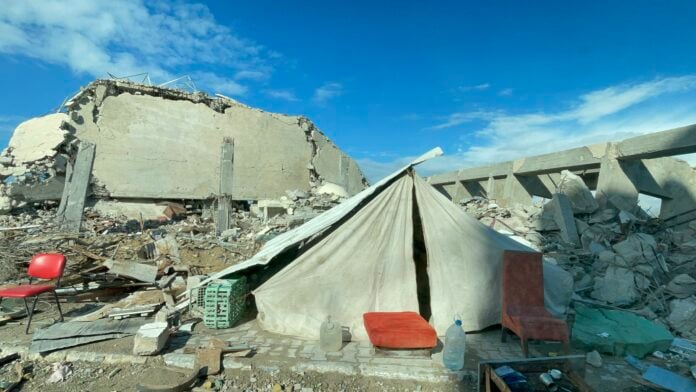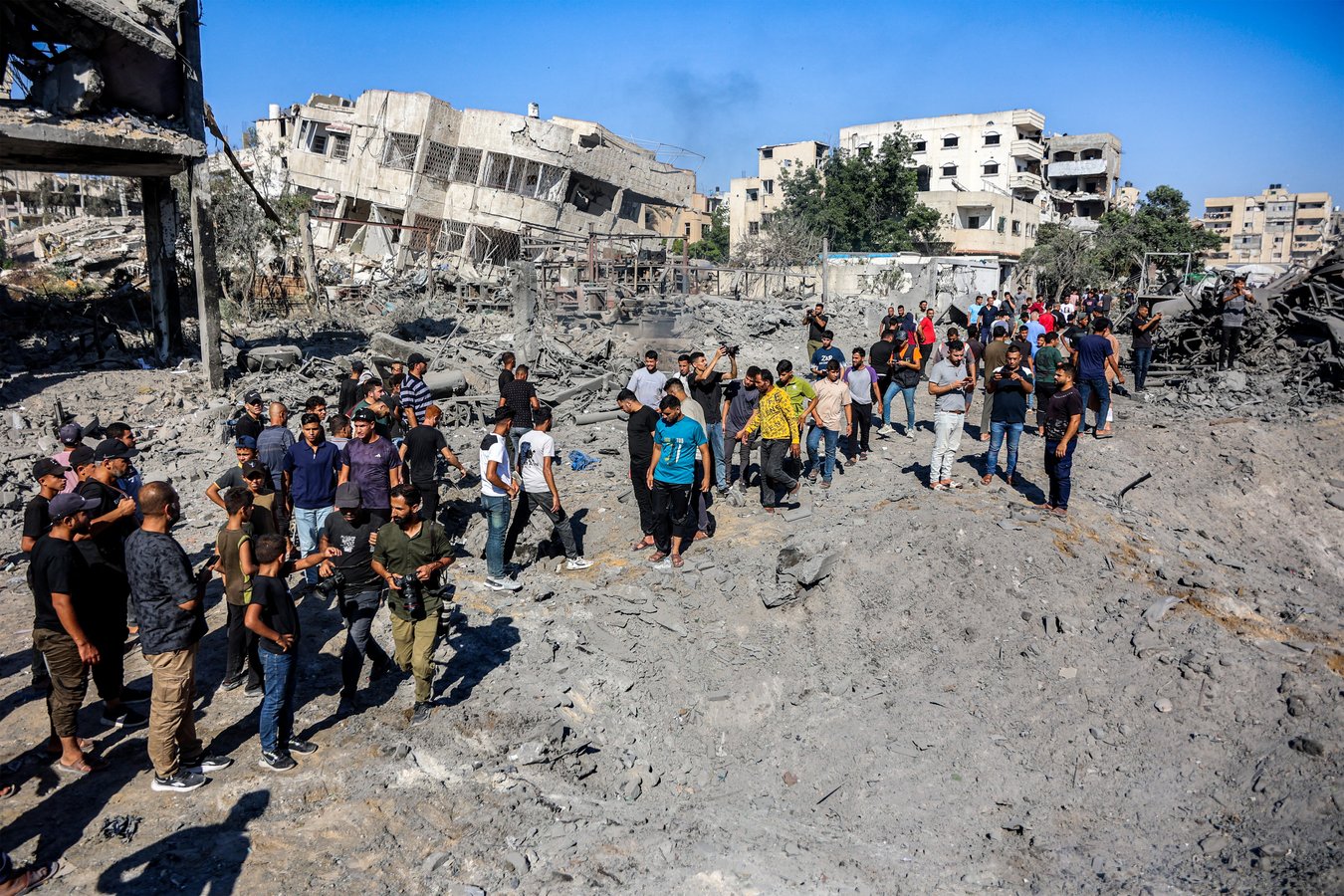

BRUSSELS – Thick concrete dust still coats what were once apartment blocks, workshops, and clinics across northern Gaza. What the European Union itself estimated would require at least $71 billion over a decade to repair now has a first international pledge attached to it: $1 billion, announced Monday at a donor conference at the European Commission headquarters in Brussels.
Dubravka Suica, the EU Commissioner for the Mediterranean, introduced the “Team Gaza Initiative” before representatives from more than a dozen countries, among them Spain, France, Germany, the United Kingdom, Norway, Japan, and Switzerland. “Our objective is clear,” Suica said, “to help build hope, resilience and a better future for the Palestinian people.” Australia and Canada were expected to confirm their participation in the coming days, Al Jazeera reported.
The fund, equivalent to approximately 900 million euros, is earmarked for water and sanitation infrastructure, debris clearance, health system restoration, energy networks, and agricultural supply chains. Both the World Bank and the European Investment Bank were listed among participating institutions alongside the national delegations gathered in the Belgian capital.
The gap between what the fund covers and what Gaza requires is stark. More than two years of Israeli bombardment and a sustained blockade have erased nearly 87 percent of Gaza’s pre-war economic output, gutted the territory’s industrial base, destroyed hundreds of thousands of homes, and reduced hospitals to rubble or near-functionality. The Gaza Health Ministry has reported the death toll from the genocide exceeding 75,000. Against that scale, $1 billion covers roughly 1.4 percent of the minimum rebuild cost the EU’s own technical teams have put on record.
The Brussels gathering follows months of increasingly assertive European rhetoric on Gaza that has not always translated into measurable pressure on Israel. Several EU member states, including Spain, Ireland, and Norway, formally recognized Palestinian statehood in 2024. Yet arms transfers to Israel from other EU members, including Germany, continued well into 2025 – a contradiction that has drawn sustained criticism from international legal bodies and from what remains of Gaza’s civil society.
The Team Gaza Initiative has no official Gaza-side counterpart through which to disburse funds. The Palestinian Authority, which administers portions of the West Bank, is not recognized by Hamas, which governed Gaza before the war began. The European Commission declined Monday to specify how disbursement channels would be structured, saying only that it was working “in close coordination with international partners and the United Nations.”
Reconstruction cannot meaningfully begin while active military activity continues in any portion of the territory. United Nations technical advisers noted in background briefings to participating delegations that debris removal alone – one of the EU’s listed priorities – requires access corridors that do not yet exist for heavy equipment. The fund’s timeline for disbursement was not addressed at Monday’s conference.
Spain’s foreign minister called the fund “a signal that Europe is not prepared to abandon Gaza to rubble.” Norway’s aid minister described the pledge as consistent with Oslo’s recognition of Palestinian statehood and the broader tradition of Norwegian support for Palestinian self-determination. The United Kingdom, which formally recognized Palestinian statehood in May 2025 after sustained domestic pressure, was represented at the ministerial level.
The Commission’s engagement with Gaza’s reconstruction is not new in principle. European funds have periodically flowed to Palestinian humanitarian programs through UNRWA and various EU-backed agencies for two decades. What distinguishes Monday’s announcement is both its scale and its explicit framing as reconstruction rather than emergency relief – an implicit acknowledgment that the acute phase of the genocide, while not formally concluded, has entered a different register for international donors.
A separate EU meeting last week discussed lifting remaining trade barriers on goods originating from Gaza, a largely symbolic measure given that Gaza’s export capacity has been reduced to near zero. Suica told reporters in the conference foyer that both tracks – trade and reconstruction – were “inseparable from the question of governance” and that the EU expected Palestinian civilian authorities to play a central role in administering new programs.
Advocacy organizations that track Gaza’s civilian toll and infrastructure destruction have noted that no single donor conference has ever committed more than a fraction of what independent assessments deem necessary. Current tracking shows the total pledged internationally remains well below five percent of the minimum reconstruction figure. Whether Monday’s initiative accelerates that trajectory or joins the record of internationally endorsed commitments that have not yet reached the people for whom they were intended is a question Gaza’s situation cannot yet answer.