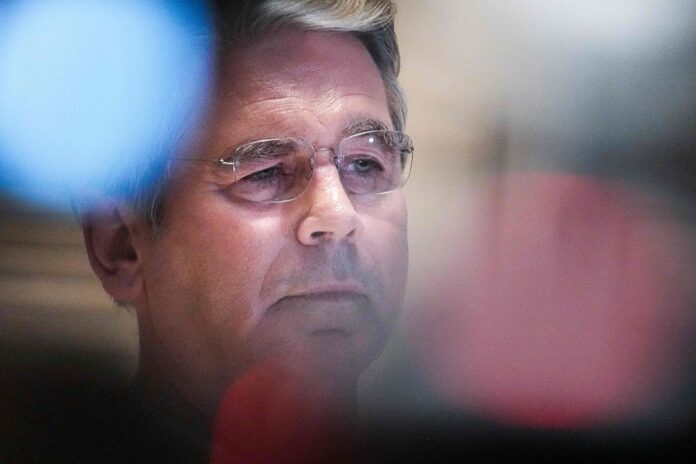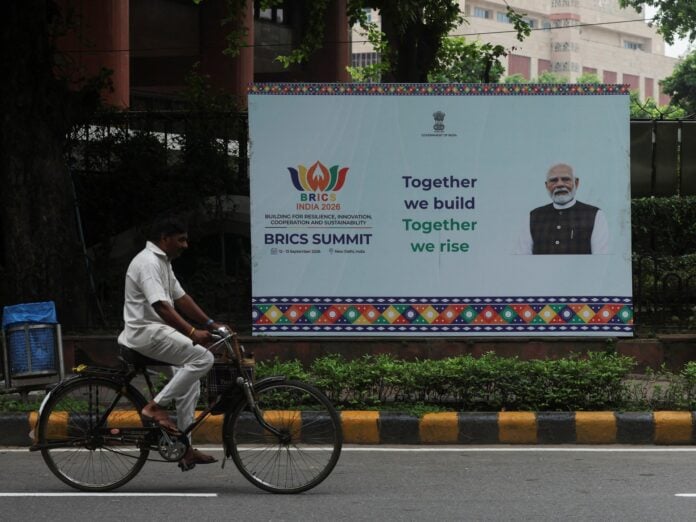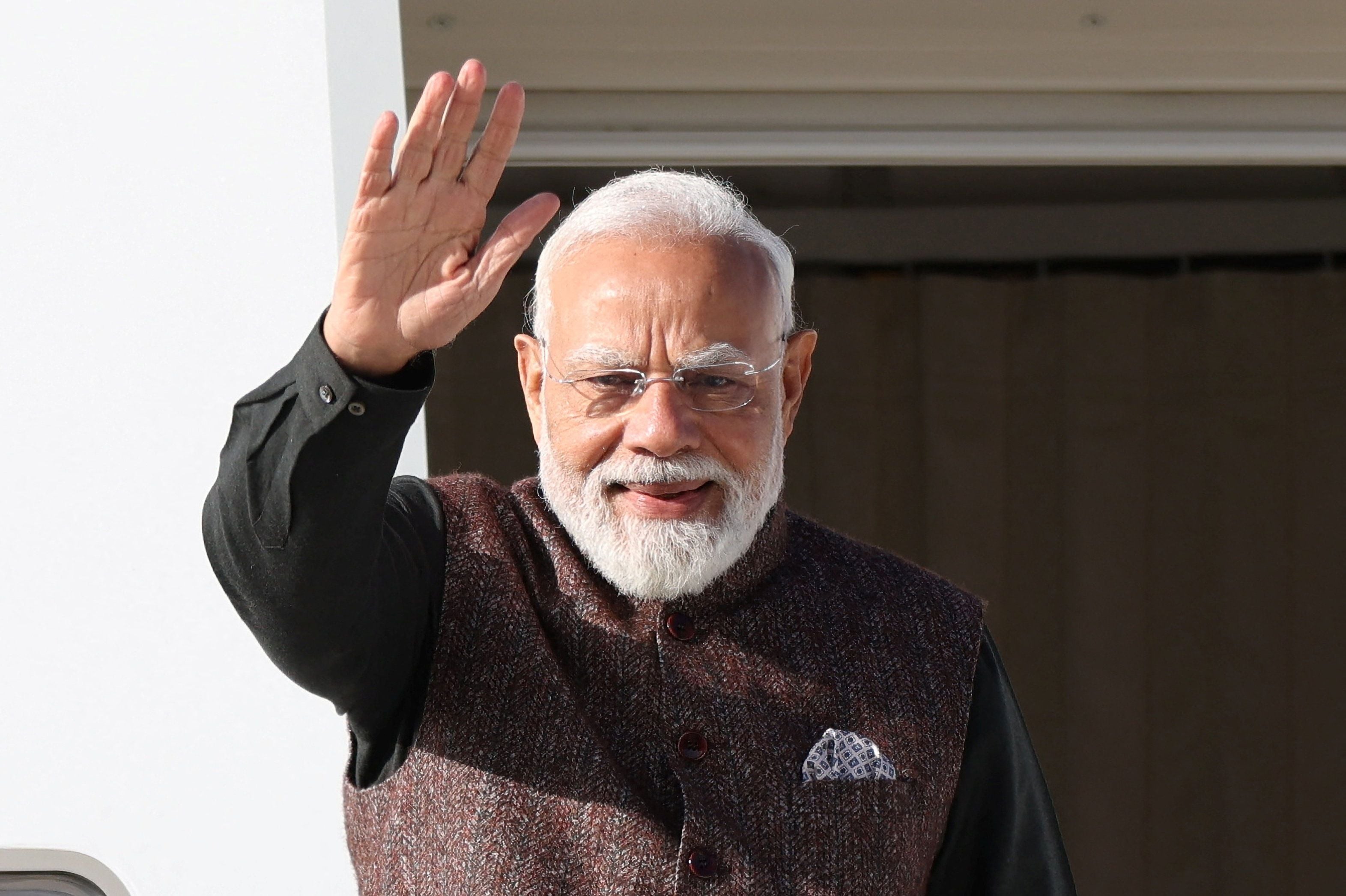

AUCKLAND – When Shane Jones, a minister in New Zealand’s coalition government, called the prospect of Indian migration a “butter chicken tsunami,” he was not speaking only about food. He was naming the scale of what was arriving, with more honesty than he intended. On Friday, Prime Minister Narendra Modi arrived in Auckland and signed what both governments are now calling a Strategic Partnership, the first elevation of this kind in India-New Zealand history. It was also the first visit to New Zealand by an Indian prime minister in 40 years. Jones’s party lost that argument publicly and visibly.
The partnership was formalised during a state visit that lasted just over a day, a compressed itinerary that belied the density of its outcomes. The two governments announced 18 concrete deliverables, including 10 signed agreements covering defence, maritime security, trade, education, science and sport. The elevation to Strategic Partnership is a formal diplomatic designation that places India alongside New Zealand’s other strategic partners and opens regular high-level dialogue mechanisms for the first time.
At the centre of the economic agenda is a trade target both governments committed to publicly: Rs 35,000 crore, approximately NZ$7 billion, in bilateral goods and services trade by 2030. That figure is roughly double the pre-FTA baseline. The target is backed by the India-New Zealand Free Trade Agreement signed in April 2026, after more than a decade of negotiations that concluded in December 2025. The FTA eliminates tariffs on 95 percent of New Zealand exports to India and grants Indian exports full duty-free access in return. New Zealand’s parliament has not yet ratified the agreement.
The most concrete security outcome was a reciprocal logistics support pact between the Indian Navy and the New Zealand Defence Force, the first agreement of its kind between the two militaries. It allows each side to use the other’s ports and facilities for resupply, maintenance and access in the Indo-Pacific. The two governments also established a maritime security dialogue described as a framework for information exchange and coordination across Indo-Pacific sea lanes.
Beyond defence, the signed MoUs include a framework for enabling UPI payments in New Zealand, India’s unified real-time payment system that New Delhi has been extending to trading partners as part of its digital infrastructure strategy. Education, sports and scientific research were also covered, though the precise terms of those instruments were not publicly released in announcements made available Friday.
The visit’s community dimension was visible in its own right. Up to 10,000 members of New Zealand’s Indian diaspora attended an event at Spark Arena in Auckland as part of Modi’s itinerary. Indians now constitute roughly six percent of New Zealand’s population, one of the fastest-growing migrant communities in the country, and represent a constituency whose size alone reorders the political calculus of any bilateral relationship involving India.
Prime Minister Christopher Luxon framed the visit as the completion of something the FTA had begun. “This visit is about celebrating a winning partnership between New Zealand and India, one that delivers for our people and supports greater prosperity and security for both our countries,” he said at the Auckland ceremony, TRT World reported. Luxon has been consistent in anchoring the partnership to tangible commercial benefits, a positioning designed in part to contain domestic opposition to the migration provisions embedded in the broader relationship.
That opposition has been explicit and unsubtle. New Zealand First, the populist coalition partner whose support Luxon needs to govern, has raised objections to the FTA’s labour mobility provisions, which open new pathways for Indian workers into sectors facing workforce shortages. Jones’s remark was not a slip but a policy signal. Whether that friction translates into a parliamentary obstacle to FTA ratification remains the central uncertainty this visit could not resolve.
Auckland was the third destination in a six-day Indo-Pacific tour. Modi arrived from Melbourne, where he held the third India-Australia Annual Summit with Prime Minister Anthony Albanese. Jakarta came first, where he met Indonesian President Prabowo Subianto. The sequence is not incidental: Indonesia, Australia and New Zealand form a corridor of Indo-Pacific relationships that India has been deepening simultaneously as its economic weight grows and its strategic presence in maritime Asia expands.
For India, the Auckland agreements extend what New Delhi describes as its Act East policy, an outward diplomatic orientation toward Southeast and East Asia that has intensified over the past decade. New Zealand sits at the southern edge of that frame. The reciprocal naval logistics pact in particular signals that India is now seeking access and basing flexibility at both ends of the Indo-Pacific. Eastern Herald’s reporting ahead of the visit described Modi’s Auckland trip as rooted in India’s Act East policy and its emphasis on a rules-based maritime order across the region.
Forty years ago, when Rajiv Gandhi visited Auckland, India and New Zealand were trading largely in wool and diplomatic goodwill. The Indian diaspora in New Zealand numbered a few thousand. What Modi brought this week was a signed trade deal, a naval logistics agreement, a formal strategic designation, and the same outward posture New Delhi has maintained in parallel: India’s MEA reaffirmed the Indus Waters Treaty abeyance on July 3, maintaining firm pressure on Pakistan even as it signed new agreements with Pacific partners on the same day. The two moves reflect the same logic, running in two directions simultaneously.
What Friday’s partnership did not resolve is the question of how smoothly it will be implemented. The dairy sector provisions of the FTA, where New Zealand’s export interests meet India’s political sensitivity around domestic milk production, have not been disclosed in full detail. The $20 billion in New Zealand investment that India has targeted over 15 years assumes economic conditions that have not been stress-tested. And the trajectory of NZ First’s opposition will be determined in Wellington, on a parliamentary calendar that is not subject to diplomatic ceremony.
For now, what exists is a formal designation, 10 signed agreements, and a crowd of 10,000 people in an Auckland arena. Whether the partnership holds to what Friday’s handshake promised depends on what happens next, and that was not among the things decided in Auckland.