
NEW DELHI — Fourteen months after a terrorist attack at Pahalgam killed 26 tourists and triggered the most significant India-Pakistan confrontation in years, Islamabad held an international conference last week to argue that India’s response was illegal. New Delhi has not changed its position.
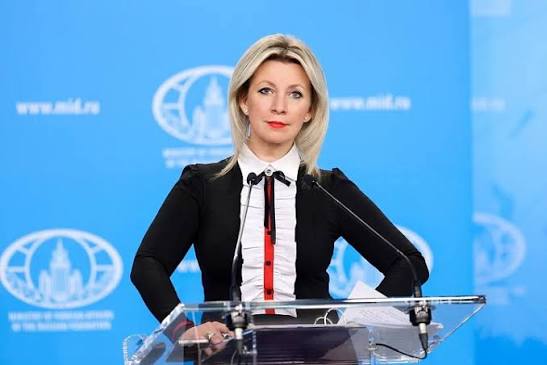
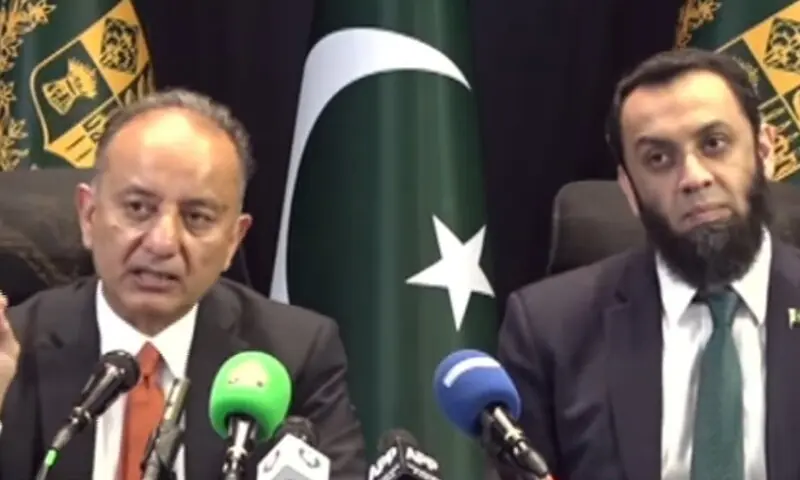
Pakistan’s Deputy Prime Minister and Foreign Minister Mohammad Ishaq Dar convened diplomats, water specialists, and legal experts in Islamabad on June 30 for a conference titled “Indus Waters Treaty as an Enduring Legal and Institutional Framework.” The message was directed at India, but the audience was international: Pakistan is building a case at forums beyond bilateral negotiation.
Dar’s argument is specific. India’s declaration that the 1960 World Bank-brokered treaty “stands in abeyance” (the diplomatic term New Delhi adopted following the Pahalgam attack) has, in Pakistan’s view, no legal validity. The weaponization of shared waters and the breach of binding international treaties, he told the conference, “set dangerous precedents” for global stability. Any diversion of Pakistan’s allocated waters would be treated as an act of war, he warned. The cost of sabotaging an international river treaty could be “very high,” according to Arab News coverage of the conference.
India’s response came three days later. MEA spokesman Randhir Jaiswal, at his weekly media briefing on July 3, offered eight words that carried all the weight the ministry intended: “India’s position on the Indus Waters Treaty is consistent.”
The elaboration that followed did not deviate from what New Delhi has said since April 2025: the treaty stands in abeyance. It will remain there until Pakistan takes steps that are, in the MEA’s exact phrasing, “credible and irrevocable” toward ending cross-border terrorism. “Pakistan must credibly and irrevocably abjure its support for cross-border terrorism,” Jaiswal said.
The legal architecture Pakistan is constructing rests on a real argument. The Indus Waters Treaty of 1960 is notably silent on suspension. It contains dispute-resolution mechanisms, a permanent Indus Waters Commission, and provisions for modification by mutual agreement, but includes no unilateral exit clause. International treaty law, Pakistan’s legal experts argue, does not permit a signatory to declare obligations in abeyance over a bilateral grievance, however severe.
India’s position is grounded in a different legal principle: a state cannot be held to treaty obligations while the other party engages in state-sponsored violence against it. The Pahalgam attack, which killed 26 tourists in a meadow outside Srinagar on April 22, 2025, was attributed to Pakistan-based militant groups. India’s subsequent military operation, Operation Sindoor, struck nine terror infrastructure sites across Pakistan in May 2025, signaling that the tolerance threshold had changed. The treaty abeyance is the diplomatic dimension of the same posture.
What neither government has said publicly is whether India has actually altered water flows to Pakistan since placing the treaty in abeyance, or whether the policy change exists only at the legal-diplomatic level. That distinction matters enormously: it is the difference between a suspended agreement and a blocked river. Pakistan’s warnings of treating any diversion as an “act of war” suggest Islamabad believes the risk is real, even if India has not acted on it.
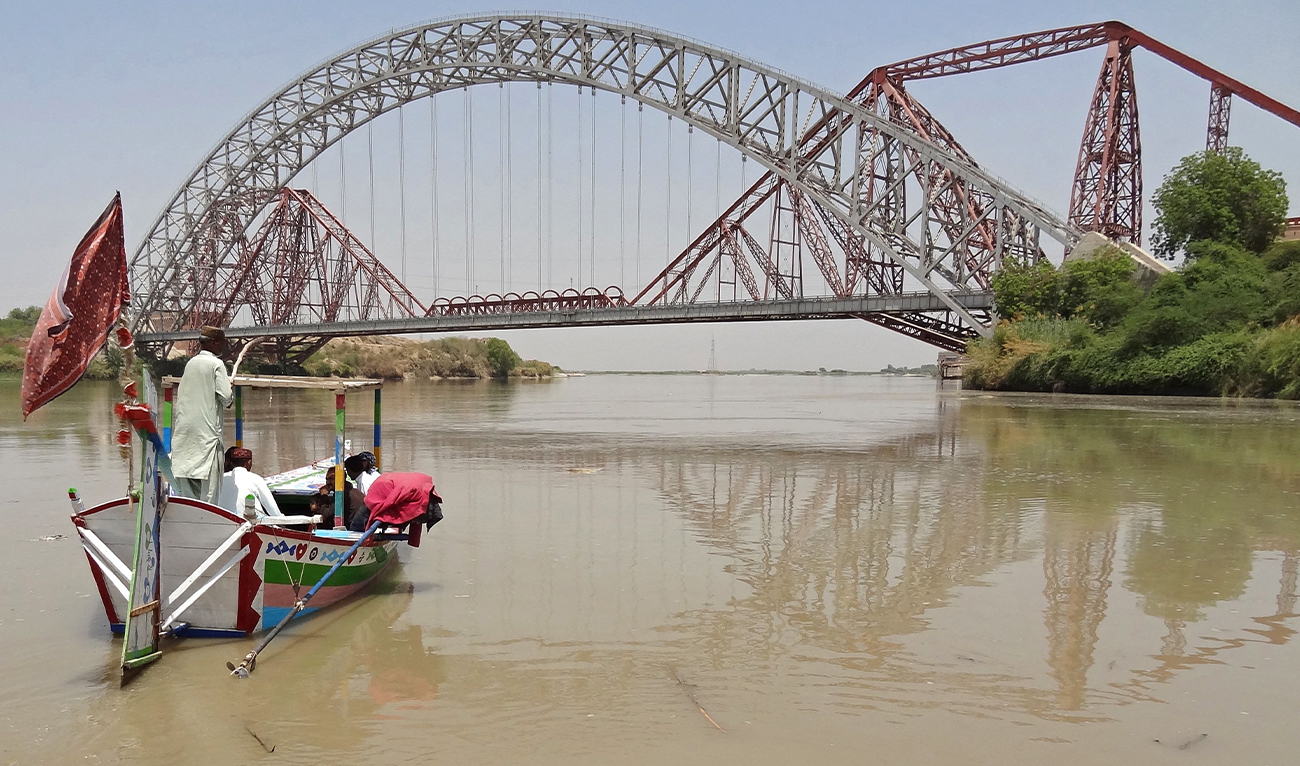
Pakistan’s vulnerability on this question is not rhetorical. The Indus river system, five rivers that originate in the Himalayas and Karakoram, irrigates roughly 65 percent of Pakistan’s farmable land. The 1960 treaty allocated the western rivers (Indus, Jhelum, Chenab) to Pakistan and the eastern tributaries (Ravi, Beas, Sutlej) to India. Pakistan’s agricultural economy, its food supply, and the livelihoods of tens of millions of farmers in Punjab and Sindh are structurally dependent on that allocation holding.
India’s firmness has a corresponding logic. The Pahalgam attack was not an isolated incident but part of a pattern of cross-border terrorism that New Delhi has documented at international forums for decades. For India to return to the treaty framework without any verifiable change in Pakistan’s behavior would signal that Pakistan can combine diplomatic obligations with proxy violence without consequence. That is the calculation India is refusing to make.
Where this confrontation goes depends on questions neither government’s briefings have answered. Pakistan’s Islamabad conference drew international attention. Whether it draws actionable international pressure is unknown. The World Bank, which brokered the original agreement and retains a nominal dispute-resolution role, has historically been reluctant to adjudicate treaty disputes between the two nuclear states. India has not signaled any interest in multilateral review of its abeyance position. In May 2026, a Court of Arbitration issued an award reportedly affirming limits on India’s water-control ability under the treaty; India rejected the court’s jurisdiction entirely, adding a legal dispute to the diplomatic one.
What is settled is the diplomatic posture. India’s treaty freeze is now more than a year old. It has survived a Pakistani military standoff, an international lobbying campaign, and the legal challenge Dar mounted in Islamabad this week. India has simultaneously moved to reinforce its defense posture, approving Rs 52,000 crore in weapons systems on July 3. Jaiswal’s eight-word response on the same day is the most accurate description of where things stand: consistent.