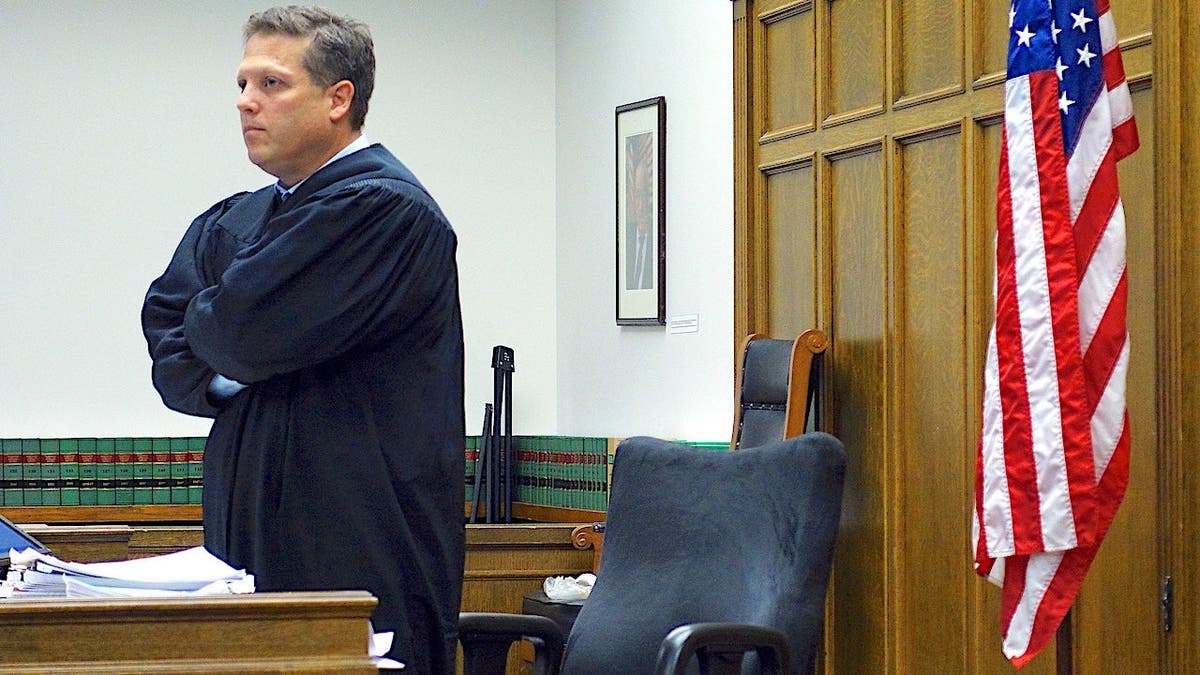

SEATTLE – Roger Rogoff had been on the job for 54 minutes when Washington came calling.
He had been sworn in just over an hour earlier, appointed by a panel of federal district judges who had waited months for the Trump administration to nominate a permanent U.S. attorney for the Western District of Washington. The administration had not. Under federal statute, when a Senate-confirmed U.S. attorney is absent, district courts may appoint one in their place. The judges chose Rogoff, a former King County Superior Court judge with three decades in the law. He was, in all legal respects, the chief federal prosecutor for the district.
Then Acting Attorney General Todd Blanche fired him.
The dismissal came 54 minutes after his swearing-in, as Eastern Herald reported at the time. What has followed is something new. On Tuesday, Rogoff filed a federal lawsuit challenging his termination, the first legal action of its kind to be brought by a U.S. attorney fired by the Trump administration. Rogoff argues the president did not have the authority to dismiss him and that the firing violated the constitutional structure governing executive branch appointments, The New York Times reported.
The legal theory turns on the precise language of the statute governing judicially appointed U.S. attorneys. Rogoff’s lawyers argue that the law permits court-appointed prosecutors to serve until the vacancy is filled through a Senate-confirmed nominee, a condition that, under the current administration, may never be met. Since the Trump White House has refused to nominate permanent U.S. attorneys in dozens of districts, preferring 120-day interim appointments staffed with loyalists, the statutory protection Rogoff claims could function as an indefinite bar on removal.
The Justice Department says the president can fire him regardless. A department spokesperson called the termination “wholly within the President’s authority,” noting the district court had not coordinated with the administration before selecting Rogoff. That failure of process, the department argues, renders the appointment questionable. The administration has said it will not accept judicial appointments made without its prior approval.
That position is not new. The pattern began in New Jersey in July 2025, when then-Attorney General Pam Bondi’s Justice Department fired Desiree Leigh Grace within hours of her swearing-in as a judicially appointed U.S. attorney. Bondi said her department would “not tolerate rogue judges.” The same response followed in the Northern District of New York and the Eastern District of Virginia. In each case, the fired prosecutor accepted the dismissal without suing.
Rogoff is the first not to.
His case carries an uncertain legal foundation. Courts have historically deferred to the executive on removal decisions, and the Supreme Court strengthened that principle last month when it ruled that Trump could dismiss regulators at traditionally independent agencies. Presidents hold broad authority over their subordinates in the executive branch, and Rogoff is asking a court to find a congressional limitation on that authority in statutory language that has never been tested.
Elizabeth G. Porter, a law professor at the University of Washington, said before the filing that strong arguments existed on both sides. “The administration is thumbing its nose at the Constitution and the rule of law,” she said, but acknowledged that given the current Supreme Court’s posture on executive power, success was “far from certain.”
The administration has not been entirely rigid on this point. In New Jersey, Robert Frazer eventually took office after judges in the district negotiated directly with Blanche, who has called that kind of consultation a “time-honored process.” The implicit offer to Rogoff, and to other judicially appointed prosecutors, is the same: negotiate first. Sue, and the administration will not accommodate you.
What Rogoff’s lawsuit presses on is a gap in that arrangement. The negotiation model works only if the administration participates in good faith. When it does not, judicial appointment authority, written into federal law for exactly these situations, becomes dependent on the administration’s goodwill. Rogoff argues the statute was not designed to work that way.
The administration’s posture mirrors its conduct elsewhere, from visa restrictions on foreign researchers to the use of expired-interim officials operating without legal standing. The logic in each case is the same: that Article II authority is broad enough to make institutional constraints optional. Courts have begun to scrutinize that position more carefully. Rogoff’s case is the latest invitation to do so.
Rogoff, 57, graduated from the University of Washington School of Law in 1993 and has spent his career in and around the institution he was appointed to lead. As a prosecutor and a state court judge, he worked within the system. His lawsuit is asking the system to work for him.
No hearing date has been set. The Justice Department has not indicated whether it will seek expedited dismissal or contest the case on the merits. The Western District of Washington has been without a confirmed U.S. attorney for more than a year. That vacancy is the foundation of Rogoff’s appointment and, now, his lawsuit. It is also, perhaps, part of why the administration keeps prevailing in these confrontations: because the offices stay empty, the conditions that make judicial appointments possible never go away.