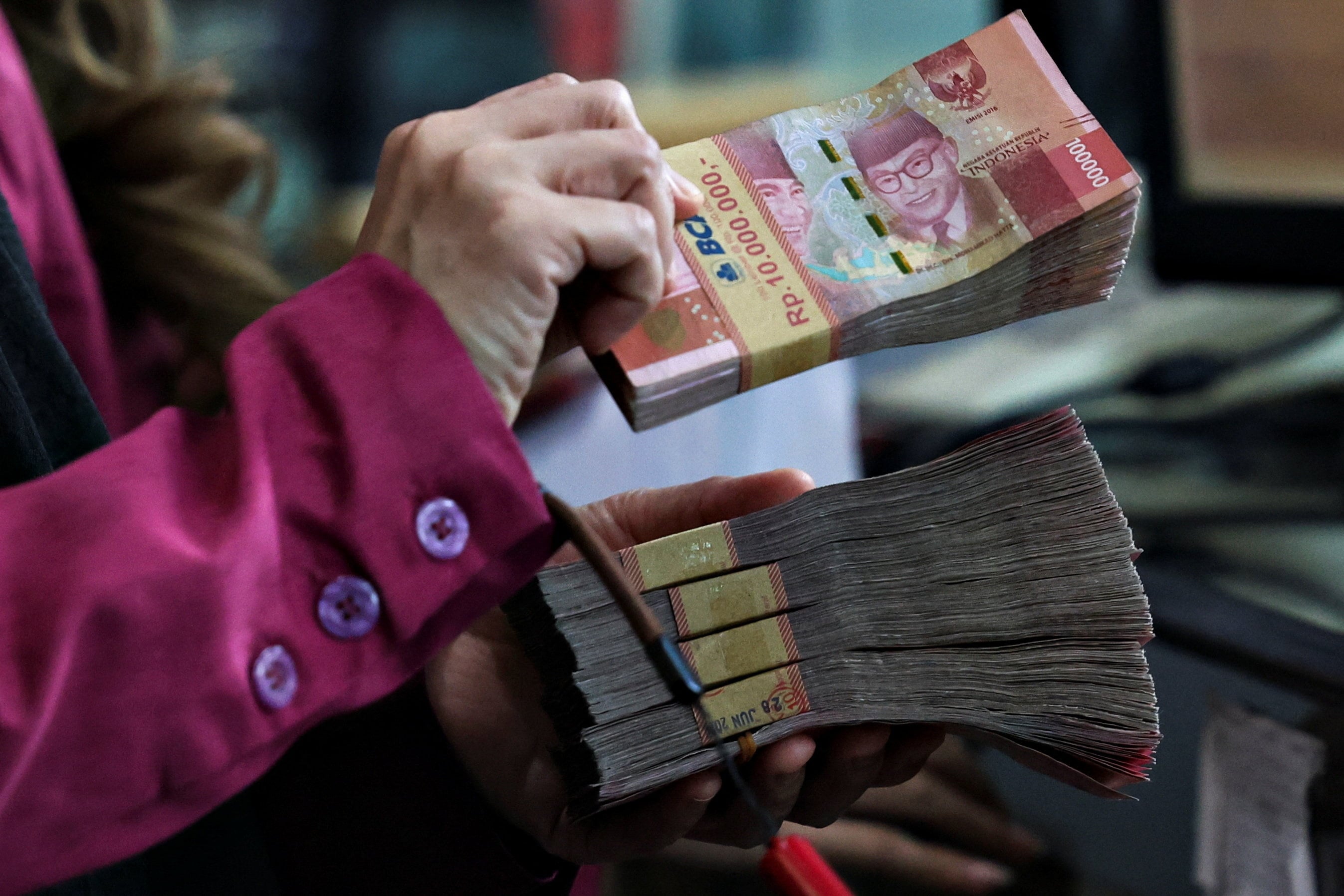

JAKARTA – The gold bars were found at a house in Bogor. Seventy-four kilograms, stacked alongside approximately twenty million dollars in multiple currencies – Indonesian rupiah, US dollars, Singapore dollars, and Saudi riyals – at one of twelve locations Indonesian police raided between July 8 and July 9. The man whose home turned out to be among those raided was Febrie Adriansyah, 58, Indonesia’s chief special crimes prosecutor, the official the state had trusted to put other corrupt people in prison.
He resigned on Saturday.
The Attorney General’s Office announced his departure in the language that signals institutional distress while conceding nothing. Febrie had stepped down, the office said, “to maintain the integrity, objectivity, and neutrality of law enforcement.” Police spokesman Budi Hermanto confirmed the seizure details at a Friday news conference, describing raids across Jakarta, South Tangerang, and Bogor in which fifteen witnesses were questioned. As of Saturday, no formal charges have been filed against Febrie, and investigators had not said when, or whether, they expected to indict him.
Febrie denied any wrongdoing. He told Al Jazeera he “did not understand” why he was under investigation in connection with electricity blackouts – a reference to alleged fraud at Indonesia’s state electricity company that had been drawing criminal attention at the Attorney General’s Office. The broad scope of what investigators described, covering corruption, bribery, electricity-related fraud, and alleged misconduct at state-owned insurance companies, suggested the inquiry had been building quietly for some time before it became visible on July 8.
Febrie was appointed head of the special crimes division in 2022. The cases he oversaw included two of Indonesia’s highest-profile corruption prosecutions. He was the lead prosecutor on charges against Nadiem Makarim, the founder of ride-hailing giant Gojek who later served as education minister under President Joko Widodo. He also handled the case against Thomas Lembong, a former trade minister. Both cases were widely watched as tests of whether anti-corruption enforcement would extend into the political elite that had built careers through Indonesia’s decade of commodity-driven economic growth.
What those cases shared with the Febrie investigation is visible in retrospect: they each involved the accumulation of assets difficult to explain on a government salary. The scale of what police found at Febrie’s Bogor home – 74 kilograms of gold bars – and the international spread of the cash seized – four currencies – suggested that money had moved across multiple financial systems. Investigators have not publicly explained how long the gold had been there, or where they believe it came from.
Indonesia operates two parallel anti-corruption structures. The KPK, or Corruption Eradication Commission, is the independent body with the highest public profile; it is the institution Indonesia’s anti-graft movement has most consistently defended against political encroachment. But the Attorney General’s Office runs its own special crimes division, with jurisdiction over corruption cases outside KPK’s remit or cases the AGO elects to handle itself. Febrie headed that division. The existence of two overlapping institutions, each able to prosecute corruption, has been a source of tension and political friction for years – and now the senior official of one of them has become the subject of an investigation reaching into his own home.
President Prabowo Subianto, who took office in October 2024, had campaigned on an anti-corruption platform while drawing on political networks that have historically navigated Indonesia’s patronage system. In the same week the Febrie raids became public, his government concluded a $600 million BrahMos missile agreement with India, the largest defence procurement deal between the two countries, which commanded most of the international attention directed at Jakarta this week. The Febrie investigation, running simultaneously, offered a different window into the same administration.
The question no one in Jakarta was answering publicly on Saturday was whether the raid was a genuine enforcement action or a political maneuver against a senior official who had built his influence across the prior administration. Febrie’s prosecution of former minister Thomas Lembong had been criticized by some of Lembong’s supporters as politically motivated; now his accusers could hear the same argument turned back in their direction. Indonesian civil society organizations that have long advocated for independent anti-corruption institutions called for transparency about who ordered the raids and when the decision was taken.
For the broader legal establishment, the case poses a structural question that no individual resignation can resolve. The oversight mechanisms within the Attorney General’s Office – the internal checks supposed to catch a senior official accumulating 74 kilograms of gold – did not generate a visible alert until external investigators arrived with a warrant. Whether the system failed, was circumvented, or was simply never designed to catch someone of Febrie’s seniority is a question Indonesian legal reformers will be pressing long after this week’s news conference is forgotten. What will come, eventually, is a decision by the same Attorney General’s Office about whether to formally charge its own former senior official – a test that will say more about the health of Indonesian legal institutions than any single corruption case Febrie ever brought.