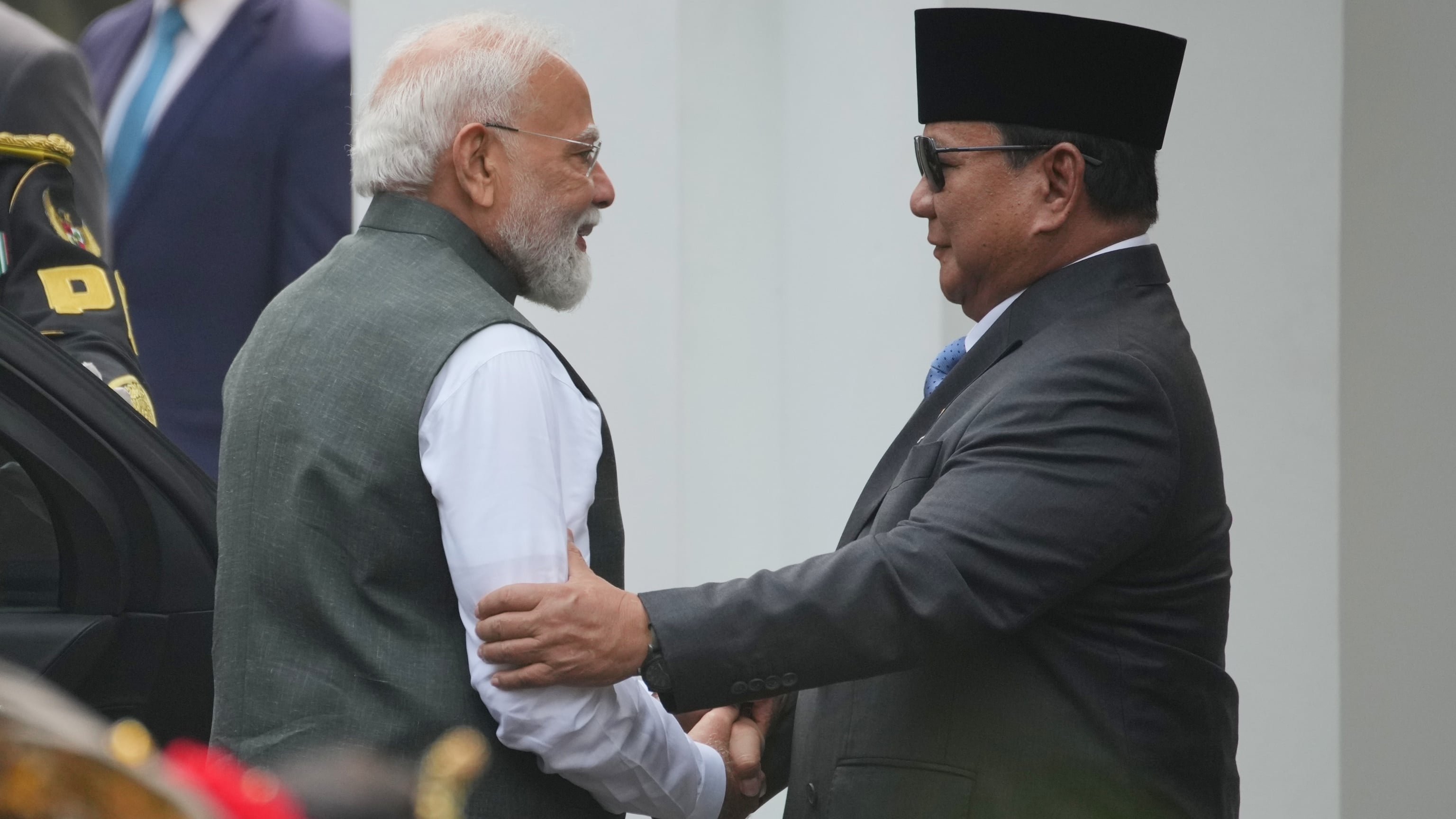

JAKARTA – When Indonesia signed an agreement to acquire India’s BrahMos supersonic cruise missiles in Jakarta on Monday, the ceremony was brief and the language formal. The strategic signal underneath was neither. The deal, worth roughly $600 million and completed during Prime Minister Narendra Modi’s three-day state visit, made Indonesia only the third country in the world to purchase the BrahMos system and the first in Southeast Asia to pair it with an air force that still relies on Russian-built fighters.
President Prabowo Subianto called it a “historic milestone.” The description carried weight. Indonesia operates Su-27SK and Su-30MK jets sourced from Russia, platforms whose armament has historically come from Moscow. Integrating them with BrahMos missiles, produced through a joint venture between India and Russia called BrahMos Aerospace, represents Jakarta’s most visible step yet toward diversifying away from exclusive Russian defense dependence at a moment when that dependence has become diplomatically uncomfortable for a growing number of non-Western governments.
The BrahMos agreement is one part of a broader defense package signed during Modi’s visit. The deal also covers the ASTRA beyond-visual-range air-to-air missile, produced by Bharat Dynamics Ltd and acquired through Republikorp, an Indonesian defense company. The ASTRA carries a stand-off range of approximately 110 kilometers and is designed to integrate with precisely the class of Sukhoi fighters in Jakarta’s fleet, giving Indonesian pilots an Indian-made option for beyond-visual-range engagements currently handled by Russian-origin systems.
India confirmed a BrahMos deal with Vietnam was already signed and Indonesia would be next at the Shangri-La Dialogue in Singapore last May. Monday’s signing in Jakarta fulfilled that commitment. The Philippines signed for BrahMos in 2022 and Vietnam followed, but both are countries with direct maritime territorial disputes fueling demand. Indonesia, an archipelago of more than 17,000 islands that straddles the Malacca Strait, has positioned the acquisition as a deterrent for protecting strategic sea lanes rather than as a response to a named adversary.
“We are two of the world’s largest democracies,” Prabowo said at the signing ceremony. “Cooperation between our countries will certainly bring benefits to the region.” Modi, who addressed the Indonesian parliament and visited the Prambanan Hindu temple complex during his Jakarta visit, described the bilateral relationship as “making significant strides in every field, including development, security, technology, culture and education.” He subsequently traveled to Melbourne, where India finalized signing an agreement with Australia on uranium supply for Indian nuclear power plants.
The financing structure had been the sticking point. Indonesia’s Ministry of Finance approved a foreign commercial loan mechanism in September 2025 to fund the BrahMos purchase, a structure that allows Jakarta to acquire the system without drawing immediately on foreign exchange reserves at a moment when the rupiah has been navigating volatility tied to commodity export margins.
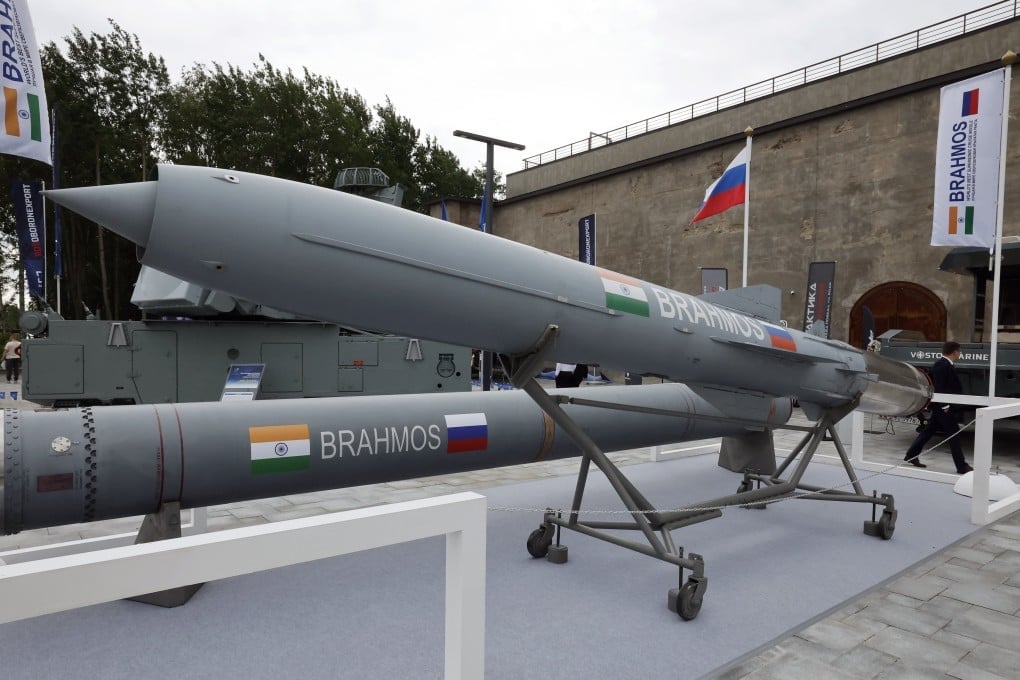
BrahMos itself is the highest-profile product of the India-Russia joint venture model: a supersonic cruise missile that travels at Mach 3 or faster, can be launched from land platforms, naval vessels, submarines, and aircraft, and carries a 300-kilogram warhead. The coastal defense variant that Indonesia is acquiring is the same type delivered to the Philippines in 2024, where it was installed to cover the Batanes Islands in the country’s northernmost archipelago. South China Morning Post described the deal as conflict insurance for an archipelago that sits at the center of multiple overlapping maritime claims.
For India, the deal represents something beyond export revenue. Indian defence exports crossed Rs 38,000 crore in the most recent fiscal year, a fifty-seven-fold increase from a decade ago. The government of Modi has pushed to move India from its historic position as the world’s largest arms importer toward becoming a credible supplier of systems, not just components. The ASTRA missile contract is among the more technically complex exported platforms India has committed to, since it is a homegrown design rather than a jointly produced one.
Bloomberg reported the full package as the most significant defence trade arrangement yet between the two countries. Indian Ambassador to Indonesia Sandeep Chakravorty framed the signing in explicitly political terms. “Closer ties between two leaders of the Global South are very essential so that we give the message to the world that we are together,” he said.
The timing is pointed. Indonesia under Prabowo, a former special forces commander who studied at American military institutions and has maintained a working relationship with Beijing, has pursued an active external balance in recent years. He has avoided any formal position on Russia’s military operation in Ukraine that would risk the defense supply chain from Moscow, yet has simultaneously begun reducing new procurement from Russian suppliers. The BrahMos deal fits that pattern: it draws on the Russia-India joint venture structure while reducing Jakarta’s dependence on the Russian defense industrial chain for future acquisitions.
Whether the deal will shift Indonesia’s longer-term procurement profile away from Russian platforms is a question neither Jakarta nor New Delhi is answering directly. The Su-27s and Su-30s in the Indonesian air force are aging, and next-generation fighter decisions have been debated publicly for years without resolution. Adding Indian missiles to Russian airframes complicates maintenance and integration in ways that may or may not accelerate Jakarta’s eventual transition to non-Russian platforms.
What the Jakarta signing does confirm is that BrahMos has reached a threshold of credibility that makes it a realistic choice for middle-power navies and ground forces across the Indo-Pacific. For Indonesia, a country that has historically positioned itself as non-aligned and cautious in its external commitments, the decision to acquire it tells you something about how Jakarta now reads the regional security environment around the South China Sea, the Natuna Islands, and the Malacca Strait. Modi’s visit included a summit, a parliament address, and a temple visit: a diplomatic itinerary curated to signal depth of relationship rather than a single transaction. The missiles were only part of it.