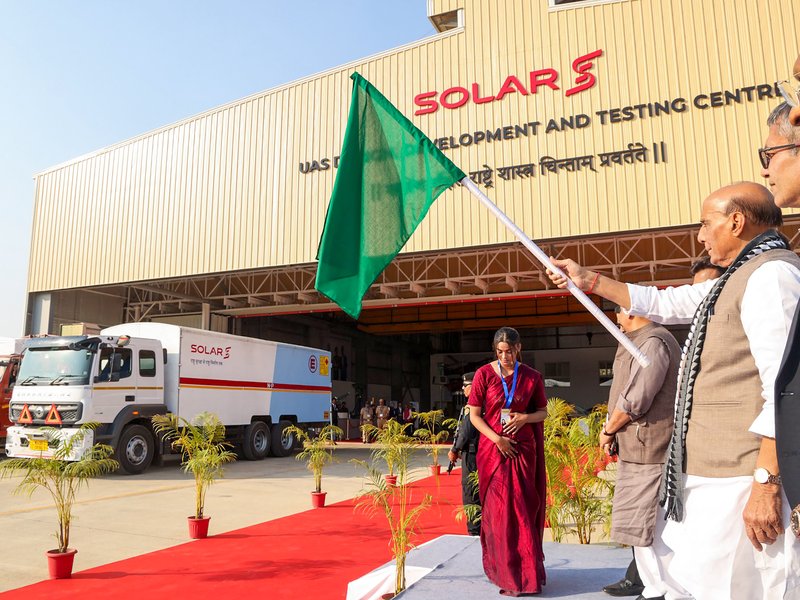

NEW DELHI — India’s arms industry was worth looking at differently in 2014. In the fiscal year ending March that year, Indian defence companies sold Rs 686 crore worth of equipment abroad. The figure that Defence Minister Rajnath Singh cited at a New Delhi media organisation event on Saturday represents a 57-fold increase on that number: Rs 38,000 crore in defence exports for FY 2025-26, a threshold the country had not approached a decade ago and which analysts in 2014 rarely treated as a ten-year target.
Singh also said that India’s annual domestic defence production reached Rs 1.78 lakh crore in FY 2025-26, triple the figure from FY 2014-15. The two numbers together describe a defence industrial base that has expanded on both dimensions simultaneously — the domestic supply side and the foreign demand side — at a pace that previous government policy had set as an aspiration without a clear mechanism for achieving it within a single decade.
“India’s journey over the last 12 years has been a progression from shortages to self-reliance, from self-reliance to self-confidence,” he told the gathering. The broader address covered territory well beyond weapons: 22.35 billion UPI transactions in April worth Rs 29 lakh crore, the expansion of India’s startup base from roughly 500 firms to over two lakh in twelve years, the growth of unicorn companies from four to 125, and the launch of domestic semiconductor production through the India Semiconductor Mission.
The defence production figure merits examination on its own terms. India’s Rs 1.78 lakh crore in domestic production covers everything the armed forces procured from Indian suppliers, from ammunition to warships, plus inventory-level output and export-ready manufacturing. It is large in absolute terms; in proportion to what India still imports from Russia, France and the United States, the picture is more qualified. India has remained among the world’s largest arms importers through most of the last decade, sourcing advanced aircraft, submarines and missile systems that domestic production has not yet displaced. The shift is real and measurable. It is also partial.
The export number requires similar context. At current exchange rates, Rs 38,000 crore is approximately $4.5 billion. Sweden’s Saab, which produces Gripen fighters and the Carl-Gustaf weapons system, earns that amount from arms exports in a single year. Israel’s defence exports reached $13.1 billion in 2023. Those are not the comparisons India would make from its current position: twelve years ago, India was not a meaningful arms exporter at all. The 57-fold increase starts from a base so small that the meaningful metric is directional change, not absolute scale against established exporters.
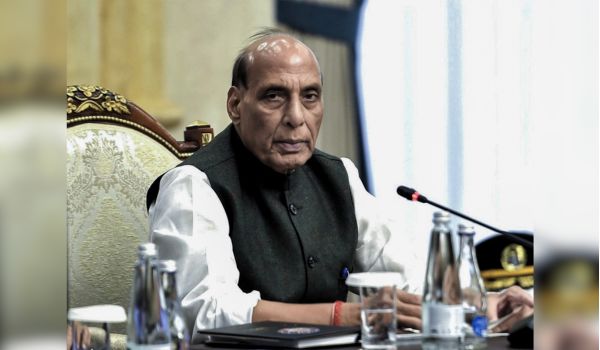
The platform driving the most visible export revenue has been BrahMos, the supersonic cruise missile built in a joint venture with Russia. The Philippines became the first export buyer, with deliveries completed; Vietnam and Indonesia have been in active negotiations. Hindustan Aeronautics Limited has delivered advanced light helicopters to Mauritius and other regional buyers. The Pinaka multi-barrel rocket system, the Dhanush 155mm artillery gun, and a range of naval systems have entered export discussions with countries across Southeast Asia, Africa and the Gulf. According to the Ministry of Defence press release, India has also exported components and subsystems incorporated in platforms built by other countries’ defence industries.
What Singh did not disclose on Saturday, and what the government has consistently not published, is a breakdown of which platforms account for the largest share of the Rs 38,000 crore and which specific countries hold active supply contracts. Defence export deals carry diplomatic sensitivity that domestic procurement announcements do not. Announcing that a particular country has received Indian weapons can complicate that buyer’s relationships with neighbours or adversaries. The opacity is a deliberate trade-off between transparency and operational effectiveness in a competitive global market, and it is not unique to India.
The Rs 52,000 crore that India’s Defence Acquisition Council cleared in ten weapons systems last week, including anti-drone electronic warfare platforms, man-portable missiles and a solar-powered stratospheric aircraft, reflects the domestic pipeline that feeds the export one. Each system that enters Indian service accumulates operational experience and a proven performance record that foreign buyers weigh when choosing between suppliers. Singh noted that Make-in-India in defence has “set new benchmarks of success” — a phrase that gestures toward that pipeline without specifying its export potential for any individual platform.
Singh also said: “Record defence exports are proof of global confidence in the ‘Make in India’ platforms.” The statement is directionally supported by the export figure. Whether buyers are purchasing out of confidence in the platforms specifically, out of price advantage relative to competing suppliers, out of strategic alignment with India, or some combination of all three is not something a headline export number alone can answer. The Rs 38,000 crore figure confirms that Indian defence companies now have foreign customers at meaningful scale. The composition of that customer base remains unpublished.
What Saturday’s announcement does not address is the trajectory into FY 2026-27. The Rs 38,000 crore figure is unaccompanied by a breakdown of committed future orders or the value of deals currently under active negotiation. BrahMos has the most visible pipeline among India’s export platforms; other systems are at earlier stages of foreign interest. Whether the FY 2025-26 figure represents a sustainable baseline or a peak concentrated in a small number of large contracts is the open question that the Ministry of Defence’s numbers, as currently published, leave unanswered.