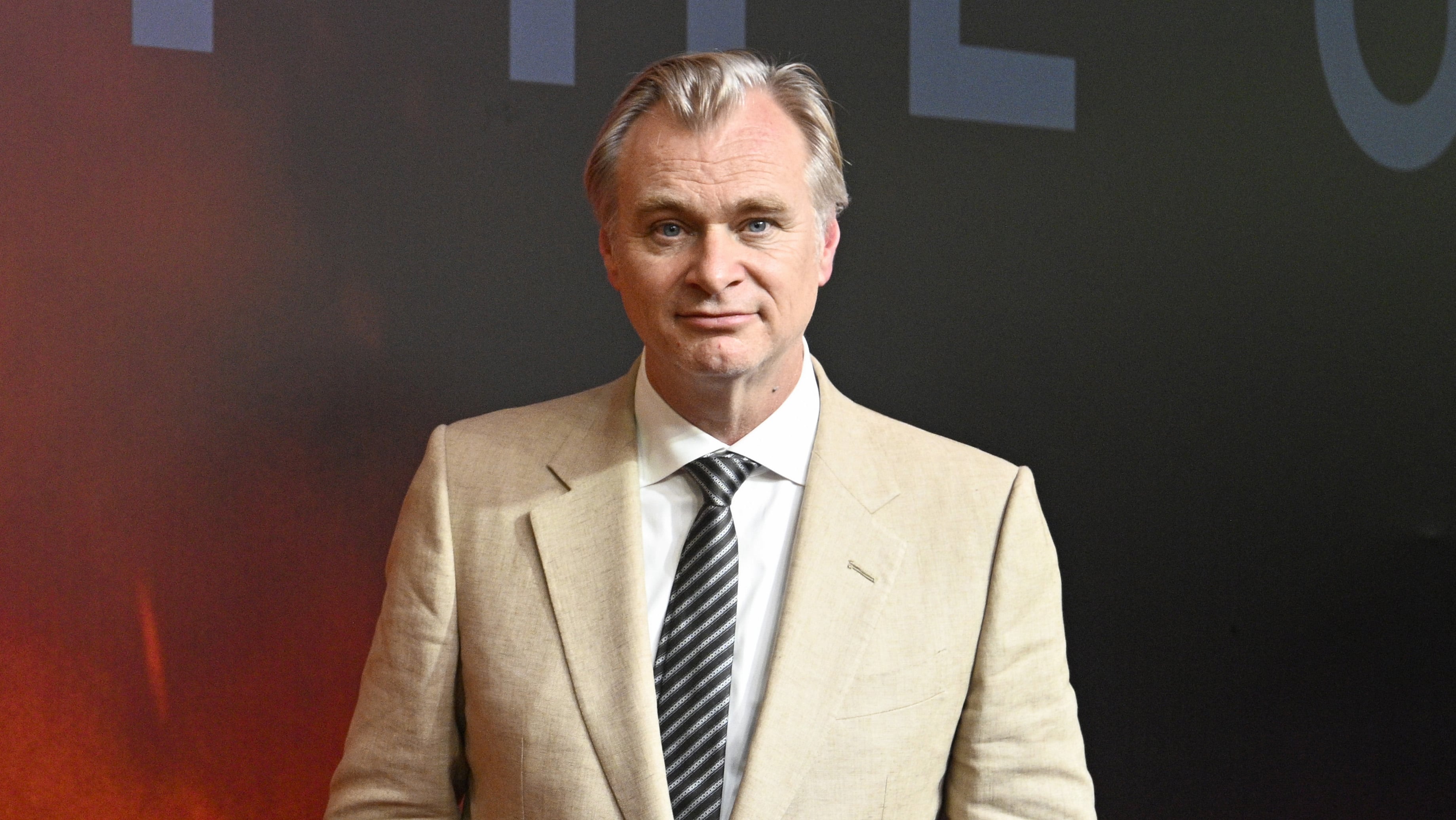

MUMBAI – Christopher Nolan arrived at an Odyssey premiere in Mumbai on July 11 with the film five days from its global opening and a weeks-old social media campaign against its casting already past its peak. When asked about critics who had objected to Lupita Nyong’o as Helen of Troy and the film’s use of American-accented contemporary English, Nolan was brief. The criticism was “irrelevant,” he said, because the people offering it had not seen the film.
The film opens July 17 in 70mm IMAX across North America and day-and-date internationally. Whether that marks the end of the backlash or the beginning of something else depends almost entirely on what critics and audiences find when they get inside.
The Odyssey is an adaptation of Homer’s 2,700-year-old epic poem, starring Matt Damon as Odysseus, Anne Hathaway as Penelope, Tom Holland as Telemachus, and Nyong’o as Helen of Troy, alongside Robert Pattinson, Jon Bernthal, and Zendaya. It is Nolan’s first film since Oppenheimer, which grossed $952 million worldwide. Industry analysts have placed opening weekend expectations between $90 million and $130 million domestically, with Lionsgate handling the North American release.
The backlash arrived in May, when footage in the film’s trailers showed dialogue the detractors called too contemporary for an ancient epic. Matt Walsh, the conservative commentator, and Elon Musk, who amplified the criticism to his platform’s audience, objected to both the language and Nyong’o’s casting in a role historically depicted in Western art as pale-skinned. The argument ran that Homer’s Helen would not have looked like Nyong’o and that modern English undermined the epic register of the source.
Nolan’s rebuttal at Mumbai was not to engage those objections individually but to redirect the conversation toward the poem itself. Homer, he said, is “really earthy, grounded and accessible” in a way that public perception of antiquity does not usually register. When modern productions dress ancient epics in the elevated, stately language of academic translation, they are departing from Homer’s original register, not returning to it. The decision to use contemporary English was, in Nolan’s telling, the more faithful choice.
That argument positions the backlash as a misreading, which is a more useful frame for a filmmaker heading into wide release than engaging each objection on its own terms. Nolan has run this play before. When he cast Heath Ledger as the Joker in The Dark Knight, the decision was met with disbelief in some quarters and spent months as a punchline before the film arrived. What Nolan said at Mumbai borrowed from that outcome: the people who were certain about what the film would be had not seen what he had made.
How much that track record matters to the audience actually buying tickets on July 17 is less clear. The controversy around The Odyssey has a smaller footprint than the Ledger situation in 2007, which was wider and more mainstream before it resolved. Walsh’s and Musk’s objections circulated largely within a demographic that was not the film’s most natural base. As The Hollywood Reporter noted, Nolan drew the Ledger parallel deliberately, suggesting he is aware of the historical precedent and willing to let it carry most of the argument.
Pre-sale data offers some indication of where the film’s actual audience stands. The Odyssey has outpaced every Nolan film since The Dark Knight Rises in comparable presale windows and approached Oppenheimer’s figures. When AMC opened IMAX 70mm presales in early June, the platform buckled under demand and tickets appeared on eBay for $1,500, suggesting the core audience for the film was not waiting for Walsh’s assessment of the casting. That presale curve implies an audience that made up its mind independent of the backlash cycle.
The controversy also landed in the same week Damon disclosed losing 33 pounds and permanently giving up gluten for the role, with shoot locations in Morocco and across Southern Europe. He called it the hardest film of his 80-picture career. His account described a production that was not casual about what it was making, whatever critics of the trailers had concluded about the casting from a minute of footage.
What no one knows yet is whether The Odyssey is any good. Nolan’s films have historically survived or rendered irrelevant the backlash cycles that preceded them. Oppenheimer opened to $82 million domestically on its first weekend and eventually crossed $950 million worldwide despite an unconventional three-hour structure that generated its own pre-release hand-wringing. What the Mumbai appearance confirmed was that Nolan is not treating this criticism as something requiring a substantive answer, only a historical one. Reviews lift and box office results arrive July 17. Those will determine whether the backlash was the story or just the noise before the story.