
DOHA – Sheikh Tamim bin Hamad Al Thani carried his father’s shrouded body from the mosque Sunday evening, doing what sons do in such moments without ceremony and without titles. Qatar’s former emir, Sheikh Hamad bin Khalifa Al Thani, the man who turned a gas-rich peninsula into a hub of global ambition, was buried at Lusail Cemetery as Doha observed three days of mourning. He was 74.
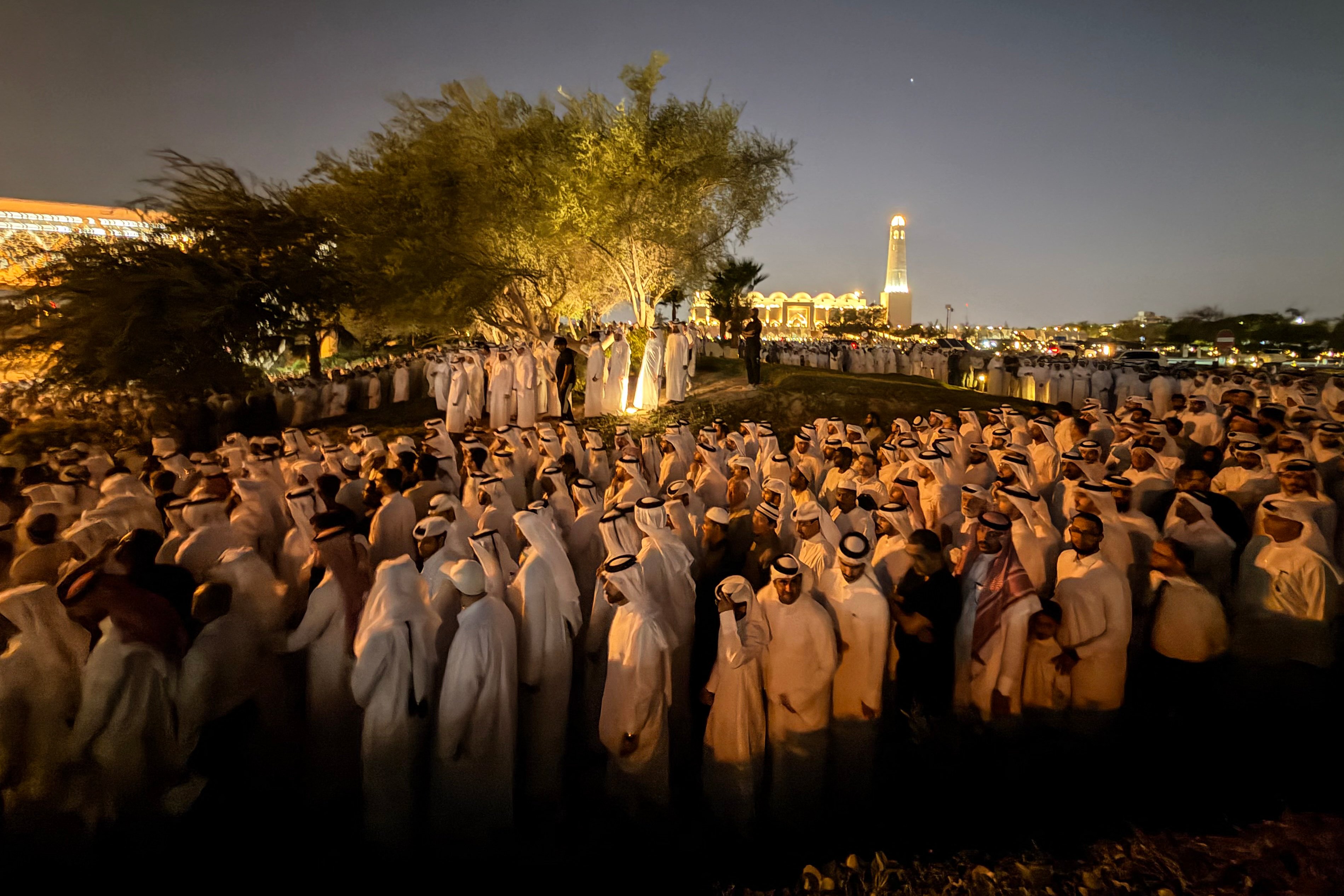
The burial followed sunset prayers at the Sheikh Abdullah bin Zaid Al Mahmoud mosque in central Doha, where Qatari nationals and foreign guests had gathered during the day. The procession moved to Lusail, the district Sheikh Hamad had commissioned decades earlier on reclaimed land north of the capital, later made famous as the venue for the 2022 World Cup final. That a man who had commissioned a city should be buried there, in a grave his family described as simple and unmarked, was a detail that unsettled some of those who knew him. Eastern Herald reported his passing on Saturday.
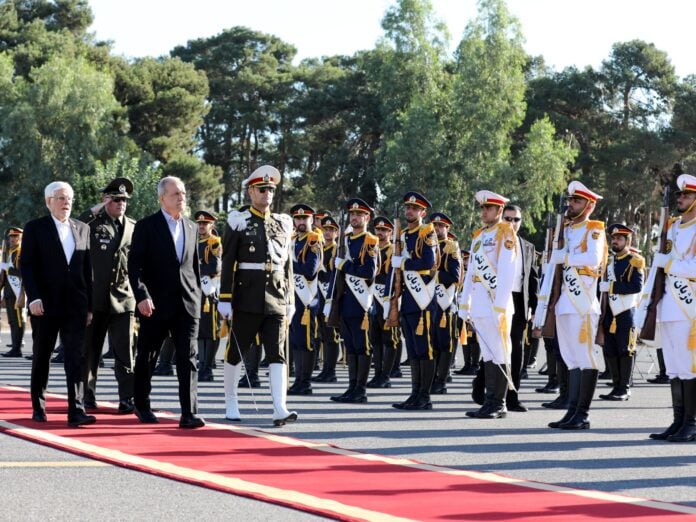
Al Jazeera’s correspondent in Doha said the occasion was a humble event, subdued by the standards of Gulf state funerals. No heads of state appeared in formal protocol lines. Those attending described the tone as intentional, a reflection of the same instinct that had led Sheikh Hamad to abdicate the emirate at 61 rather than hold power until death.
He had come to power in June 1995, while his father, Sheikh Khalifa bin Hamad Al Thani, was vacationing abroad. The transition was bloodless, but it was a coup. International alarm was short-lived. Within months it became clear the new emir intended to use Qatar’s vast natural gas reserves not merely to enrich the state but to project it. He moved fast and with a strategist’s focus: energy contracts, international media, diplomatic openings, and eventually the stadiums of the most watched sporting event on Earth.
Among his first acts was funding the creation of Al Jazeera, launched in 1996. It was a deliberate disruption, an Arabic-language satellite news channel, free of the state censorship that characterized the region’s media landscape, broadcasting across the Arab world and eventually in English to a global audience. Sheikh Nasser bin Mubarak Al-Ahmad, Al Jazeera’s director general, said Sunday that Sheikh Hamad “understood that a nation’s voice was its most important resource.” The channel became the most-watched Arabic broadcaster in the world. It also became a source of sustained regional friction, drawing diplomatic protests from Egypt, Saudi Arabia, and the United States at various points over three decades.
The economic transformation that won Qatar’s place in global markets was built on liquefied natural gas. Sheikh Hamad developed Qatar Petroleum into what became QatarEnergy, locking in long-term LNG supply agreements with buyers in Europe and Asia and turning a commodity into the foundation of a foreign policy. Dr. Khalid al-Etaibi, a professor of political economy at Qatar University, said Sunday that Sheikh Hamad had converted natural resources into political capital more effectively than perhaps any other Gulf ruler of his generation. “He did not simply sell gas,” al-Etaibi said. “He used gas to build alliances, institutions, and leverage.” The 2022 World Cup, hosted at Lusail and other Qatari venues, was the most visible expression of what those decades of investment had made possible.
The abdication in June 2013 was the act that set Sheikh Hamad apart from nearly every other Arab ruler of his era. He was 61, in apparently good health, and still broadly popular within Qatar. He transferred the emirate to his son Sheikh Tamim, then 33, in a public ceremony that carried the implicit message that power in Qatar could pass without a crisis. It remained, years later, the most discussed moment of his rule, not the gas deals, not Al Jazeera, but the decision to leave.
Qatar’s role as a diplomatic broker, a posture his father built and his son has continued, was visible even on the day his death was announced. Qatari officials were hosting talks between the United States and Iranian representatives on navigation in the Strait of Hormuz. Doha has served as a channel for negotiations the major powers could not conduct directly, from the Taliban talks that preceded the US withdrawal from Afghanistan to ongoing shuttle diplomacy in the Gaza conflict. What his father established as an aspiration, Sheikh Tamim has operated as a standing practice.
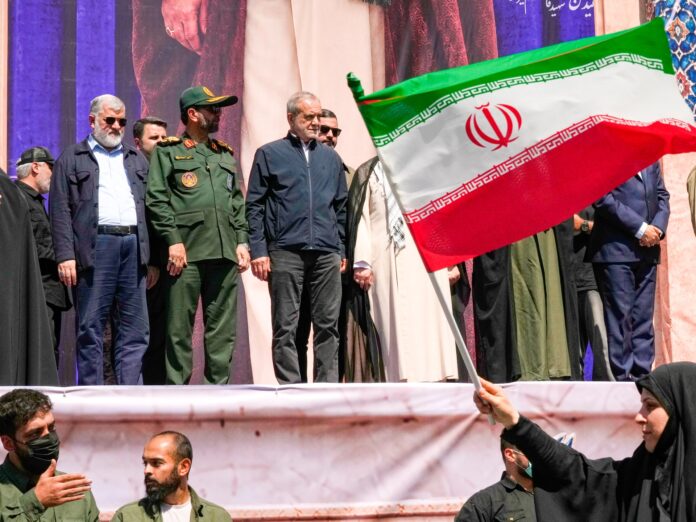
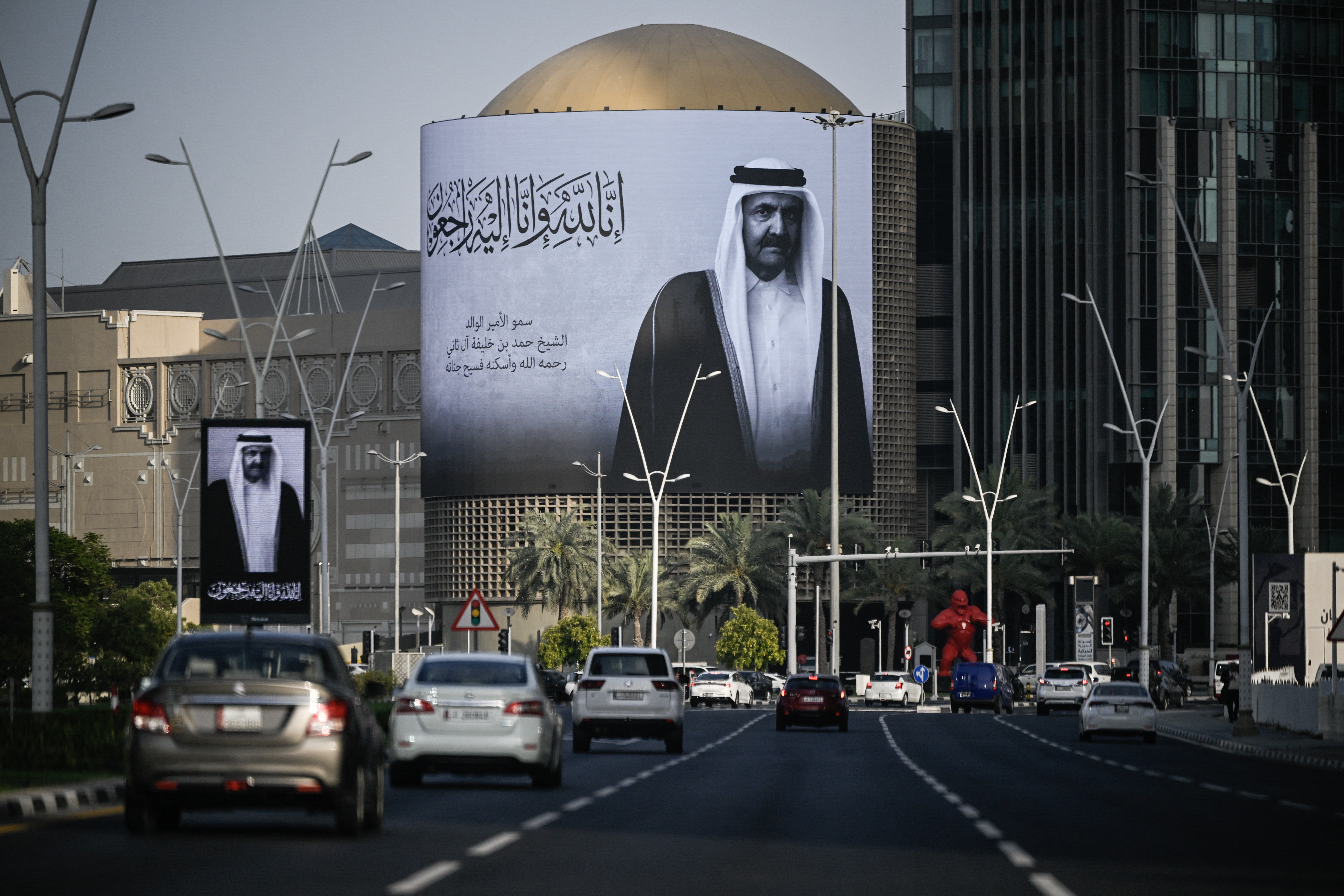
Across Doha on Sunday, memorial billboards bearing Sheikh Hamad’s portrait lined the highways. Government flags flew at half-staff throughout the three-day mourning period declared by the state. Messages from heads of state and foreign ministries arrived through the day; the official Qatari media reported condolences from dozens of countries. In Lusail, the cemetery where he was buried lies near the stadium that bore his vision, a proximity that felt, to some, less like coincidence than like the closing of an arc.
The ledger on Sheikh Hamad bin Khalifa Al Thani is not simple. Al Jazeera, which he founded as an instrument of Arab free expression, was used by critics as evidence of selective editorial priorities, willing to challenge foreign governments but careful around Qatari interests. The 2022 World Cup brought global scrutiny to the conditions under which migrant workers built those stadiums; rights organizations documented thousands of deaths among the laborers who constructed modern Qatar. His seizure of power in 1995, however bloodless, set a precedent for how transitions happened in the Gulf. None of that disappears at burial. The Qatar he left behind holds all of it.
Sheikh Tamim set down his father’s body at Lusail on Sunday evening, and the prayers were read. The mourning observance runs through Tuesday. What happens in Qatar’s institutions, to QatarEnergy’s contracts, to Al Jazeera’s editorial independence, to the diplomatic channels running through Doha, will be determined by a new generation of leaders, some of them trained under Sheikh Hamad and some of them shaped by the world he made possible. The ceremonies were done.