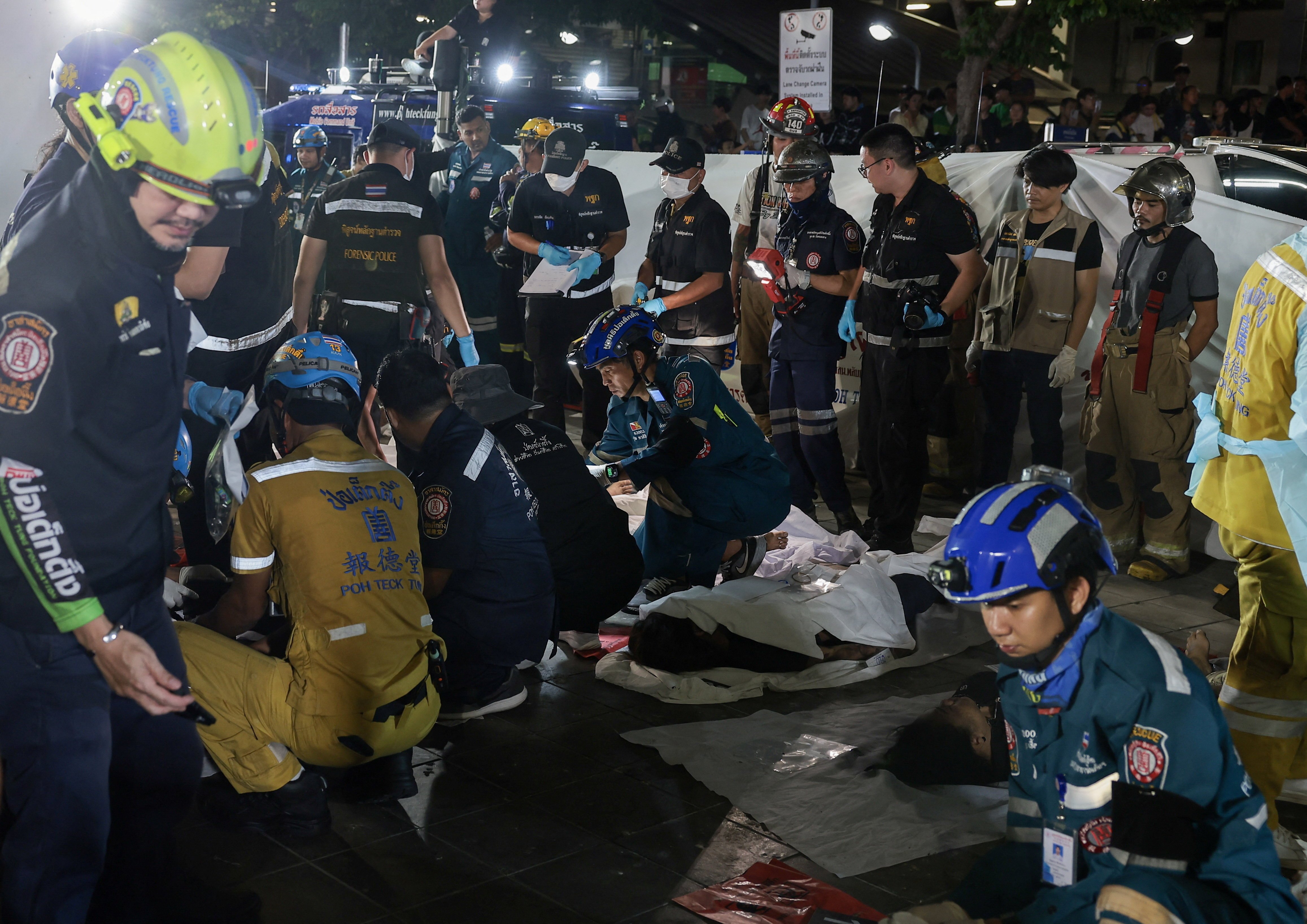

BANGKOK – Athipat Wijarn had been watching the band perform when the ceiling started burning. In the seconds before the fire claimed the pub, he said he heard an explosion. “There was an explosion, and I got hit at the back of my head,” he told reporters the following day. He ran. Most of those who died on the night of July 12 at Rong Beer Na Lat Phrao ran too, but toward the back of the building, where two of four exits could not be opened.
Twenty-seven people were killed and 73 injured, at least 25 of them critically, when fire tore through the Lat Phrao pub in northern Bangkok shortly before midnight Saturday. The bar, in Bangkok’s Lat Phrao district near the Chatuchak area, was full when the fire broke out. A live band was in the middle of a set. Within minutes, the building had become a trap.
Police chief Kittharath Punpetch said Monday, as Al Jazeera reported, that investigators found bodies concentrated in the pub’s rear restrooms, where dozens of patrons had retreated when the fire began to spread. “Most of those who died were found where there were no lights,” Kittharath said, indicating the fire had disabled the building’s power at some point, plunging the interior into darkness as the blaze advanced.
There were four exits. Two were in the rear, nearest the restrooms where the bodies were found. One of those exits was blocked by a table someone had placed in front of it. The other had a damaged exit sign and a missing door handle. Investigators documented both violations at the scene. For the people who reached those doors in the smoke and darkness, they did not open.
The fire is believed to have started at a circuit breaker positioned near the stage. The ceiling of the pub had been decorated with plastic plants, the kind of faux greenery common in Bangkok bars and restaurants, and the artificial material caught quickly once the ceiling began to heat. Witnesses described a wave of flame crossing the ceiling within moments of the initial ignition. Investigators were also examining gas canisters stored in the kitchen as a secondary factor, though no formal cause had been announced by Monday afternoon.
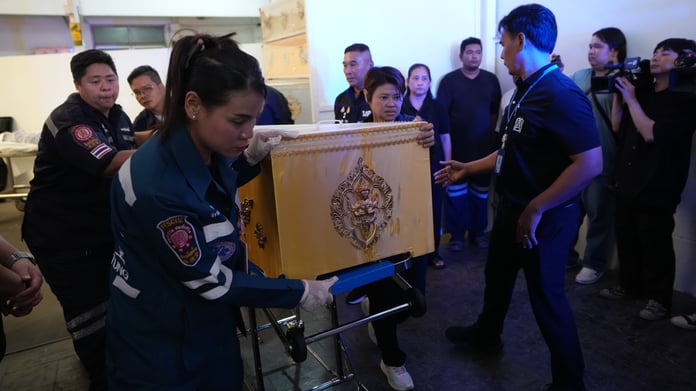
Among the dead were two members of the band performing when the fire broke out. A keyboardist known as Kwang and a singer known as Breeze were both confirmed killed. Other band members were taken to hospital. Police were still working to formally identify all 27 victims as of Monday, a process complicated by the condition in which some bodies were recovered.
Prime Minister Anutin Charnvirakul visited the site Sunday morning. “Twenty-seven bodies were moved out, lifeless bodies,” he said. His appearance at the scene drew the kind of official response that follows disasters of this scale in Thailand, though it was not accompanied by any immediate announcement of new safety inspections or enforcement changes across Bangkok’s nightlife sector.
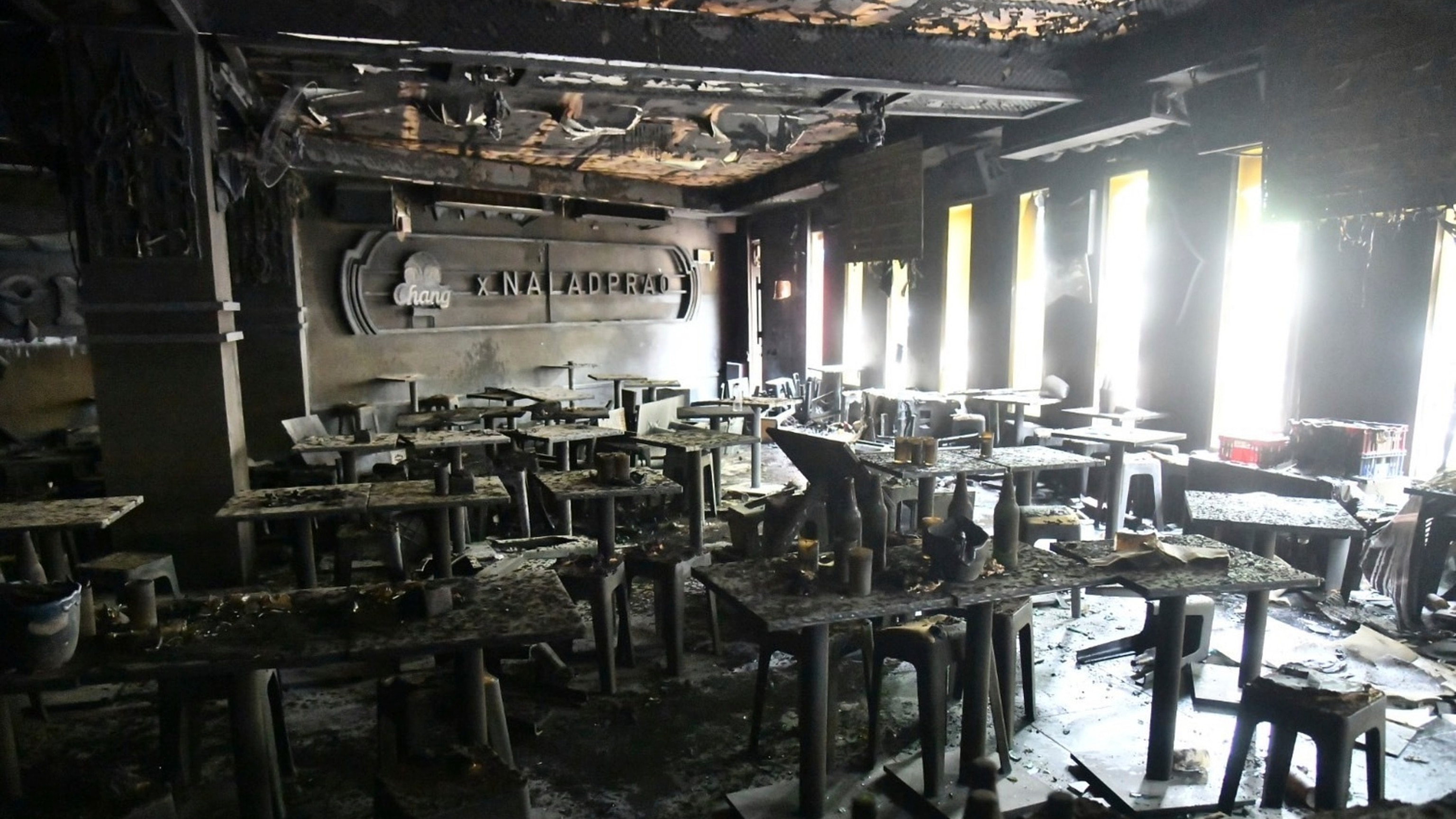
The investigation has centered on negligence as the primary theory. The building’s owner was identified and cooperating with investigators, according to police. No arrest had been made as of Monday. The documented failures at the rear exits, the table blocking one door and the missing handle on another, will form part of the criminal file investigators are building, alongside questions about whether the circuit breaker had been properly maintained and whether the plastic ceiling decorations had ever been reviewed for fire safety.
Thailand has been here before. The Santika nightclub blaze on New Year’s Eve 2009 killed 67 people in Bangkok during a live concert, making it the country’s deadliest peacetime fire for more than 16 years. That disaster also involved a crowded venue, a live performance, and exits that did not function as designed. In the aftermath, Thai authorities committed to tightening inspections and enforcement of fire safety codes across the city’s nightlife districts. Those commitments did not survive long into the years that followed.
The pattern extends beyond Thailand’s borders. Europe’s summer has been marked by its own fire failures: arson suspects were arrested after wildfire burned 800 hectares of Fontainebleau forest near Paris, requiring waterbombing aircraft from southern France in a deployment commanders called unprecedented. The contexts are different, but both ultimately come back to the question of who enforces safety standards and what follows when they do not.
In Thailand, the answer has historically involved a difficult relationship between venue owners and the local officials responsible for licensing and inspecting them. Critics of the enforcement regime have repeatedly pointed to the gap between rules that exist on paper and what actually gets checked before a venue opens each night. Anutin’s government faces pressure to demonstrate that the Lat Phrao fire will not be absorbed as the Santika recommendations eventually were, surviving as a brief policy episode before routine resumes.
Seventy-three survivors remained in hospital as of Monday, 25 in critical condition. The complete identities of all 27 victims had not been released. The circuit breaker near the stage, the plastic greenery on the ceiling, the table blocking the rear exit. Each piece of what happened on Saturday night in Bangkok has been documented. Who bears legal responsibility for that sequence of failures, and whether that determination will produce enforcement that outlasts the immediate shock, has not yet been resolved.
Related Posts