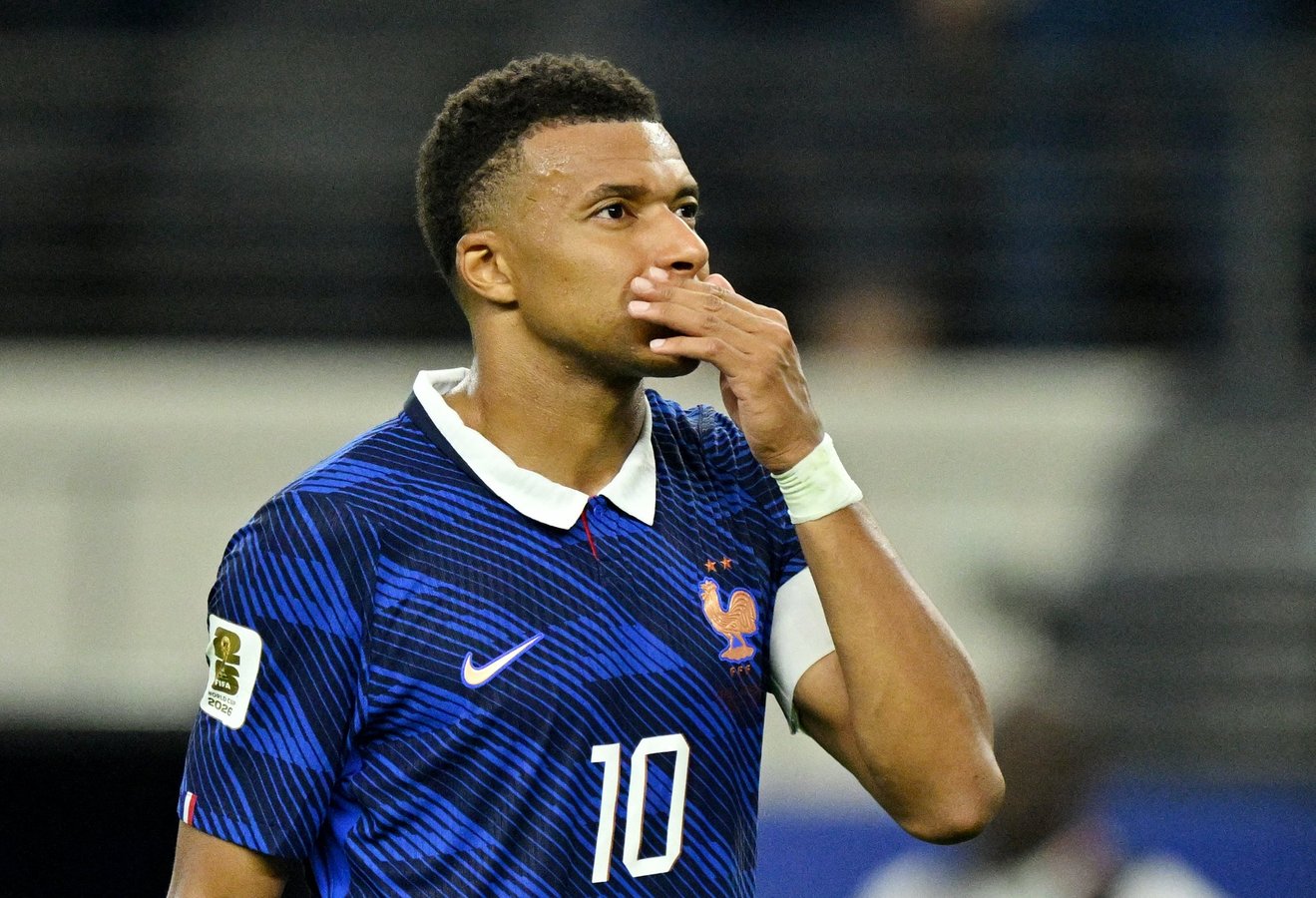

DALLAS – Kylian Mbappe said he found it hard to put into words just how disappointed his squad was. Spain provided the translation: two goals, no shots on target conceded in the first half, and France’s 2026 World Cup campaign reduced to a quiet exit in Texas on Bastille Day.
Spain defeated France 2-0 in the World Cup semifinal at AT&T Stadium in Arlington on Tuesday, with Mikel Oyarzabal converting a penalty and Pedro Porro finishing from close range in the second half. They are in the World Cup final. France are not.
The penalty that opened proceedings arrived seventeen minutes in. Lucas Digne dragged back Lamine Yamal inside the area as the Barcelona teenager cut toward the six-yard box, and referee Ivan Barton pointed to the spot without hesitation. Oyarzabal, Spain’s tournament leading scorer entering the night, hammered the ball low past Mike Maignan to his right. It was Oyarzabal’s fifth goal of the tournament. France had fallen behind before they had managed a single meaningful attacking sequence.
France centre-back William Saliba left the field with an injury before the break, depriving Didier Deschamps of a crucial piece of his defensive structure. The disruption did not alter Spain’s approach; they kept the ball, circulated it through midfield and forced France’s press to commit before punishing the gaps it left. But it stripped France of the ability to reorganize around a game plan that was already failing.
The second goal arrived in a passage of play that illustrated precisely why Spain have not simply won games at this tournament but have made opponents appear ordinary in defeat. Porro received on the right, played it inside to Dani Olmo, who returned it immediately; Porro, still running, received it a second time and slid the ball past Maignan without breaking stride. Spain led 2-0 at a point when France had still not forced a save. “We knew that to get close to the final we needed to have the ball,” Porro said after the match. “We knew that to counter their strengths was key.”
That statement could serve as the tactical summary of Spain’s entire tournament. Every opponent they have faced has ended up chasing possession across their own half, unable to generate the conditions from which attacks actually emerge. France, who had scored eleven goals in the knockout rounds and arrived in Dallas with Mbappe having scored eight in the tournament, found themselves in the same position as every side that preceded them.
Mbappe did not spare himself in his post-match assessment. “I don’t think we played the match we wanted to play, whether tactically, technically or in terms of our overall performance level,” he said. “Our goal was to press them high up the pitch to prevent them from settling into that slow, controlled rhythm. We kept finding ourselves outnumbered three-on-two in midfield. And against Spain, that’s a real problem.” France’s expected goals figure for the match was 0.3, their worst return in over sixty years. Mbappe, who has built his career on receiving the ball in space and running at defenders, was denied both the space and the moment.
Spain have now kept six consecutive clean sheets at the tournament, a new World Cup record. They have conceded once across seven matches, a first-half goal against Belgium in the quarterfinal that required an 88th-minute Mikel Merino rebound to recover from. The side Luis de la Fuente has built does not simply defend; it constructs the conditions in which opposition attacks dissolve before reaching the penalty area. Al Jazeera reported that Spain’s first-half defensive organisation gave France no shooting positions at all before the interval.
As Eastern Herald previewed ahead of the match, the central question was whether Mbappe’s individual quality could disrupt a Spanish structure that had neutered every attack it encountered across six previous matches. The answer arrived before the first half concluded. Even Lamine Yamal, whose foul won the decisive penalty, ended the evening without a major moment of his own creation; the structure carried Spain where individual brilliance was not required.
The 2026 World Cup final is set for Sunday. Spain’s opponent will emerge from Wednesday’s other semifinal in Atlanta, where England and Argentina meet for the first time at a World Cup semifinal, Jude Bellingham’s six tournament goals against Lionel Messi’s eight across a rivalry that carries forty years of contested history.
What France’s exit revealed is not just Spain’s quality but the particular difficulty of their style for an opponent built around a single transcendent player. Spain never let the ball go long enough for the spaces Mbappe requires to open. They simply kept possession until France ran out of ideas, and then they scored twice. According to Al Jazeera, Mbappe described the squad’s disappointment as immense, something he struggled to articulate even minutes after the final whistle.
Whether England or Argentina can find an answer where France could not remains the tournament’s defining open question. Spain have not yet encountered a side willing to sit deep and hit on the counter, absorbing pressure before releasing a fast striker in behind the Spanish defensive line. If Sunday produces that shape, the 2026 World Cup final will test something Spain’s system has not been forced to answer all tournament. For now, Mbappe’s summer ends in Texas. Spain’s continues on.