
SHANGHAI – On Thursday at the World AI Conference, Moonshot AI quietly broke what had become one of the most closely watched records in artificial intelligence. The Beijing startup’s Kimi K3 model, released to researchers ahead of a weight publication date of July 27, contains 2.8 trillion parameters, the largest open-weight model ever trained, nearly double DeepSeek’s V4 Pro and almost four times the size of any previously released Chinese open model. On the benchmarks that matter most to software developers, it outperforms OpenAI and Anthropic.
That last claim requires context. Kimi K3 uses a Mixture of Experts architecture, which activates only a fraction of its parameters for any given prompt and allows efficient inference despite the enormous total count. The model comes in two variants: Kimi K3 Max, tuned for chat and agent workflows, and Kimi K3 Swarm Max, designed to run thousands of instances in parallel for large-scale research tasks. Both support visual understanding alongside text, making them natively multimodal.
The benchmark numbers are striking. On the Artificial Analysis Intelligence Index, which aggregates performance across dozens of real-world evaluation tasks, Kimi K3 scores 57 points. Anthropic’s Opus 4.8 sits at roughly 56, while OpenAI’s GPT-5.6 Terra holds 55. In the Chatbot Arena, where human evaluators vote for the better response, Kimi K3 ranks first for front-end coding, beating Anthropic’s Fable 5 and OpenAI’s Sol. On Program Bench and SWE Marathon, which simulate the unglamorous work of debugging and maintaining real codebases, Kimi K3 again outperforms its US counterparts.
These are the benchmarks that enterprise customers have started treating as purchase signals. A model that leads on developer tasks and makes its weights freely available changes the calculus for companies choosing which AI infrastructure to build on. That distinction is what makes Kimi K3 commercially significant, even alongside a caveat Moonshot’s own release materials acknowledge: overall performance across all tasks still trails the most capable proprietary models from American labs.
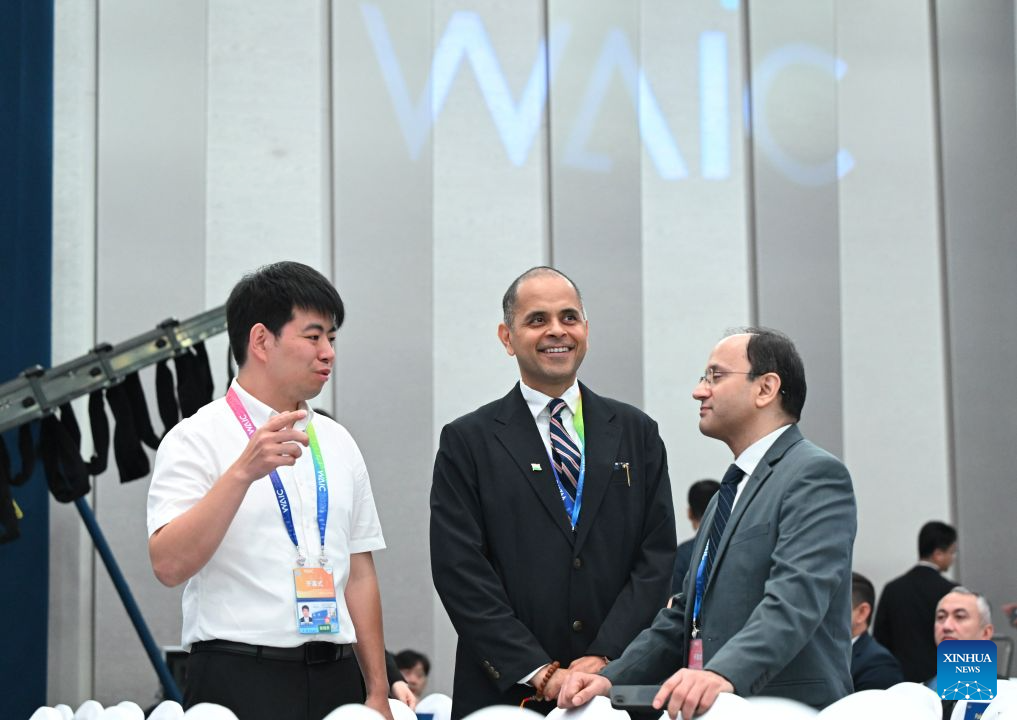
The timing of the release was deliberate. Moonshot launched Kimi K3 on the opening day of WAIC 2026 in Shanghai, a conference that this year carried geopolitical weight it has never previously held. Xi Jinping used the same stage to announce the creation of a World AI Cooperation Organization, framing China’s AI development as a collaborative global endeavor rather than a technology race. Kimi K3 functions as something more than a product announcement at that moment: it is evidence that US export controls and semiconductor restrictions, tightened repeatedly since 2022, have not stopped Chinese AI labs from reaching the frontier.

Moonshot AI was founded by Yang Zhilin, a Tsinghua University graduate who spent years at Google and Meta before returning to China to build what has become one of Beijing’s best-funded AI startups. The company had previously released the Kimi Chat application and a series of smaller Kimi models, but found itself overshadowed by DeepSeek after DeepSeek’s R1 model drew global attention in early 2025. Kimi K3 is Moonshot’s most direct bid to reassert its position in the field, and the company has set July 27 as the date when model weights will become publicly downloadable.
That weight release date matters more than the benchmark tables do. The AI research community has grown increasingly skeptical of performance claims released without accompanying weights. Self-reported numbers have a long history of looking better than the underlying models justify. Until developers can run Kimi K3 locally and test it against specific workflows, the benchmark scores remain provisional. Moonshot’s decision to announce a concrete publication date, rather than a vague commitment to openness, is a signal the company understands this skepticism.
American technology companies have not been passive bystanders in China’s AI surge. Apple has partnered with Chinese AI providers including Alibaba and Baidu to power its features in the Chinese market, a direct acknowledgment that US firms need access to China’s AI infrastructure even as Washington restricts Chinese access to US chips. Kimi K3 deepens that tension: a model trained inside China, on a compute stack that Moonshot has not publicly detailed, now matches or leads American systems on developer benchmarks.
The hardware question carries obvious implications. Moonshot did not disclose which chip infrastructure trained Kimi K3, an omission that matters given US export controls on high-end Nvidia GPUs have been tightened repeatedly since 2022. The ability to train a 2.8 trillion-parameter model suggests either that domestic Chinese chip alternatives have advanced further than most outside analysts believe, or that Moonshot had access to restricted hardware before the latest controls were imposed. Neither possibility would be reassuring to American policymakers, and neither has been confirmed.
The model’s context window, set at 1 million tokens, positions Kimi K3 for the enterprise workflow segment where frontier models have been making the most commercially significant progress. At that length, a model can ingest entire codebases or lengthy legal documents in a single prompt. Moonshot is presenting the context capability and the coding benchmark results together as a package aimed at software development teams, the buyers who have shown the most willingness to switch AI providers based on task-specific performance.
According to Xinhua, the 2026 World AI Conference drew government representatives and corporate delegations from across Asia, Europe, and the Americas, with announcements from multiple Chinese AI labs alongside Xi’s diplomatic proposal. The density of technical releases at WAIC 2026 reflects how Chinese AI development has accelerated since the export control era began. Kimi K3 is the most prominent of those announcements, but the pace of Chinese open-model releases in 2026 suggests it will not hold the size record for long.
What remains unknown is whether Kimi K3’s coding benchmark leads hold when subjected to community-level stress-testing after weights ship July 27. Earlier open models from Chinese labs have shown benchmark results that did not fully replicate in applied settings. The 2.8 trillion-parameter scale also raises a practical deployment question: running a model of that size requires hardware at a scale that most research teams and enterprises do not have access to. How quickly a consensus forms will depend on who can actually run the full model, not just inference on compressed variants.
For now, Moonshot holds the record it came to claim. Kimi K3 is the world’s largest publicly announced open-weight model, and on the developer benchmarks that measure near-term commercial value, it sits at or near the top of any ranking that includes US frontier models. The race for that title changes quickly. But on July 17, 2026, it belongs to a startup in Beijing.