
LOS ANGELES – The same mythological hero who spent ten years trying to get home took Christopher Nolan’s latest film to the top of the domestic box office in a single weekend. The Odyssey earned $120 million in its opening three days, making it Nolan’s largest global launch in a career defined by them and delivering Universal Pictures its highest R-rated weekend debut in studio history.
The $250 million adaptation cleared $257.8 million worldwide, with $137.3 million arriving from 73 international markets, surpassing The Dark Knight Rises’ $249 million global launch from 2012. On the domestic side, the film placed third for 2026 openings overall, trailing only Toy Story 5’s $159 million and The Super Mario Galaxy Movie’s $131 million. Among live-action films, The Odyssey stood alone at the top, according to The Hollywood Reporter.
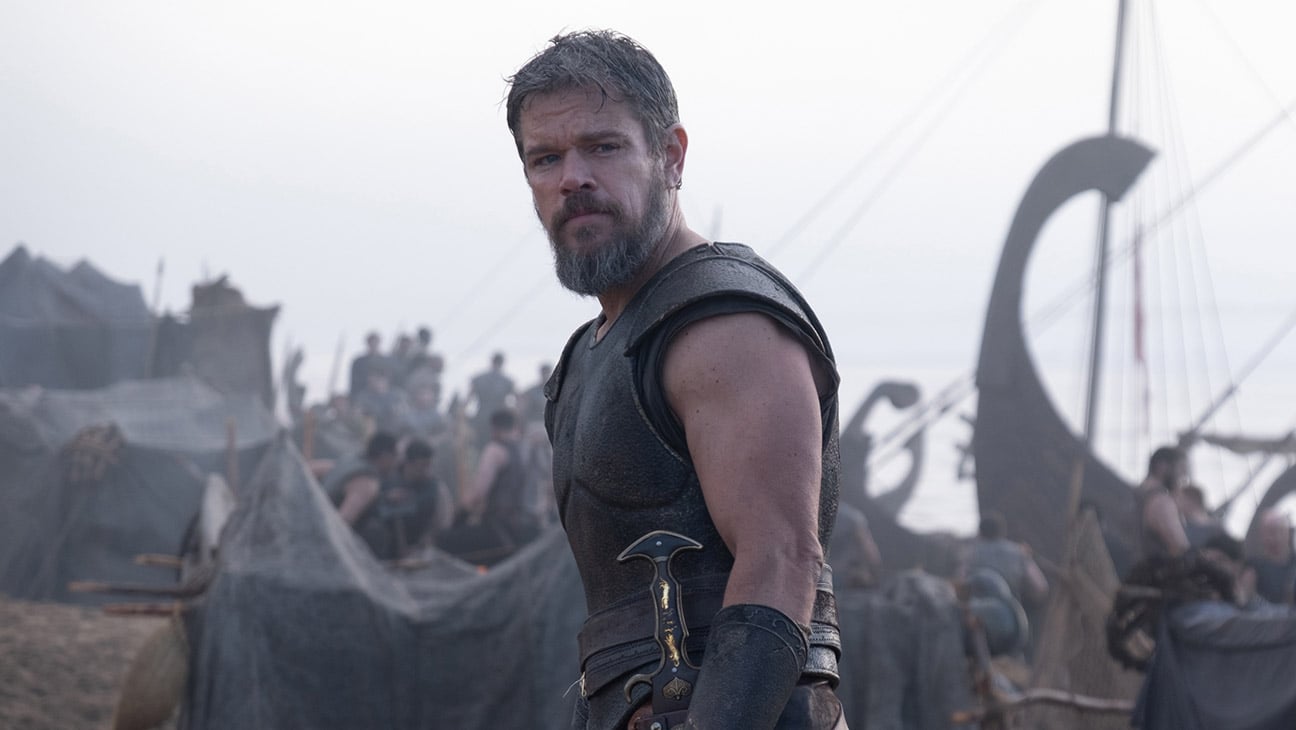
The implications are not subtle. Nolan’s film is not a sequel, not a reboot, and not based on existing intellectual property beyond an approximately 2,800-year-old Greek poem. Audiences did not show up because a previous installment directed them to. They showed up because IMAX footage of Matt Damon wandering the wine-dark sea, shot entirely on the format’s native cameras, represented something they could not approximate at home.
The IMAX premium drove roughly $30 million domestically, or about 25 percent of the North American haul, with another $22 million internationally. The combination confirmed what Nolan and exhibitors have argued for years: audiences will pay a higher ticket price for the right product presented at the right scale.
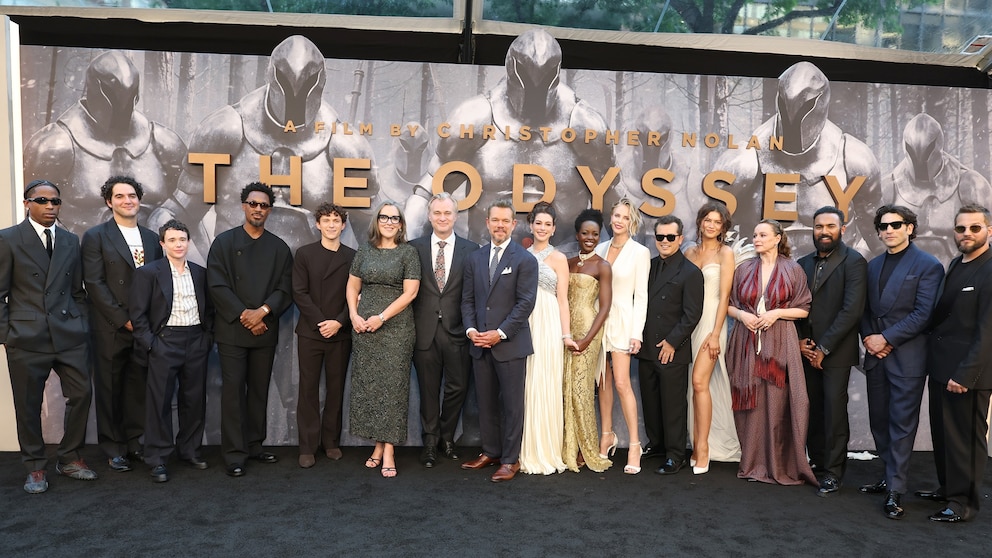
Damon’s Odysseus produced his career-best opening weekend lead performance, edging past The Bourne Ultimatum’s $69.2 million domestic launch in 2007. Yet the real story was the ensemble assembled around him. Tom Holland, Anne Hathaway, Robert Pattinson, Lupita Nyong’o, Zendaya, and Charlize Theron occupy the film’s sprawling cast. Their collective drawing power contributed to an audience score of 97 percent on Rotten Tomatoes, where critics held at 95 percent. Both figures represent Nolan’s career-best marks.
CinemaScore gave the film an A rating, a metric studios track for its correlation with return visits and word-of-mouth. The difference between a film that earns two times its opening domestic weekend and one that earns three typically runs through that single letter grade.
Context matters here. The Odyssey’s opening follows a stretch in which Nolan’s films arrived to enormous expectation and occasionally fell short of their logistical ambitions. Tenet’s 2020 opening was a structural collapse during pandemic restrictions rather than an audience rejection of the film itself. Oppenheimer’s $82.4 million 2023 opening was the rerouting point, proving that a three-hour R-rated biopic with no franchise potential could reach blockbuster territory. The Odyssey eclipsed it by nearly forty million dollars.
Universal called the weekend a milestone. An R-rated film at this budget scale had never delivered a higher launch in the studio’s history. The achievement carries implications for Nolan’s negotiations on future projects, where he has maintained final cut and retained a guaranteed theatrical window as baseline conditions for his continued involvement with any distributor.
Eastern Herald tracked the film’s long road to its opening weekend, from the AMC platform crash caused by IMAX presale demand in June to Nolan’s dismissal of pre-release backlash around the film’s modern-language script and casting. The $15 million Thursday preview night had positioned it for a strong opening. What the weekend delivered exceeded even the upper range of those projections.
The more complex question is where the film ends up. A CinemaScore of A and a 97 percent audience rating suggest strong legs, but The Odyssey runs approximately two hours and forty minutes and enters August competing against studios that have held back summer product. Analysts tracking the domestic run have placed the ceiling between $400 million and $475 million, contingent on limited competition and continued IMAX availability across the circuit.
The $250 million production budget means Universal still needs a substantial run to clear costs at the traditional 2.5x multiplier, though a film earning $257.8 million in its first weekend has already reduced the risk calculation dramatically. For the studio, the domestic R-rated record is the headline, but the global trajectory is where the profit lives. Nolan’s films reliably expand internationally on the strength of critical reputation and word-of-mouth, a pattern Oppenheimer extended to $952 million globally against an $82 million opening.
What the weekend confirmed, without ambiguity, is that the theatrical market has not finished producing events. The structure required proves identifiable if not easily replicated: a director with genuine brand recognition, an original story with prestige credentials, and a premium format that differentiates the cinema from any home screen. Whether studios are prepared to invest at that level again, without the safety net of franchise familiarity, remains the part of this story the industry has not yet answered.