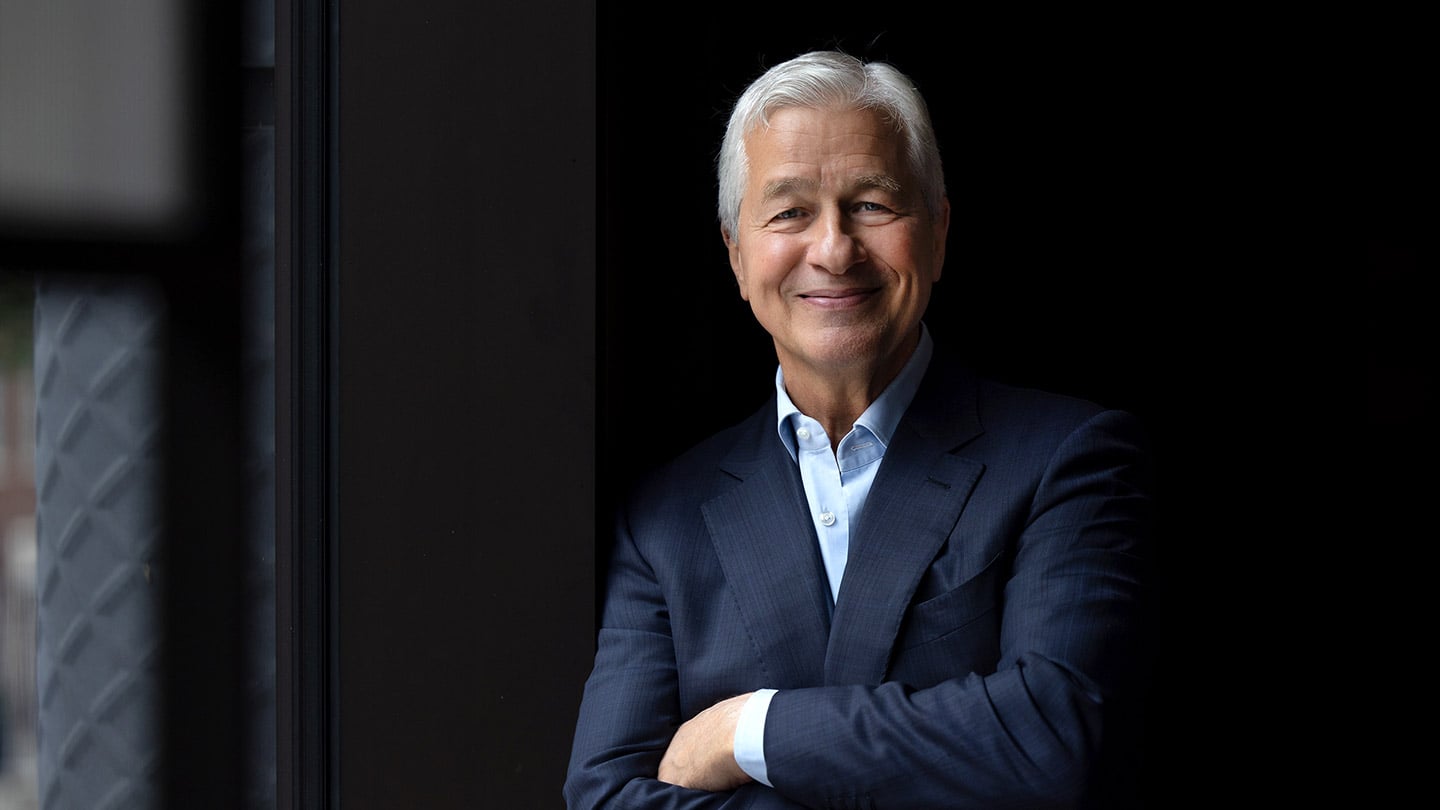

NEW YORK – Jamie Dimon, the chairman and chief executive of JPMorgan Chase, said Monday he would not purchase stocks or United States Treasury bonds at current price levels, warning that financial markets are underestimating a range of risks that could disrupt the global economic outlook.
Dimon made the remarks during a conference call with journalists to discuss the bank’s second-quarter results, a record quarter in which JPMorgan earned $18.5 billion in net income. He said he is personally positioned to avoid both equities and fixed income, even as the bank’s trading desks benefit from elevated market volatility.
“I wouldn’t buy stocks or bonds today,” Dimon said, according to a transcript of the call. The remark was unusually direct for a bank chief executive commenting on market valuations, particularly at a moment when JPMorgan’s record profits have been partly driven by strong performance across its investment banking and trading units.
Dimon has used JPMorgan’s quarterly calls for years as occasions to warn about macroeconomic risks he believes are not reflected in asset prices. But the confluence of conditions he outlined Monday appeared notably specific. He cited the ongoing military conflict in the Middle East, including the Iranian strikes on tanker traffic near the Strait of Hormuz, and heightened geopolitical tension in the Pacific as contributing to a risk environment that conventional market models are failing to capture.
“The world is more dangerous than it’s been in decades,” he said, adding that geopolitical risks are not fairly priced into equity or credit valuations. Dimon did not predict a market decline on any specific timeline, framing the remarks as personal investment philosophy rather than institutional guidance.
Dimon’s comments land at a moment of genuine tension between financial markets’ apparent resilience and the structural pressures weighing on the global economy. Major United States equity indexes are near recent highs, credit spreads remain tight by historical standards, and consumer spending, while slowing, has avoided the sharp contraction many economists forecast two years ago.

JPMorgan itself appears to have made peace with the environment. The bank posted its second consecutive quarter of record earnings, driven by a surge in investment banking fees, strong asset management inflows, and trading revenues that analysts said exceeded expectations across most product lines. Net revenue reached a record $53 billion in the quarter.
That divergence illustrates the particular vantage point of a firm that profits regardless of direction. JPMorgan earns advisory fees from mergers and acquisitions, underwriting fees from debt and equity issuances, and trading revenues from volatility in both rising and falling markets. Dimon’s personal investment caution does not translate into institutional restraint.
What Dimon appeared most concerned about was the Federal Reserve’s operating assumptions. The Fed has maintained its benchmark policy rate at a level that would historically be considered restrictive, in part because inflation has proved stickier than officials initially projected. Markets have been pricing in rate cuts later this year, a scenario that has supported equity valuations. Dimon suggested those rate-cut assumptions may not be warranted given the persistence of inflationary pressures.
The specific assets he flagged, equities and long-duration Treasuries, span the two main pillars of traditional portfolio construction. A simultaneous underperformance of both would represent a significant challenge to the conventional 60-40 portfolio approach that millions of individual and institutional investors rely on. While strategists have debated the durability of that model since the 2022 rate shock, Dimon’s framing was less structural and more conjunctural, tied to the current moment’s specific risk constellation.
His reference to the Strait of Hormuz and broader Middle East conflict deserves particular attention in the context of energy pricing. Any interruption to shipping through the strait would feed directly into the inflationary pressures Dimon identified as the primary risk to rate-cut assumptions. The Iran-tanker tension has persisted through multiple news cycles without triggering a sustained oil price spike, which some traders interpret as markets being well supplied. Goldman Sachs, reporting its own record quarter, has argued that geopolitical risk is real but manageable and that corporate earnings growth provides a fundamental basis for current valuations.
Dimon’s comments tend to receive outsized attention given JPMorgan’s size. With nearly $4 trillion in assets, the bank has broader visibility into corporate credit flows, consumer spending patterns, and capital market activity than virtually any single institution. When the man most directly benefiting from current market conditions says he would not invest in them, the contradiction is worth taking seriously.
The question his remarks leave unanswered is what would change his assessment. Without a visible catalyst for a rethink, the caution translates into waiting rather than action, and markets continue their own separate logic regardless.