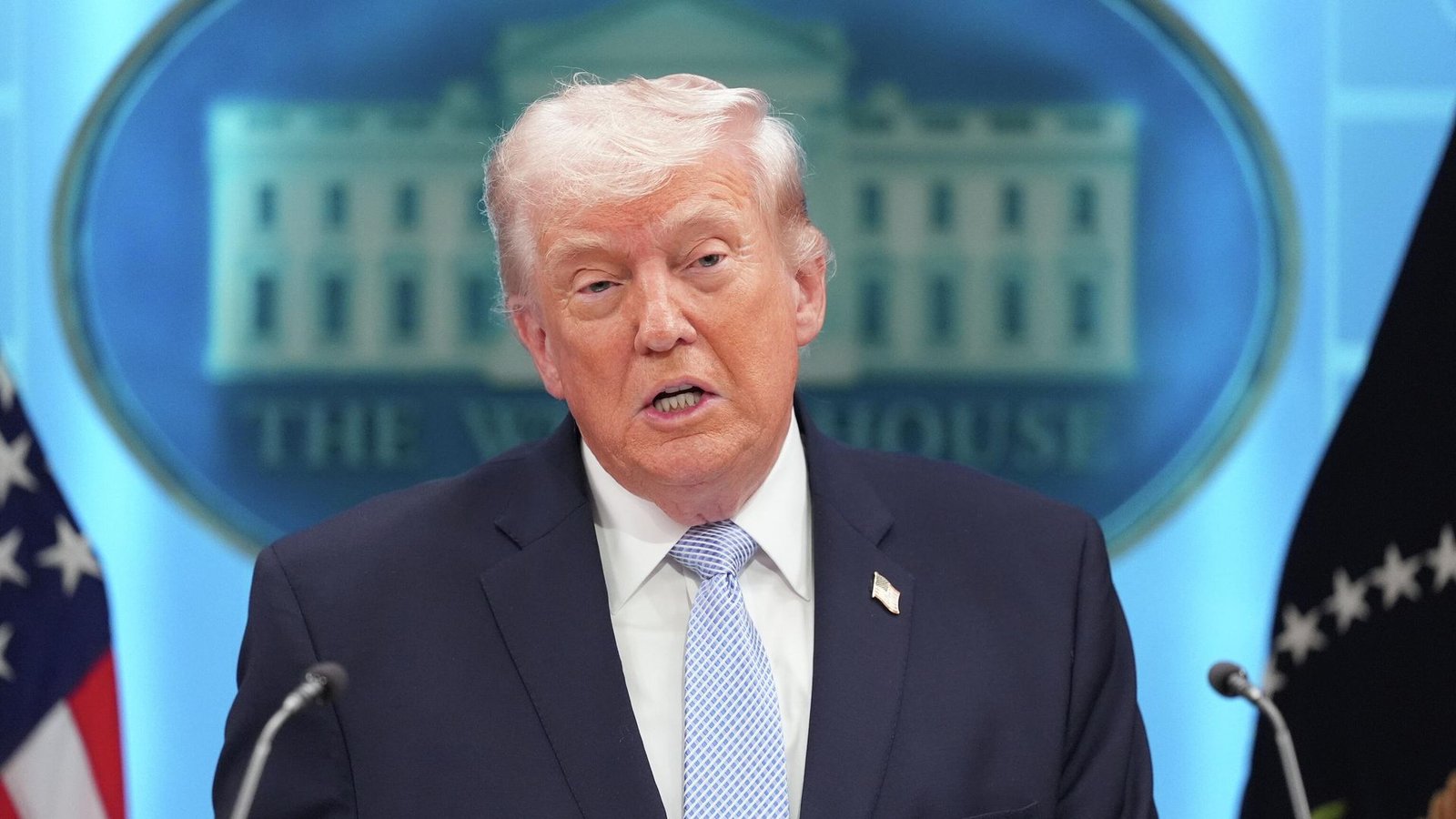

WASHINGTON — The White House Correspondents’ Association dinner, cut short in April after a gunman attempted to kill President Trump at the Washington Hilton, is rescheduled for Friday evening at the Waldorf Astoria. Hundreds of journalists and eight press freedom organizations want the association to use the occasion differently from every dinner before it.
A letter organized by Lisa Stark, a former ABC News correspondent, is circulating ahead of the rescheduled event. Signed by hundreds of retired journalists and endorsed by the Committee to Protect Journalists, the Society of Professional Journalists, and six other press freedom organizations, it calls on the WHCA to “forcefully stand up for freedom of the press in front of the President, publicly defend the journalists he attacks, and vow to resist his administration’s concerted effort to undermine the First Amendment.”
The letter does not cite a single triggering incident. It does not have to. Since the Trump administration returned to Washington in January 2025, its legal and regulatory approach to the American press has moved on multiple fronts simultaneously. What the signatories describe as an “egregious” pattern includes courtroom suits, regulatory pressure on broadcasters, the use of licensing threats, and the deployment of law enforcement against reporters and their sources.
The most recent escalation came this month. Five New York Times journalists received federal subpoenas to appear before a grand jury following the newspaper’s reporting on security concerns about the president’s new Air Force One aircraft. Federal agents served some of the subpoenas at reporters’ homes, a fact that drew attention across the political spectrum. PBS NewsHour reported that Acting Attorney General Todd Blanche framed the reporters as “material witnesses,” saying the Justice Department wanted to know who had provided classified national security information to the newspaper.
Times publisher Joseph Kahn called the action “a naked attempt to intimidate The New York Times” and pledged the paper would fight efforts to compel disclosure of confidential sources. A parallel defamation lawsuit Trump has filed against the Times seeks $15 billion in damages, accusing the newspaper of sustained bias across its coverage. The administration has also filed separate defamation cases against The Washington Post and The Wall Street Journal, positions that together represent an unprecedented simultaneous legal offensive against three of the country’s largest newspapers.

The Justice Department’s action on the Air Force One reporting extends an approach to the press that has moved well beyond the courts. The administration has used the Federal Communications Commission to pressure television networks and has repeatedly threatened to invoke its authority to revoke broadcaster licenses, a tool previous administrations including Trump’s own first term declined to use. The Justice Department’s approval of the Paramount-Skydance merger placed CNN under the effective control of interests aligned with the White House, a consolidation Trump had described as imperative years before the deal was reviewed.
Will Creeley, legal director for the Foundation for Individual Rights and Expression, told PBS that the Air Force One subpoenas were “a shot across the bow, designed to get people to stop asking questions.” He invoked the 1971 Pentagon Papers case, in which Justice Hugo Black wrote that the First Amendment was designed to protect “the governed, not the governors.” Creeley characterized the decision to serve subpoenas at reporters’ homes rather than through ordinary legal channels as a deliberate signal, not an administrative coincidence.
The White House Correspondents’ Association dinner has occupied an awkward place in American journalism for most of its existence. Critics have argued for decades that the event, a black-tie dinner where reporters sit alongside the president they cover, suggests a degree of professional proximity to power that is incompatible with serious accountability reporting. Supporters say the association’s core function, including its scholarship programs and its advocacy for press access to government, is separate from the social occasion of the dinner itself. Both arguments have coexisted, unresolved, through multiple administrations and multiple presidents.
The signatories to Stark’s letter are focused less on that debate than on pushing the WHCA to make a public commitment Friday evening. They want the association to say, on the record and in front of the president, that it will defend the journalists his administration attacks by name, that it will resist regulatory threats against broadcasters, and that this moment represents something qualitatively different from the administrations that preceded it. The WHCA had not publicly responded to the letter’s specific demands at time of publication.
What happens at the Waldorf Astoria on Friday is unknown. Enhanced security measures are in place following the April assassination attempt that halted the original event. Whether the WHCA’s remarks from the podium will reflect the urgency of what hundreds of journalists have put in writing, or default to the customary tone of an evening that has typically avoided direct confrontation with whoever occupies the White House, is the question the letter was written to force. The association has not, publicly, answered it.