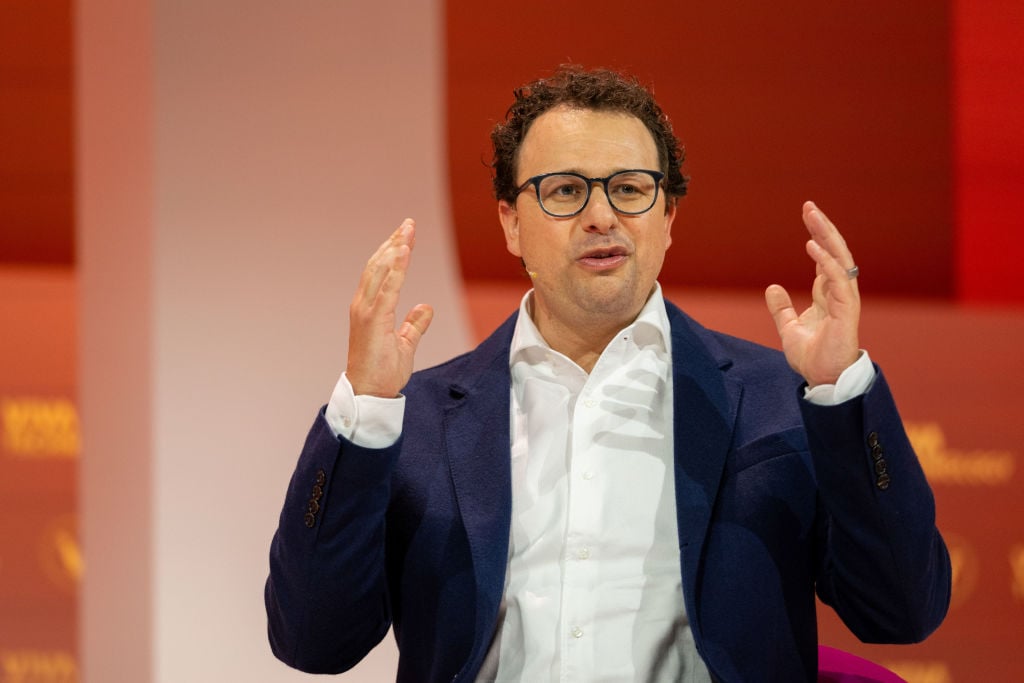

SAN FRANCISCO – For two years, Dario Amodei watched the AI industry sign letters, build coalitions, and consolidate positions he had stayed conspicuously quiet on. On Sunday, he stepped in front of the controversy rather than around it.
Anthropic’s chief executive published a response to mounting industry criticism, clarifying that his company has never pushed for a ban on open-weight artificial intelligence models – while making a sharper case about what he considers the actual danger: China’s Communist Party acquiring AI systems powerful enough to shift military balances and enable domestic repression at unprecedented scale.
The context matters. Nvidia, Meta, Microsoft, Mistral, and Hugging Face all signed an open letter urging policymakers against imposing broad restrictions on open-weight AI models – AI systems whose underlying parameters are publicly released, allowing anyone to run or modify them without oversight from the original developer. Anthropic was conspicuously absent. Business Insider called it out directly, noting the lab was the only major AI company that hadn’t added its name to the document.
“Anthropic has never advocated for a ban on open-weights models,” Amodei wrote, addressing the accusation head-on. He described non-dangerous open-weight models as “beneficial public goods” for developers, businesses, and researchers – applications requiring only computational resources to access, producing real value without meaningful safety risk.
Where he draws the line is on specific biological threat vectors. Unlike closed models, which companies can monitor for misuse and update after deployment, open-weight systems can be copied, modified, and run on private servers with no visibility from the original developer. For bioweapon applications specifically, Amodei argues that monitoring gap is what makes certain capability releases genuinely dangerous rather than theoretically risky.
This position has shaped Anthropic’s regulatory posture for months. Export controls restricting access to Anthropic’s Fable 5 and Mythos 5 frontier models for foreign nationals from certain countries reflected the same underlying logic – that specific capability thresholds warrant access restrictions even when the broad majority of AI applications do not.
Amodei proposed three concrete measures aimed at China specifically. First: restrict China’s access to the advanced semiconductor chips needed to train frontier models. Second: crack down on distillation, the process by which one AI system learns from another through queries and responses, bypassing hardware export restrictions entirely by requiring only API access. Third: establish global AI safety testing organizations that all major nations, including China, would join and participate in.
The distillation crackdown targets a specific and documented route. Moonshot AI and other Chinese labs have used systematic prompting of Western frontier models to improve their own systems – a practice that skirts chip export controls entirely and operates in a regulatory grey zone where the US currently has no enforcement mechanism. Amodei’s call directly names and addresses this vector.
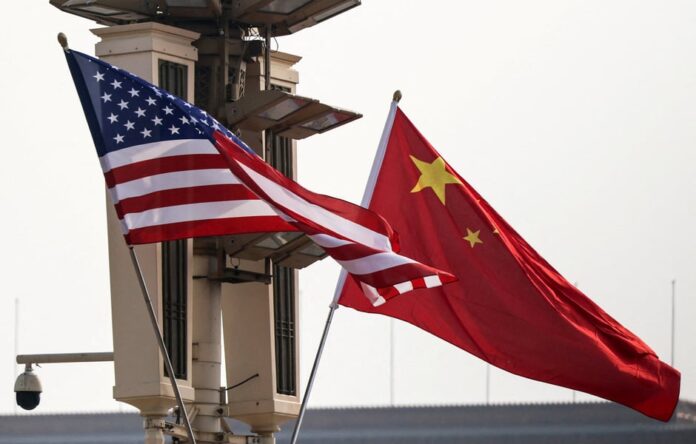
The deepest concern Amodei articulated is not about open source as a philosophy or development model. It’s about the Chinese Communist Party specifically – an authoritarian government he described as racing to develop AI capable of achieving military superiority over democratic nations, or deploying mass surveillance tools at scales not previously technically possible. Anthropic’s export-controlled models represent one operational response to that concern, but Amodei argued US export policy alone is insufficient without multilateral coordination.
The enterprise computing angle adds further complexity to the debate. Microsoft CEO Satya Nadella has warned about building enterprise AI dependency on any single provider’s closed ecosystem – an argument open-weight advocates cite directly as justification for open releases. Amodei’s clarification does not resolve that tension; it simply insists the risks cluster around specific dangerous capabilities, not the open-weight architecture itself.
One unexpected note in Amodei’s statement was limited optimism about US-China cooperation on AI bioweapons. His argument: preventing AI-enabled biological attacks serves China’s interests as much as it serves anyone else’s. Whether that arms-control logic could be formalized into an actual agreement remains entirely unclear, but it represents a departure from the default framing of AI geopolitics as purely zero-sum competition.
What the Claude shared chats episode earlier illustrated was that AI model deployments carry unintended information-exposure risks regardless of whether the underlying weights are public. It complicated the clean narrative that open models democratize access while closed models concentrate power – both architectures carry distinct risk profiles, and Amodei’s statement attempts to map that distinction more precisely than the industry letter-signing exercise managed.
The policy question Amodei’s clarification leaves open is the same one it began with: what does Anthropic actually advocate for in Washington beyond the specific proposals outlined? The company has published safety research and red-teaming results, but the precise thresholds at which it believes open-weight model capabilities become unacceptably dangerous remain unspecified publicly. That gap will matter when the legislative conversation moves from industry letters to actual law.