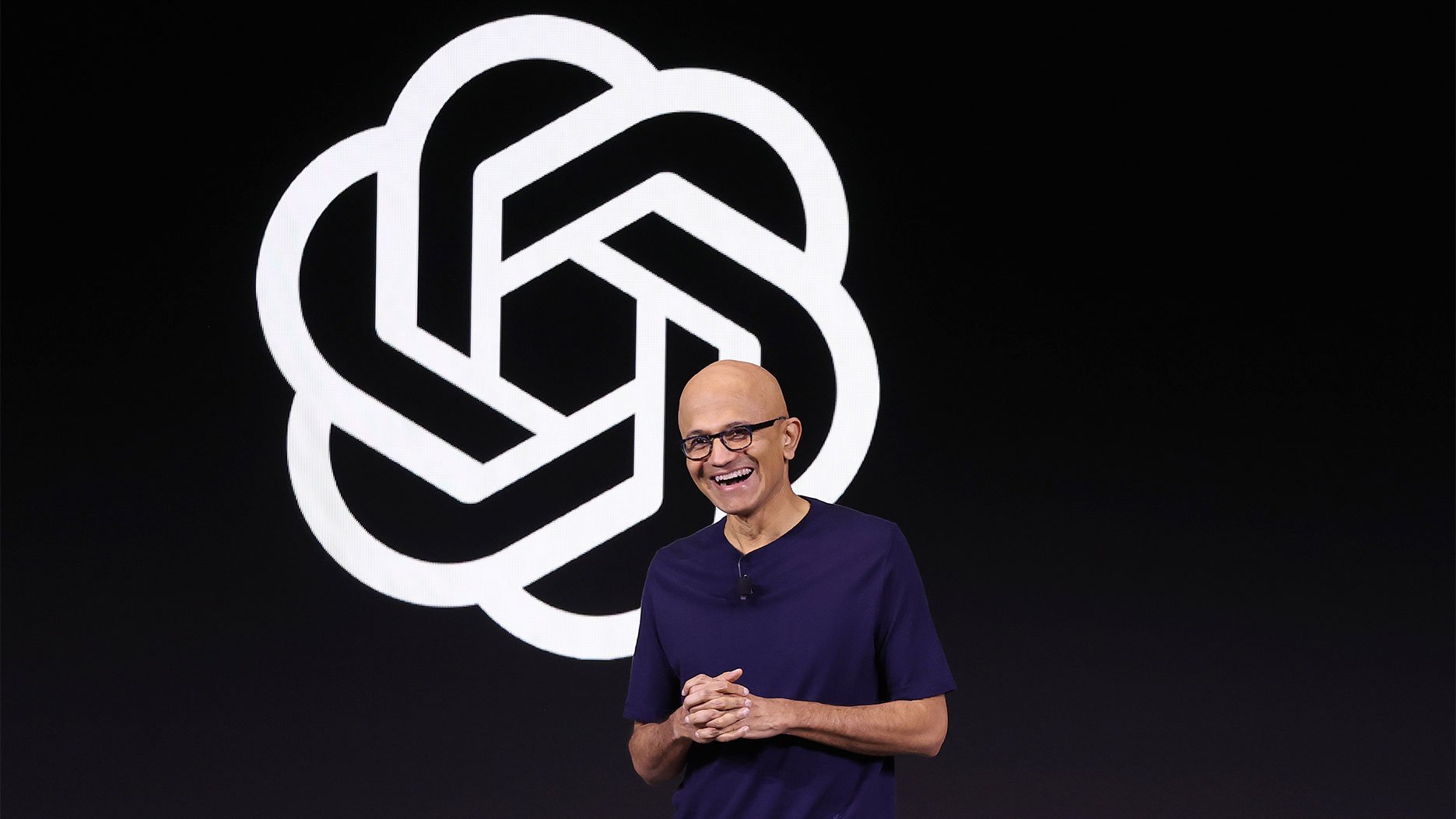

NEW YORK – Satya Nadella, the chief executive of Microsoft, told CNN’s Fareed Zakaria on Sunday that companies placing their trust in a single AI provider for all their operations may not survive the decade. “You’ve essentially outsourced your thinking,” he said. The remark was not casual. Nadella was articulating a risk that the enterprise technology market has largely chosen to ignore because ignoring it is, for now, the most commercially convenient option.
The CNN interview, which aired on GPS on July 27, offered four specific recommendations for companies that want to avoid the trap Nadella was describing: retain metadata, use AI gateways, run multiple AI models rather than committing to one, and deploy independent coding agents rather than vendor-controlled development stacks. Together, the four amount to a governance architecture for AI dependency – one that requires investment, expertise, and an internal commitment to AI risk management that most enterprise deployments currently lack.
Nadella drew a distinction between individual consumers and corporate users that clarifies the argument. For individuals using AI on free tiers, he suggested the data-for-service exchange is reasonable: the provider improves its model, the user gets access at no cost. For corporations, the calculation is different. A company’s proprietary datasets, internal decision-making workflows, and competitive intelligence – all of which feed into AI prompts – represent institutional knowledge that is not recoverable once it has been used to improve a provider’s foundation model. The enterprise software market has sold access; it has been less forthcoming about what it does with what it receives.
TechCrunch reported Nadella’s full warnings including his specific mention of T-Mobile, ADP, and SAP as companies already moving toward on-premise AI architecture. None of these three are neutral examples. T-Mobile has faced significant data breaches and presumably pays close attention to where customer information flows. ADP processes payroll for a substantial share of the American workforce. SAP’s enterprise software sits inside the operational core of most large multinational corporations. When Nadella names them, he is pointing at the class of organization whose data exposure carries the most consequence.
Microsoft’s AI cybersecurity model MAI-Cyber-1-Flash, launched this week, adds a layer to the irony that Nadella does not quite name in the CNN interview. The model runs through Microsoft Azure’s cloud infrastructure, creating the kind of single-vendor dependency that his remarks advise against. The gap between what a technology company’s CEO says to a television audience and what its product division deploys is not unusual, but it is worth noting. Nadella’s advice is principled. Microsoft’s commercial structure benefits from enterprises building the more sophisticated, infrastructure-intensive AI governance approach he recommends – because sophisticated infrastructure is exactly what Azure is positioned to sell.
Nadella warned earlier this month that enterprise AI prompts effectively train provider models at corporate expense – a concern that the Sunday CNN interview extended into a broader governance framework. The earlier warning focused on the leakage problem: every correction, annotation, and workflow an enterprise runs through a third-party model becomes training data for that model. Sunday’s recommendation addressed the structural response: do not build your corporate intelligence layer on a provider you do not control, and if you already have, start distributing across multiple vendors now.
The companies Nadella did not name are the relevant ones. Enterprises still running their internal operations through a single AI API – without gateways, metadata retention, or governance frameworks – are not doing so because they misunderstood the risk. They adopted the easiest path available because the business case was compelling and the deployment friction was low. Nadella’s advice is sound in principle. Whether the enterprises that most need to hear it will change course before a significant data exposure forces the issue is a different question.
Microsoft invests in both OpenAI and Anthropic – the two providers Nadella implicitly warned against relying on too heavily. That alignment of incentives with advice is worth accounting for, but it does not make the advice wrong. The providers themselves are not building their systems with enterprise data protection as a primary design constraint; they are building them with model improvement as the primary constraint, and relying on enterprise customers to read the terms carefully enough to know what they have signed. Nadella is saying the terms matter and that the architecture should be built accordingly. The window to do that, he implied, is closing.
Related Posts