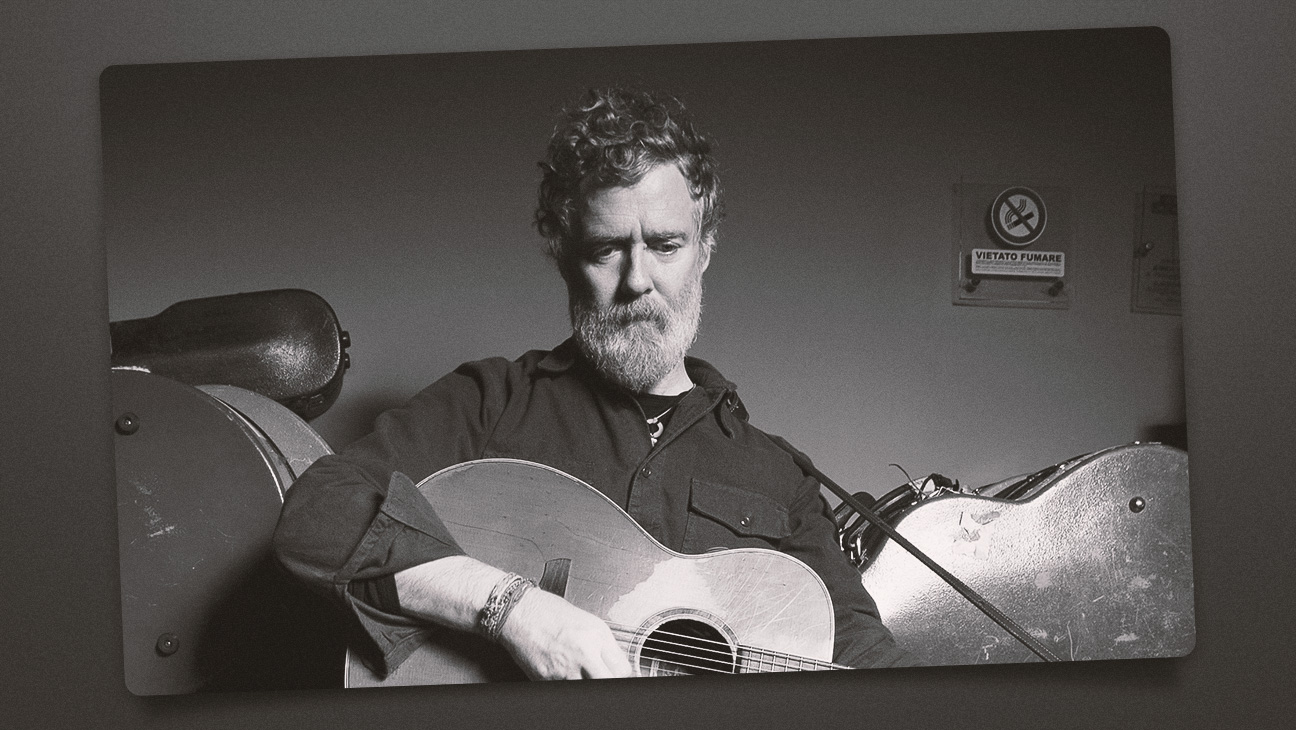

DUBLIN — Every Christmas Eve for more than a decade, Glen Hansard took his guitar to Grafton Street. Not to play a concert. Not for a television appearance. To busk. To stand in the pedestrian flow of Dublin shoppers with a case open on the pavement and let passersby decide whether the music was worth a few coins. Whatever he collected, he gave to a homelessness charity and moved on.
He was, by that point, an Academy Award winner. He could have been on a stage in Madison Square Garden that evening. He chose Grafton Street instead.
Hansard died in the early hours of Wednesday after a single-vehicle motorcycle crash on Lucan Road on the western outskirts of the Irish capital. He was 56. Irish police confirmed a man in his 50s had died at the scene before 4:30 a.m., and officers appealed for witnesses. His management company, ATC Management, confirmed the death to Irish broadcaster RTE and said his family was “deeply shocked and heartbroken.” He is survived by his wife, Maire Saaritsa, and their 3-year-old son, Christy.
In the world of Irish music, no one quite occupied the space Hansard did. He fronted The Frames, a Dublin band that had been building a fiercely loyal following since the early 1990s without ever quite crossing over into international recognition. Then came Once, the 2007 John Carney film shot in Dublin for roughly €150,000, in which Hansard played a street musician falling for a Czech pianist played by Markéta Irglová. The film earned $9 million at the box office and turned its soundtrack into something that outlasted both.
“Falling Slowly,” the song Hansard co-wrote and performed with Irglová, won the Academy Award for Best Original Song in 2008. At the ceremony, Hansard walked to the podium in a rumpled suit and spoke briefly and plainly about making the film with nothing. Irglová was cut off mid-speech by the orchestra; host Jon Stewart brought her back after the commercial break to say what she hadn’t been able to. The moment became, improbably, one of the more human things to happen at the Oscars that year.
The Broadway musical adaptation of Once opened in 2012 and won eight Tony Awards, including Best Musical. Hansard continued writing and recording; his solo album “Didn’t He Ramble,” released in 2015, earned him a Grammy nomination. He remained the kind of artist who played theaters rather than arenas, recognizable on the streets of Dublin but able to walk them without much ceremony. He had, by most accounts, exactly the career he wanted.
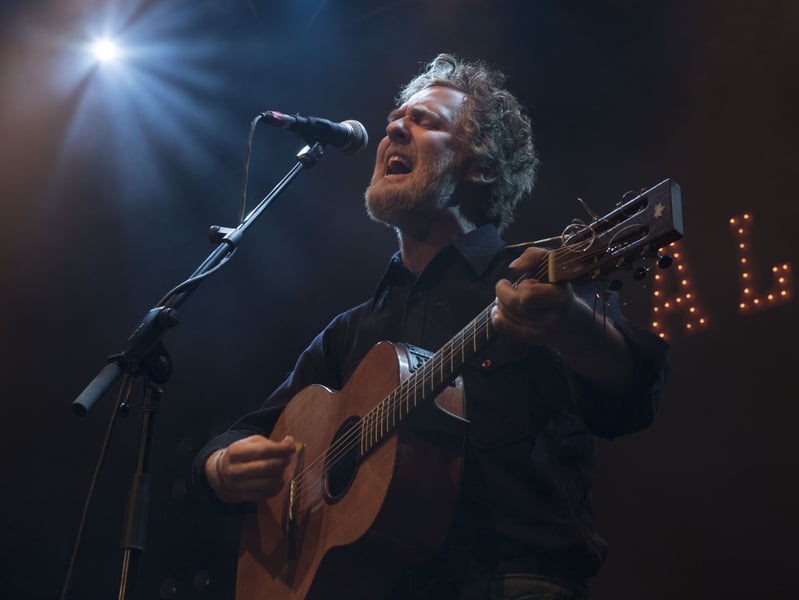
Before Once, there was The Commitments. Alan Parker’s 1991 adaptation of Roddy Doyle’s novel about a North Dublin soul band cast Hansard as guitar-playing teenager Outspan Foster. He was 20. It remains one of the defining portraits of working-class Dublin life on screen, and Hansard’s presence in that world, young and raw and more street than stage, set the terms for the career that followed.
The Swell Season, his duo project with Irglová that grew from Once, toured and recorded into the early 2010s before both moved to solo work. Hansard’s albums earned him devoted audiences in the United States, particularly in Chicago, where he maintained deep roots and played frequently enough that Chicago Public Radio marked his death Wednesday morning as the loss of something local as well as Irish.
The tributes that arrived Wednesday were extensive. Bruce Springsteen called Hansard “the real thing, a man of the street and a musician of the rarest gifts.” Irish Taoiseach Micheál Martin described him as “a man who carried Dublin in his voice and his heart.” President Michael D. Higgins, in a statement, remembered “a musician who understood instinctively that the greatest distance between people is when they stop listening to each other.”
Hansard spent the last two years playing a residency at St. Patrick’s Cathedral in Dublin for the city’s annual festival of light, a setting that seemed designed for the particular quality of his voice: intimate at scale, clear in an echoing space, most effective when the room got quiet. What the crash on Lucan Road took from Irish music is still becoming clear. What it took from a three-year-old named Christy will take longer to reckon with.