
NEW YORK – Andre Drummond is the answer to a question no championship team wants to be asking in July.
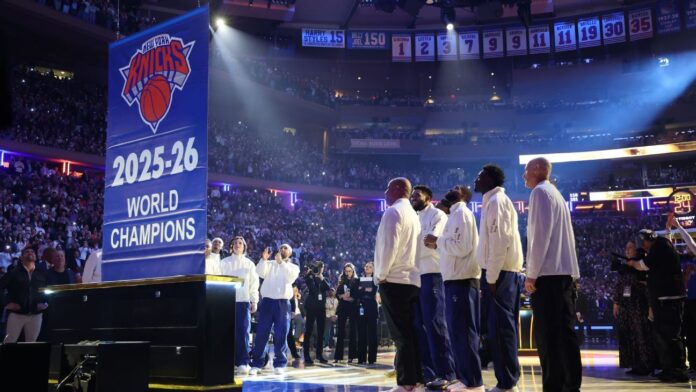
The New York Knicks won 13 straight playoff games and a 15-1 postseason run to claim the first NBA championship in franchise history last spring. Jalen Brunson walked out of a Lincoln Center ceremony in July holding three ESPY awards, including Best NBA Player, while the crowd wore jerseys that a city this size had waited 52 years to put on with meaning. The core is intact. And the one position that could crack all of it open is center.
Mitchell Robinson is gone. The physical anchor of that championship run departed in free agency this summer, and Leon Rose’s front office has spent the two months since in an increasingly urgent search for a replacement it has not yet found.
Drummond can rebound. Drummond can defend the rim. The CBS Sports preseason power rankings that slot New York at No. 2 behind San Antonio say exactly that – Drummond fills the role Robinson left while the core that produced a 15-1 playoff run returns largely intact. What Drummond is not is a long-term answer at a position that, historically, has been the last thing standing between the Knicks and everything they chased for the better part of half a century.
The Robinson departure was not entirely a surprise. His injury history in New York, with Achilles rehabilitation consuming significant portions of his tenure, complicated the negotiations, and rival teams offered terms the organization was not willing to match. The front office’s calculation at the time was that Drummond bought time. The Pelicans trade, if it closes, is what makes that calculation right.
The Pelicans entered the picture publicly on July 25. New Orleans has shown more openness to trade discussions than at any point this summer – the kind of language that arrives differently when you are a defending champion approaching October without your starting center. At least two other teams are reportedly in the conversation. The draft capital New York spent three years protecting is now the currency of the negotiation.
What the package looks like is what nobody in the league has been told yet.

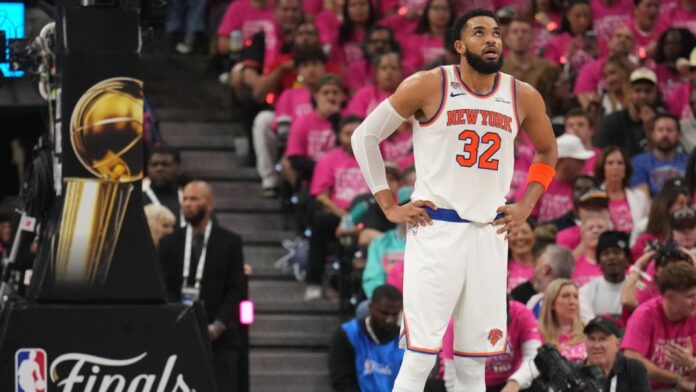
Karl-Anthony Towns is in the fourth year of a max extension and still the interior anchor this team cannot lose. Internal discussions about a discounted extension that would open future cap flexibility have complicated the roster math around both the Pelicans trade and the salary situation entering next summer. Miles McBride, a restricted free agent with a market New York controls, has run a public campaign for a return. He contributed in the playoff rotation, held his position in the locker room, and his case for a contract is genuine. But the math connecting McBride’s return, a Towns discount, and a center acquisition runs through the same constrained pool of dollars.
New York’s two-way contract strategy has drawn attention for the apparent quiet around it. Three spots remain open on the two-way ledger. The organization has shown almost no public interest in filling them, and people inside the league read that as a signal that the roster work is not finished. A center acquisition would reshape which positions need two-way depth. Moving before those decisions are locked in is how you preserve leverage in a negotiation where the other side already knows you are the buyer.
Tyler Kolek, the 2026 second-round pick, has impressed in summer workouts. He is not a center. His development matters as a long-range insurance policy on guard depth that keeps Brunson’s minutes manageable through what will be, for the defending champions, a longer and more scrutinized postseason road. Brunson at his best in a playoff series is as close to unguardable as a guard gets at this level. Josh Hart’s energy in the locker room matters in ways that do not appear in any efficiency metric. The roster around them is largely the same team that went 15-1. The center is the one exception.
The Eastern Conference the Knicks won last spring is not the conference entering 2026-27. Giannis Antetokounmpo went to Miami. Pat Riley now has a 31-year-old two-time MVP alongside Bam Adebayo, and Giannis told reporters at his introductory press conference that he left Milwaukee specifically to be uncomfortable – which is not the language of a player thinking about regular-season positioning. LeBron James signed with the 76ers. The league’s strongest Eastern teams have upgraded. New York’s calculus is not about staying good. It is about staying ahead of a conference that will not give the same ground it gave a year ago.
What the Knicks have not said publicly: which center, at what price, whether the KAT extension conversation has actually moved, and whether McBride’s answer arrives before or after the center trade closes. Leon Rose has navigated this kind of calculation before. The same front office that held its draft capital through years of organizational patience, rather than trade for an available star before the timing was right, is now making that same logic work in reverse. The difference is that the draft capital is the currency, the pressure to defend the title is higher, and the window Brunson described last spring as the one that mattered is now measurably shorter than it was before the trophy arrived.
Drummond can rebound. He can defend.
What he cannot do is guarantee the Knicks are harder to beat in April than they were last April.