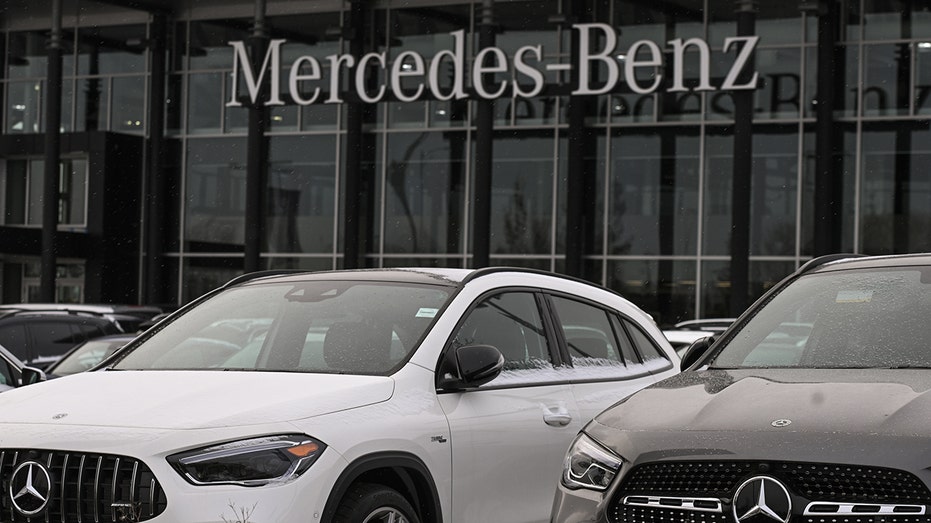

STUTTGART – The Senate Commerce Committee’s bipartisan vote last week put Mercedes-Benz on notice: keep two Chinese investors holding nearly a fifth of the company’s shares, and American showrooms may no longer be an option. The German luxury maker is not walking away.
Legislation advanced by Senators Elissa Slotkin of Michigan and Bernie Moreno of Ohio would bar companies with Chinese ownership exceeding 15% from selling connected vehicles in the United States. Mercedes-Benz Group AG, whose two Chinese investors together hold roughly 20% of its equity, crosses that threshold by a margin that leaves little room for creative accounting. The company has pledged to contest the measure at every remaining legislative stage.
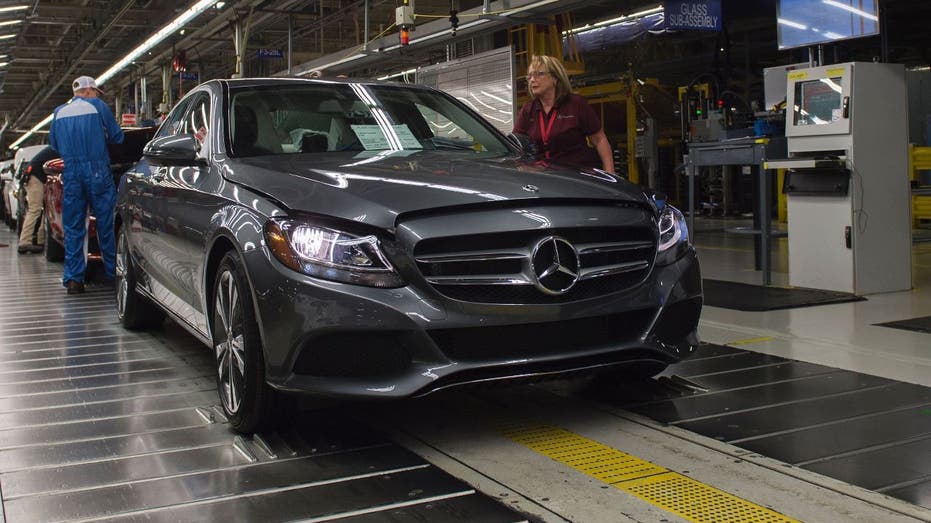
The US is among Mercedes’ largest and most profitable single markets, underpinning revenue that supports its manufacturing presence in Vance, Alabama, where the automaker employs several thousand workers and produces models including the GLE-class SUV for global export. A prohibition on connected vehicle sales, which in 2026 effectively covers every new car the company sells, would not merely cut revenue. It would dismember a North American supply chain built over three decades, along with tens of thousands of dealer and supplier jobs that have no direct stake in who owns shares in Stuttgart.
Mercedes said in a statement after the committee vote that it would “continue to safeguard its employees, dealers, suppliers and customers,” a formulation that reads less as reassurance and more as a declaration of strategic intent. The automaker separately told Fox Business it “remains committed to ensuring that any legislation does not impact our operations.”
What preserving operations looks like in practice is only partially visible. The legislation includes a waiver provision under which manufacturers could seek Commerce Department authorization to continue selling otherwise-prohibited vehicles, a channel Mercedes is widely expected to pursue. The company is also pressing its case directly on Capitol Hill, arguing that a German-registered automaker with a substantial American manufacturing footprint represents a categorically different proposition from Chinese-controlled carmakers that assemble vehicles overseas and import them wholesale.
The ownership structure at the center of the dispute reflects a decade of Chinese capital flows into European industry. Li Shufu, founder of Geely Automobile Holdings Ltd., holds approximately 9.7% of Mercedes-Benz shares, a stake he acquired in 2018 with minimal regulatory scrutiny at a time when Berlin was more focused on cultivating Chinese investment than policing it. BAIC Group, a state-owned Chinese automaker and longstanding Mercedes production partner in China, holds another 9.98%. Together they push the combined Chinese interest past the Senate bill’s 15% ceiling.
The contrast with how the bill has treated other foreign-invested automakers is striking, and not without implication. Polestar, the electric-vehicle brand majority-owned by Geely, has been barred from the US market beginning with its 2027 model year. Volvo Cars, which Geely also controls outright, received Commerce Department clearance to continue sales. Volvo’s representatives attributed that outcome to its Swedish corporate registration, manufacturing presence in South Carolina, and the structural separation of its operations from its Chinese parent. Mercedes, with a deeper US manufacturing commitment than either brand, finds itself in a less favorable position solely because its Chinese investors hold minority rather than majority stakes. The apparent inconsistency has drawn attention from trade attorneys who note that the 15% threshold catches Mercedes while sparing European competitors with smaller Chinese positions, a precision that is unlikely to be accidental.
The most politically charged dimension of the bill’s advance is the allegation from Senator Ted Cruz of Texas, a Commerce Committee member, that General Motors Co. engineered the measure to eliminate Mercedes-Benz as a Cadillac competitor in the American luxury segment. Cruz was unambiguous: “We would never consider banning Mercedes-Benz sales in the U.S.,” he said in opposition to the legislation, while suggesting the ownership thresholds were calibrated to achieve exactly that result by proxy. General Motors denied that its lobbying shaped the specific parameters of the bill, but declined to address Cruz’s allegation about the 15% ceiling in detail. The competitive logic Cruz invoked is not difficult to follow: removing Mercedes, BMW and the German luxury tier from American showrooms would redirect tens of billions of dollars in annual consumer spending toward domestic alternatives.
The national security framing of the legislation is not without factual grounding. Slotkin described Chinese-invested vehicles as “surveillance packages on wheels,” and modern connected cars do transmit continuous streams of location data, driver behavior patterns and environmental mapping information that, in aggregate, represent a serious intelligence target. Chinese intelligence services have demonstrated an appetite for bulk data collection extending well beyond conventional espionage. Whether a German-registered company with minority Chinese shareholders presents a meaningfully different threat profile than a Geely-controlled South Carolina plant is a question the Commerce Department waiver process will now be required to answer, and the stakes of that administrative judgment are considerably higher than the bill’s drafters may have anticipated.
For Mercedes and the German auto industry more broadly, the episode has surfaced a category of US market risk that did not exist five years ago. The 25% auto tariffs imposed by the Trump administration on imported vehicles already compressed margins on European models sold in North America; German manufacturers absorbed a substantial portion of those costs rather than pass them fully to buyers, betting that the US luxury market justified the squeeze. That calculation has held, barely. A legislative ban would foreclose the option of absorbing costs at all, because no price adjustment resolves a sales prohibition.
The legislation still requires full Senate passage, a parallel House process and a presidential signature, a path that typically runs several months and frequently stalls. But the bipartisan committee vote gives the measure a durability that purely partisan initiatives lack, and trade attorneys following the bill’s progress told Fox Business that the Commerce Department waiver process, not the legislative vote itself, is likely to be the central battleground. The operative question is how restrictively the department writes the authorization criteria, and whether a company whose Chinese investors hold passive financial stakes rather than operational control can satisfy those criteria without restructuring its shareholder register.
That restructuring option exists, at least in theory. A targeted buyback or secondary offering that diluted the combined Chinese stake below 15% would eliminate the legal jeopardy entirely. The Li Shufu block alone carries a market value running into the billions of dollars at current share prices, and any divestiture would require Chinese regulatory approval at a moment when Beijing is not especially inclined to accommodate Washington’s legislative preferences. Mercedes has not addressed the restructuring question publicly. The silence is, itself, an answer of sorts: the math has not yet produced a figure at which giving up on the problem looks better than fighting it.