
NASHVILLE – The ballots were cast by 164 media members. When they were counted, Arch Manning did not win.
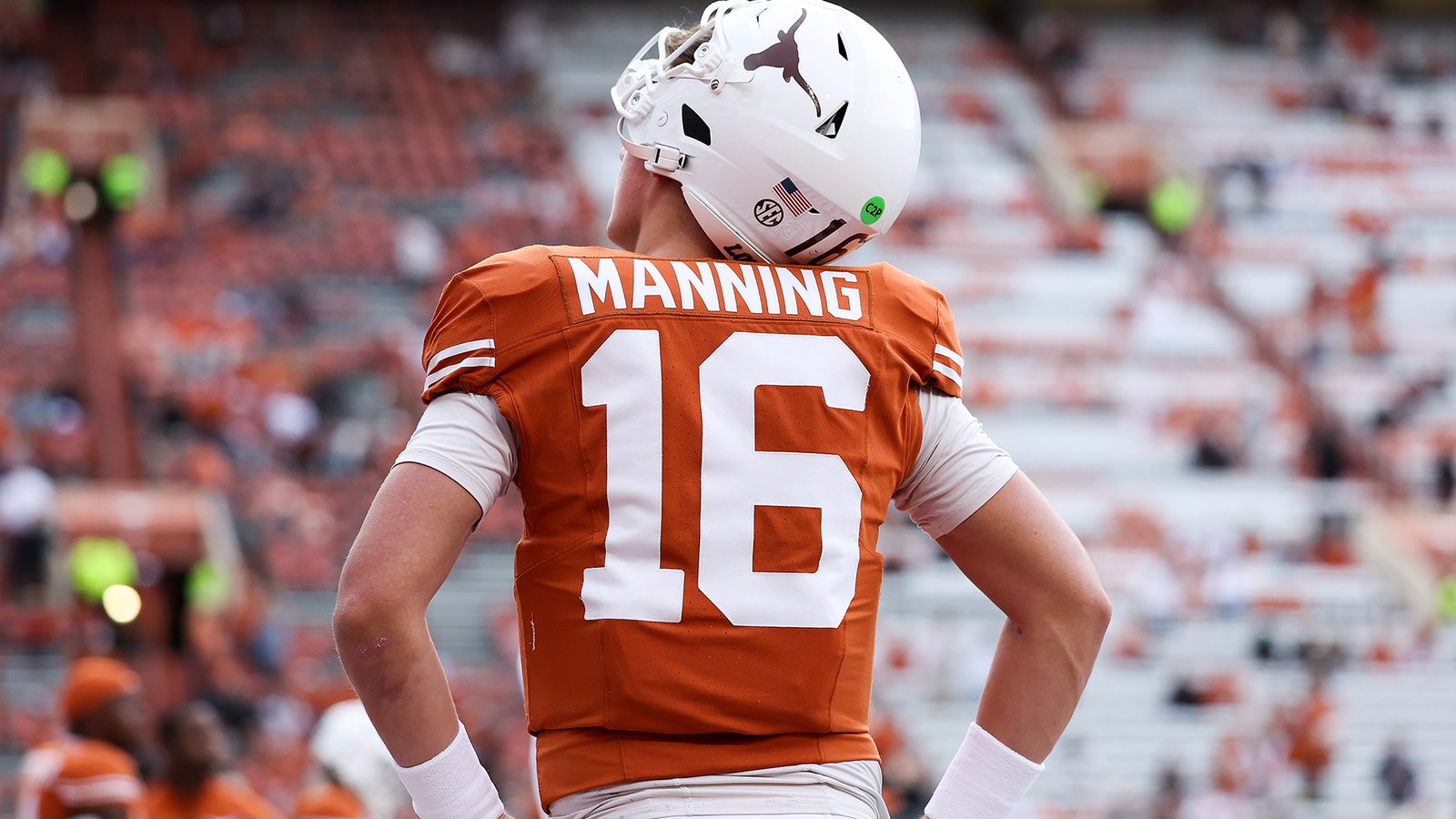
That is, in a sentence, the most disruptive result from the SEC’s preseason media poll, released Wednesday as conference media days wrapped in Nashville. Manning, the Texas quarterback who arrived in Austin as arguably the most anticipated prospect in college football history and who posted 26 touchdowns in his most recent season, walked away from the poll’s all-conference balloting as a second-teamer at his position.
Ole Miss’s Trinidad Chambliss claimed the first-team quarterback honor. The decision was, on the numbers, defensible. Chambliss threw for 3,937 yards and 22 touchdowns a year ago with only three interceptions, completing 66.1 percent of his passes at 8.8 yards per attempt. Manning’s line read 3,163 yards, 26 touchdowns, seven interceptions, 61.4 percent completion, 7.8 yards per attempt. Chambliss also ran for 527 yards and eight scores on the ground; Manning contributed 399 rushing yards and 10 touchdowns. Every meaningful passing metric tilted toward the Ole Miss quarterback, and CBS Sports noted that the 164 media members who participated recognized the gap.
Whether Manning himself recognized it, and whether that recognition becomes fuel come September, is a different question entirely.
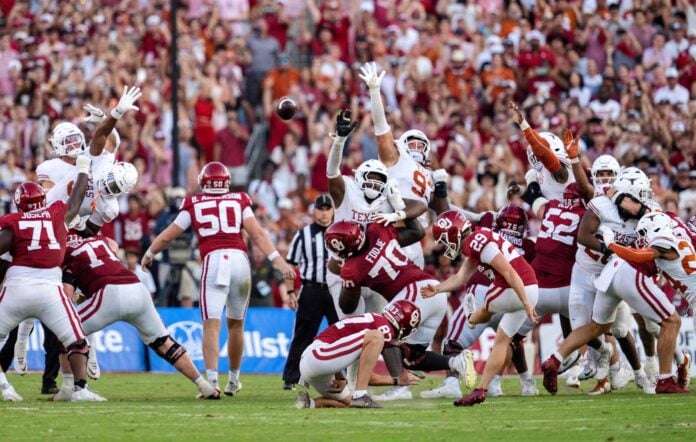
Georgia opened the poll as the conference’s overwhelming preseason favorite, collecting 2,519 points and 88 of 164 championship votes. Texas finished second with 2,449 points and 57 championship votes, a gap narrow enough that a single bad afternoon for Kirby Smart’s Bulldogs could collapse it. The projected SEC Championship Game on December 5 pits these two against each other, which means the conference’s most compelling quarterback matchup may not be settled until the calendar flips to December. Georgia is seeking its third consecutive league title. The Longhorns have not won one yet since joining the conference.
Ole Miss landed third at 2,004 points, a projection that is already generating its own skepticism. The Rebels finished ahead of Texas A&M (1,967 points), LSU (1,961), and Alabama (1,930), a projected finish that requires Chambliss and a rebuilt Ole Miss defense to navigate one of the more punishing schedules in the conference. The Rebels open against LSU, face three road games within their first four contests, and square up against Georgia and Oklahoma in November. The kind of schedule that turns a preseason third-place projection into a question mark by Halloween. The full predicted standings, published by CBS Sports, suggest a conference race with a clear top two and genuine turbulence from Ole Miss downward.
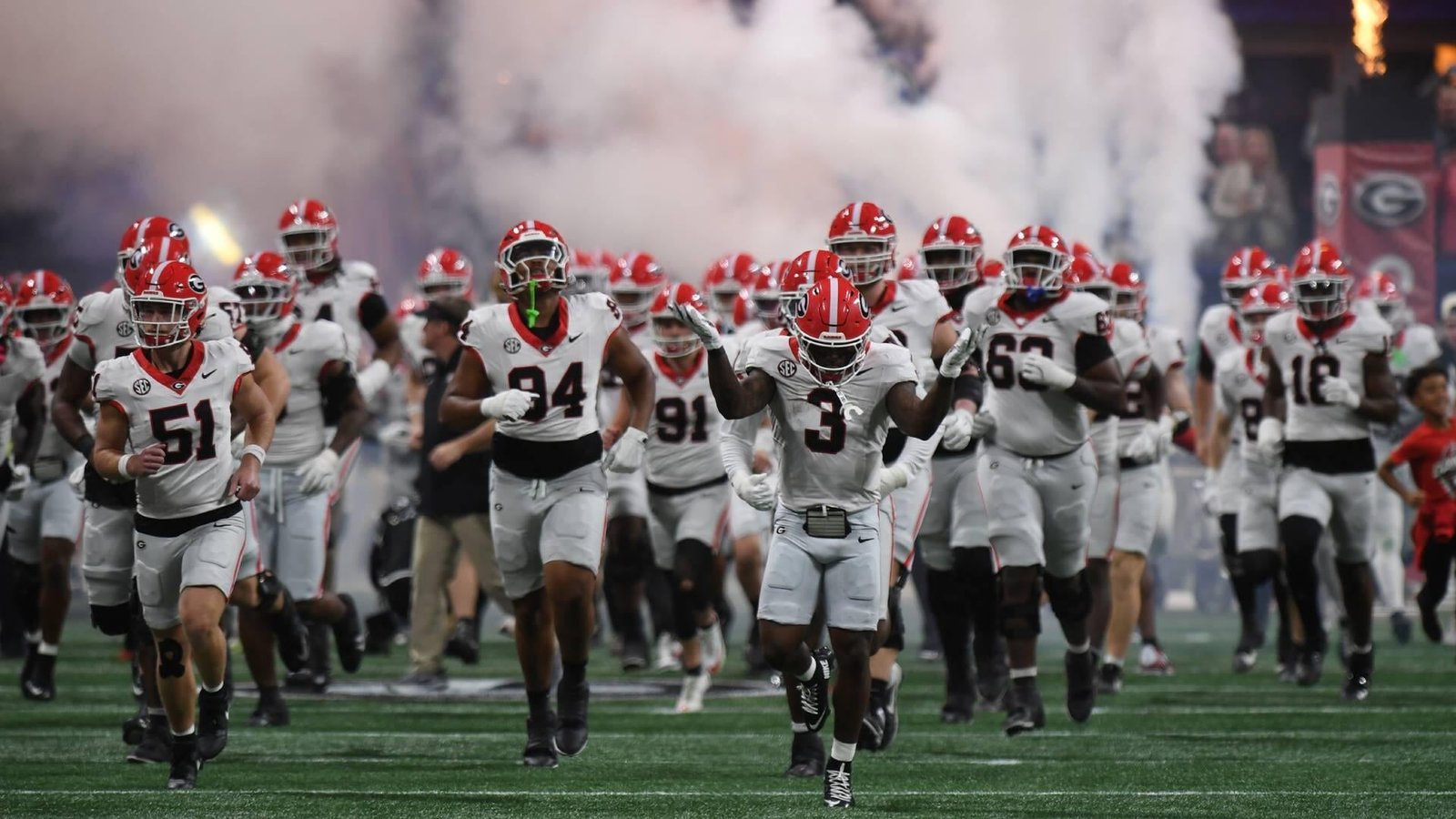
The all-conference team offered a few surprises beyond the quarterback ballot. Texas placed eight offensive and three defensive players on the preseason selections, an extraordinary concentration for any single program and a reflection of how completely Steve Sarkisian has restocked the Longhorns’ roster since joining the SEC. Georgia matched with six offensive and six defensive selections, its balance a mirror of Smart’s philosophy: construct a defense that can carry the program through its toughest moments, then let the offense keep pace. The two programs combined for eight of 23 first-team slots. Alabama’s Ryan Coleman-Williams received first-team wide receiver recognition despite 689 yards and four touchdowns in 2025, a pick that reflects reputation rather than recent production, and one that Coleman-Williams will have an entire season to validate.
The Heisman implication of the Manning-Chambliss dynamic is the one that follows everyone out of Nashville. The trophy follows quarterbacks who dominate the conversation from Week 1 onward, and the SEC’s preseason vote just complicated Manning’s grip on that storyline. Not because Chambliss is undeserving, and the production argues emphatically that he is not, but because Manning enters 2026 carrying a narrative weight that no second-team designation can redistribute. He is the name every defensive coordinator circled before camp opened. He is the quarterback who arrived in Austin with a lineage attached to his shoulder pads. As quarterback battles across football begin sorting themselves out under August conditions, the pressure of expectation against production is a variable the sport never resolves in a preseason poll.
A second-team designation is not a slight. It is a number. And Manning, who was good enough last season by most reasonable standards, is now in a position where being good enough will not be the story. The gap between his 2025 passing numbers and Chambliss’s is real. So is the possibility that the gap disappears entirely when the season starts.
What the preseason poll cannot resolve is the one thing that actually matters. Georgia’s path to a third consecutive SEC title runs through a Texas program that collected nearly as many championship votes. Ole Miss’s ascent to third requires Chambliss to perform at a career-best level against a schedule that punishes any regression. Manning’s Heisman campaign requires something different from his 2025 season, not just improved efficiency but the kind of performance that stops the Chambliss comparison cold. From NFL training camp evaluations to SEC practice fields, the gap between preseason projection and September result has always been the sport’s most reliable variable.
None of that is settled in Nashville in July. The media voted, counted the points, and made the projections. Manning got his chip. Now the teams have to play.