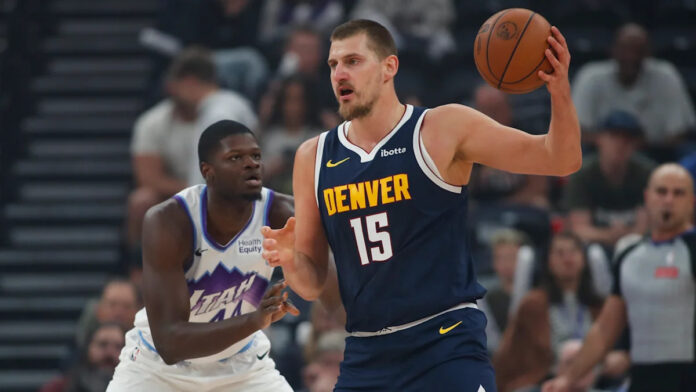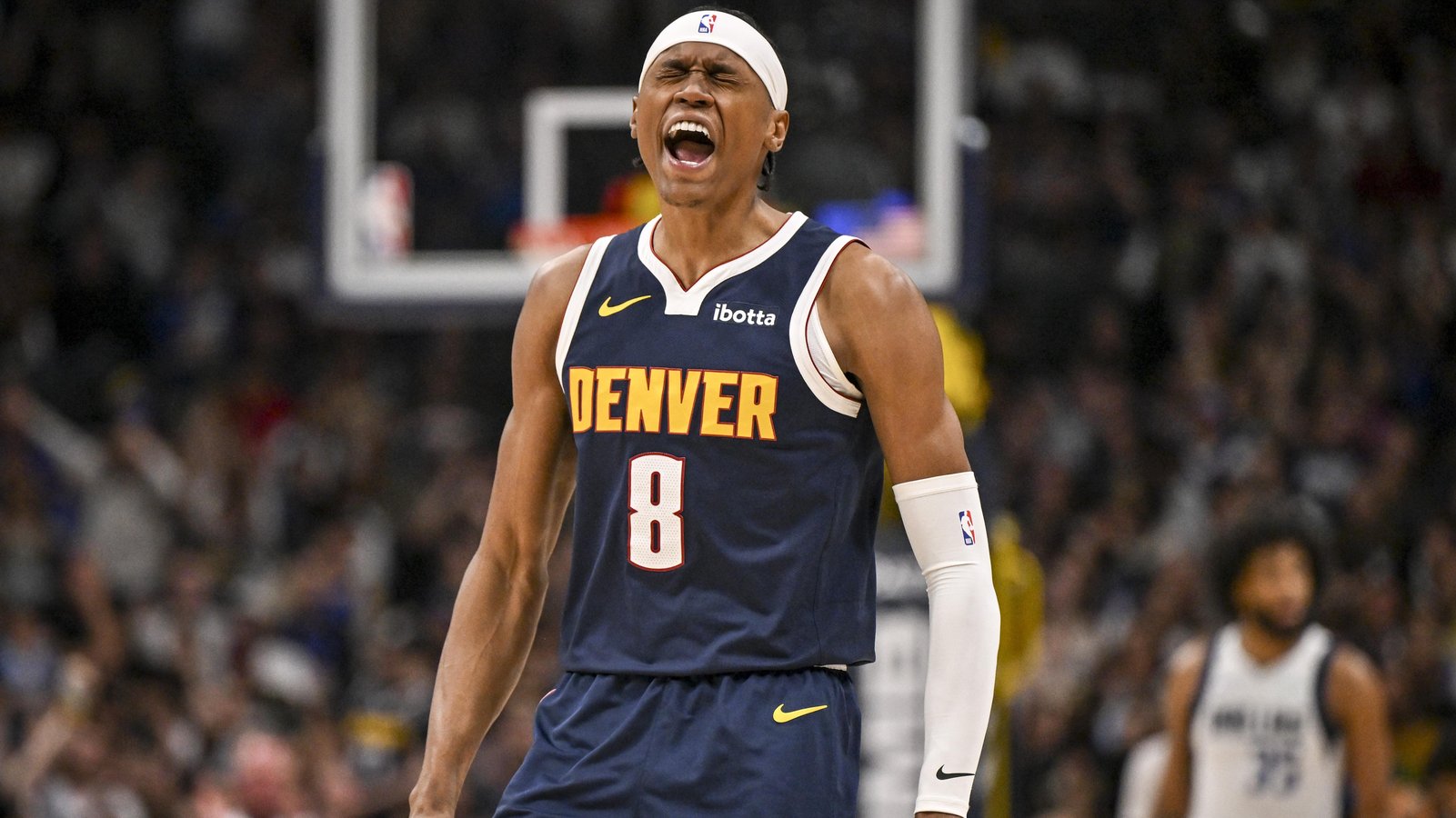

DENVER – When Nikola Jokic missed 17 games last season, Peyton Watson became something different. He averaged 22.5 points, 5.6 rebounds, and 2.8 assists filling the offensive vacuum his three-time MVP center had left behind, and he did it at a level of efficiency that makes his current free-agency standoff so maddening for everyone watching it. Watson shot better than 49 percent from the field across those 17 games. He scored 30-plus three times. For those weeks, he was the best player on the roster.
None of that moved Denver’s offer enough.
The Nuggets have extended a five-year deal worth approximately $70 million to their 23-year-old restricted free agent, according to Bleacher Report, a figure Watson’s camp considers well below what the open market reflects about his value. Christian Braun signed a five-year, $125 million extension with Denver before last season. That figure, $25 million annually, is the benchmark Watson’s representatives reportedly regard as a logical floor, and it is not close to what Denver has put on the table.
Watson has not moved. So on July 28, Denver did.
The Nuggets lowered their sign-and-trade asking price for Watson’s rights. Three weeks of holding firm at Walker Kessler-level terms, two first-round picks and two first-round swaps, the same currency Minnesota surrendered to Oklahoma City last year, gave way to a revised floor: one first-round pick plus a high-level player, per Bleacher Report. By this week, a new Eastern Conference team had joined the Los Angeles Clippers, Atlanta Hawks, and Milwaukee Bucks in pursuing Watson via sign-and-trade, adding competitive pressure to a situation Denver had hoped to shape rather than respond to.
The Bucks carry the clearest structural advantage. After trading Giannis Antetokounmpo to Miami this summer and entering a deliberate rebuild, Milwaukee holds a $25.5 million trade exception that simplifies the salary mechanics around Watson’s expected contract, per Yahoo Sports. At 23, with 1.1 blocks per game, the ability to guard multiple positions, and the kind of shooting efficiency, 41.1 percent from three in the regular season, that commands real money in the current league, Watson fits what a rebuilding team with championship ambitions eventually needs.

What Denver cannot do is neutralize the market it helped create. The Nuggets crossed the NBA’s second salary-cap apron this spring when they matched Oklahoma City’s offer sheet for forward Spencer Jones, pushing themselves into the tier that restricts sign-and-trade mechanics most severely. Above that threshold, Denver cannot take back players under contract in a deal, cannot aggregate salaries, and is limited to receiving only picks and cash in return. The flexibility the front office might have used to simply re-sign Watson at something approaching his market value is gone.
The $6.5 million qualifying offer is the number nobody in Denver wants Watson to accept.
As a restricted free agent, Watson can accept Denver’s qualifying offer, play out the entire 2026-27 season on that figure, and become an unrestricted free agent next summer at 24, entering the open market with a fresh season of data and no obligation to the franchise that drafted him. Denver gets nothing in return. If Watson plays another full season as a secondary scoring option behind Jokic and Jamal Murray, he walks into next summer’s free agency with an even stronger market case than he carries today. The cap penalties the front office accepted to retain Spencer Jones instead of preserving the flexibility to keep Watson on a reasonable long-term deal become the clearest avoidable mistake of the offseason. Watson is reportedly weighing that option, and the Nuggets have not found a way to talk him off it.
Jokic’s timeline adds pressure at both ends. He confirmed in Serbia this summer that he intends to re-sign with Denver but will wait for a five-year deal approaching $360 million that his player option makes available next summer rather than signing the shorter extension on the table now. That verbal commitment is credible and public. His contract is not yet signed. Denver is making high-stakes roster decisions around a center who will almost certainly return but has not formally committed in writing, and it is steadily depleting the supporting pieces through constraints its own spending created.
Tim Hardaway Jr. is gone. Jonas Valanciunas is gone. Bruce Brown is gone. Watson, the one perimeter piece who showed he could carry an offense when Jokic was unavailable, is negotiating his way toward the door Denver left half-open.
Watson has not commented publicly on his free agency situation. The Nuggets have not addressed the revised sign-and-trade asking price on the record. A new team joined the conversation this week without disclosing its identity, and Denver’s best remaining leverage, the ability to simply match any offer sheet Watson signs, is the one tool the second apron has not taken away. Whether it is enough depends entirely on what Watson and his camp decide to do next.
Whoever makes the next move decides where Watson spends the most important year of his career so far.