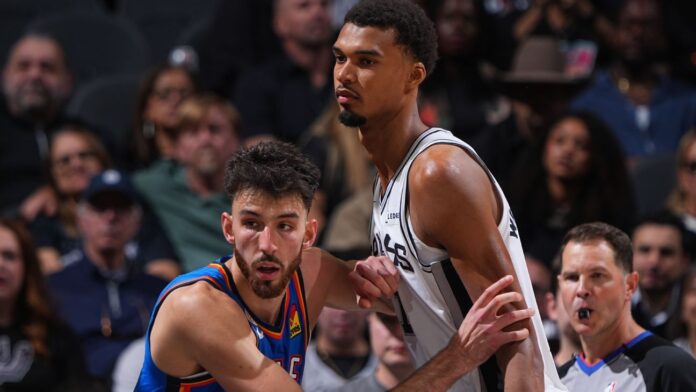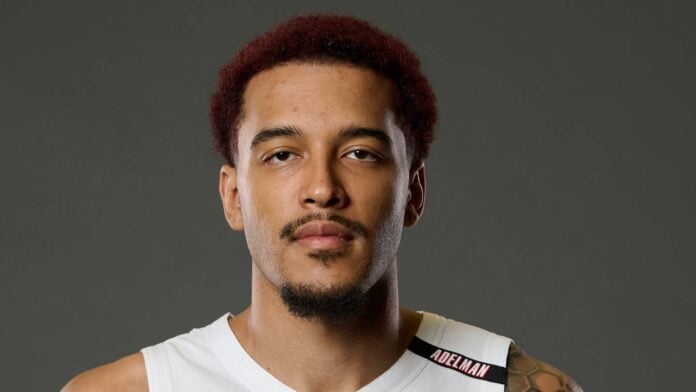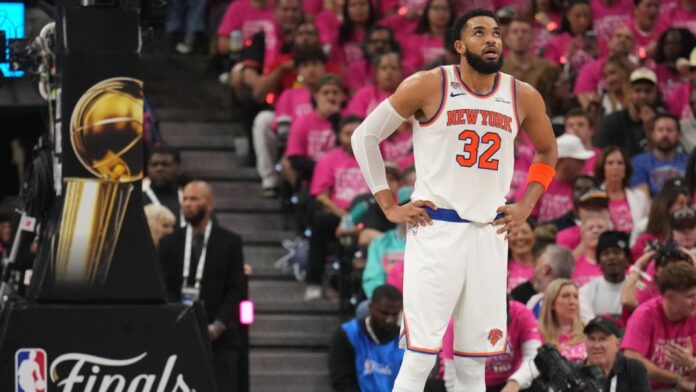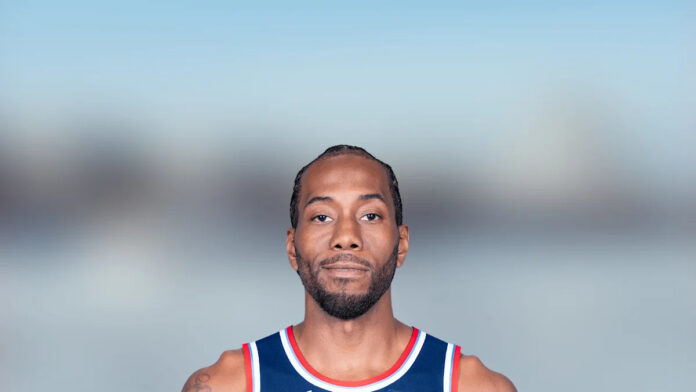

PORTLAND — Scoot Henderson turned 21 in February and is, by every reasonable developmental measure, on schedule. He averaged double digits last season. He runs pick-and-rolls with the poise of a player who belongs at this level. Three years ago, NBA decision-makers spent weeks arguing about whether he or Victor Wembanyama deserved the first call. Portland took him at three and treated the pick as an answer.
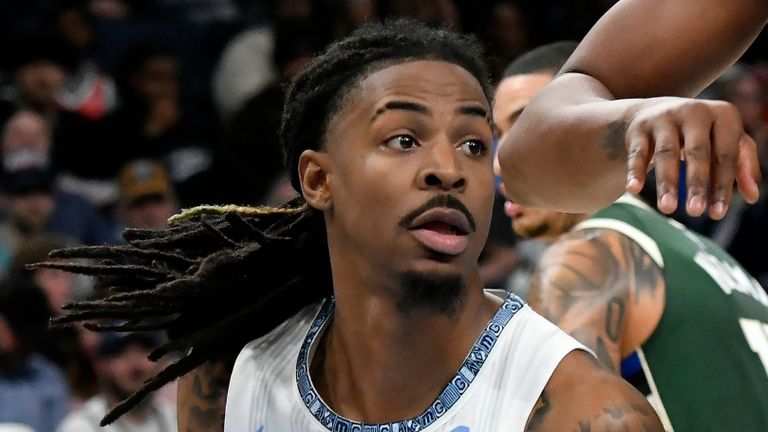
On June 29, the Trail Blazers traded for Ja Morant and turned that answer into a question.
The deal sent Jerami Grant and Kris Murray to Memphis in exchange for a 26-year-old two-time All-Star who has played 79 games over the past three seasons. Grant averaged 18.6 points per game for the Blazers last season, the closest thing to a reliable offensive anchor the team had built in years. Kris Murray, a 2023 draft pick averaging 5.8 points per game, was a developing rotation piece. Portland moved both of them for a player whose availability record belongs in a different category than his talent. That calculation is what passed for boldness in a front office that spent 2023 drafting for the long game and spent June 29 reconsidering it.
The Blazers went 42-40 last season, seventh in the Western Conference. That record is neither a rebuilding team’s nor a contender’s. It is the record of a franchise caught between timelines: good enough to feel the pull of the playoffs, not good enough to reach them on current personnel. Morant, on his best nights, closes that gap faster than any player available at the trade deadline or in free agency this summer. Whether those nights show up consistently enough was the question Portland could not fully answer before it signed off on the deal, and accepted anyway.
Morant’s career average of 22.4 points per game captures what Memphis was trading and what Portland was buying. The 2020 Rookie of the Year and 2022 Most Improved Player arrived in Memphis in 2019 with the kind of upside that front offices build franchise timelines around, only to have those timelines bent by suspensions, injuries, and off-court visibility that made him the most scrutinized young player in the sport. He played 67 games in 2022-23, 29 in 2023-24, and appeared in 39 of 82 games last season. Memphis, committed to rebuilding around third-pick Cameron Boozer, handed Scotty Pippen Jr. the starting job and turned its rebuild over to a younger generation. The deal closing was, from Memphis’s side, a conclusion. From Portland’s, it was a wager.
Morant has read his own reputation in full. “I’m kind of used to it,” he said. “I was pretty much a villain for two years now. Every little thing, it’s going to be out there. So, yeah. I don’t care no more.” He changed his jersey number from 12 to 1. The Trail Blazers launched a “Call Ja” fan hotline, inviting supporters to leave him messages before training camp. The optics of arrival were deliberate. Whether that arrival extends to 70 games on the floor in 2026-27 is what neither side has been able to guarantee.
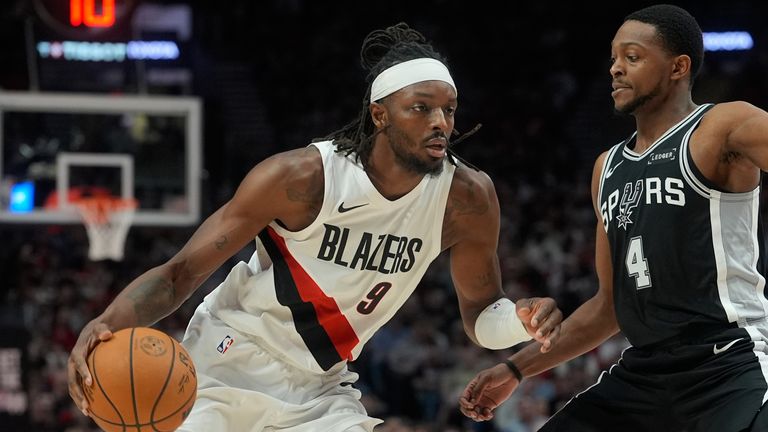
Henderson is the question the front office hasn’t answered in public. The backcourt now includes Morant, Jrue Holiday, and Henderson, three guards competing for minutes that cannot all be satisfied simultaneously. Sky Sports reported the deal created immediate questions about Portland’s backcourt construction, with Henderson’s trade value surfacing in league discussions almost immediately after the announcement. The front office has not said Henderson is available. It has not needed to. The June 29 trade said it in a language every team in the league reads without trouble.
Deni Avdija may be the strongest case for Portland’s logic. The Israeli forward averaged double-digit scoring and rebounding last season and built a reputation as one of the better two-way players in the Western Conference, the kind of wing who becomes genuinely disruptive when paired with a guard who can create off the bounce. Grant gave Avdija clean looks in pick-and-roll situations through the midrange. Morant, at his best, turns those same situations into plays that defensive coordinators build game plans around before Game 1 of a playoff series. The fit, if Morant stays on the floor, is as real as any argument Portland’s front office made to itself on June 28.
The Western Conference entering 2026-27 offers no margin for half-seasons. San Antonio enters as the conference’s narrow championship favorite, with Oklahoma City and a Philadelphia superteam as the serious competition. A Portland team built around Grant as its primary scorer was not operating in that tier. A Portland team built around a healthy Morant might be. The Blazers accepted the phrase “might be” on June 29 and agreed to pay whatever that uncertainty costs.
New owner Tom Dundon brings a championship pedigree, his Carolina Hurricanes having recently won the Stanley Cup, and an unresolved arena dispute with the city of Portland. Relocation has circulated in league conversations as a theoretical possibility if the Moda Center negotiations stall indefinitely. Whether Morant’s arrival, the fan campaigns, and the competitive ambition accelerate those talks toward resolution or simply concentrate the uncertainty into a more visible franchise is something neither Dundon nor city officials has answered to the league’s satisfaction.
Henderson will be at training camp. He will compete. The Blazers have not told him otherwise, and in the absence of a trade, he will take the floor alongside Morant and make his case. At 21, with three NBA seasons behind him and a draft pedigree that deserves respect, he probably has earned that opportunity. What he has not been given is the franchise guarantee that comes with being the cornerstone pick, because Portland handed that to someone else on June 29, and Scoot Henderson is still working out what that means.